
Sensible Screen Time Rules for Mumbai Kids That Actually Work
From tiny apartments in Borivali to monsoon days in Thane, managing screen time in Mumbai is tough. Here are practical screen time rules that work for local families.
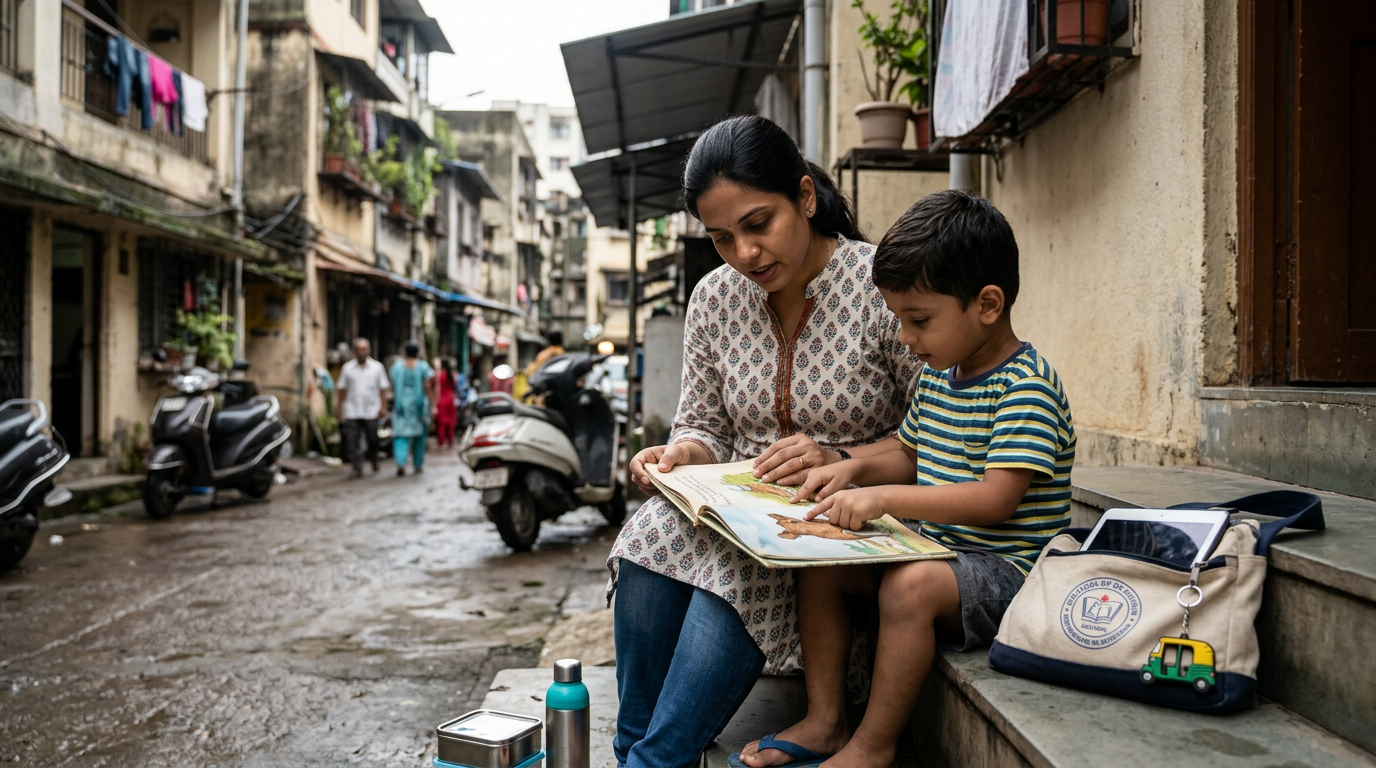
Realistic Screen Time Rules for the Mumbai Parent
You’re at an Amar Juice Centre in Vile Parle, waiting for your pav bhaji. Your child is getting restless. You hand them your phone. You’re stuck in traffic on the Eastern Freeway, the journey from Chembur to Fort stretching into infinity. You hand them the tablet. Let’s be honest: for parents in the Mumbai Metropolitan Region, screens are not just entertainment; they are a survival tool. The conversation around child screen time often feels divorced from our reality. That’s why we need to move beyond blanket statements and establish sensible screen time rules that acknowledge the unique pressures and opportunities of raising a child in this vibrant, chaotic city.
Why a Total Screen Ban is a Losing Battle in Mumbai
Many parenting gurus advocate for a near-total ban on screens for young children. While the sentiment is noble, it’s profoundly impractical for the average Mumbai family. For one, our living spaces are compact. Not everyone has a sprawling lawn or a dedicated playroom. A 2BHK in Andheri or a 1BHK in Ghatkopar doesn't offer endless realms for physical exploration, especially when it's pouring outside for four months straight. During the monsoons, when a trip to the local park in Thane is a non-starter, a curated selection of digital content can be a lifesaver.
Then there's the academic pressure cooker. From a young age, children are introduced to educational apps and online classes, a trend that has only accelerated. Schools in Powai and Vashi are integrating digital tools into their curriculum. Abruptly declaring all screens 'bad' creates a confusing cognitive dissonance for a child who uses a tablet for their online math tuition. The goal shouldn’t be total elimination, which is a setup for failure and constant conflict. Instead, the goal should be mindful integration. We need to teach our children how to coexist with technology in a healthy way, a skill that will serve them far better in the long run than a rigid, fear-based prohibition.
The “When and Where” Rule: Creating Tech-Free Sanctuaries
One of the most effective strategies is not about the how long but about the when and where. By creating clear boundaries around technology use, you reclaim important parts of family life. These rules need to be simple, consistent, and, most importantly, apply to everyone—yes, that means you too, Dad scrolling through WhatsApp forwards at dinner.
Key Tech-Free Zones and Times:
- The Dinner Table: This is non-negotiable. Whether you're eating a home-cooked meal in your Belapur flat or grabbing a dosa at Ramashray in Matunga, meal times are for conversation. No phones, no tablets, no TV in the background. This single rule can dramatically improve family connection.
- The Bedroom: The bedroom should be a sanctuary for sleep and rest, not for endless scrolling. Multiple studies show that the blue light from screens interferes with melatonin production, making it harder to fall asleep. Implement a “digital curfew” one hour before bedtime where all devices are docked in a central charging station, perhaps in the living room.
- In the Car (for short trips): While a long haul to Pune might necessitate the tablet, try to keep short trips screen-free. A 15-minute drive to the grocery store in Kharghar is a great opportunity to talk, sing songs, or play “I Spy” with the wonderfully chaotic Mumbai traffic.
Consistency is your best friend here. It will be a battle at first, but when children understand that the rules are firm and predictable, the nagging and negotiating will eventually subside. You are establishing a family culture where human connection is prioritized over digital distraction.
Curating Their Digital Diet: Quality Over Quantity
We obsess over the number of minutes our children spend on screens, but we often neglect to scrutinize what they are actually consuming. Thirty minutes spent watching mindless, algorithm-generated YouTube videos of someone unwrapping toys is vastly different from thirty minutes spent on an app that teaches basic coding principles or explores the solar system. As a parent, you need to become a digital curator, just as you are for their diet.
Think of it like food. There’s junk food (most viral videos, simple repetitive games) and there’s nutritious food (documentaries, creative apps, educational games). It doesn't mean they can never have 'digital junk food', but it should be a rare treat, not the main course. Take the time to research and vet apps and channels. Look for content that encourages active participation rather than passive consumption.
- Active Engagement: Apps like Toca Boca or Sago Mini encourage creativity and problem-solving. For older kids, platforms like ScratchJr introduce them to coding in a fun, interactive way.
- Educational Value: Instead of another cartoon, try a nature documentary on CuriosityStream or a well-produced educational YouTube channel like SciShow Kids. Tie it to their local context. Watched a video about coastal ecosystems? Plan a weekend trip to see the mangroves in Airoli.
- Co-Viewing: Whenever possible, watch with them. This is the single best way to gauge the quality of the content. It also opens up opportunities for conversation. If you're watching a show together, you can pause and ask questions, connecting the digital world to the real one. “That looks like the Sea Link, doesn’t it?”
For more specific recommendations, Common Sense Media is an excellent resource for reviews on apps, games, and shows. Taking an active role in choosing the content transforms screen time from a passive babysitter into an active learning tool. A good starting point is [INTERNAL_LINK: best educational apps for kids].
Earn Your Screen Time: The “Work Before Play” Principle
In a city driven by ambition and hard work, the concept of earning your rewards is easily understood. Applying this to screen time can be a powerful motivator and teaching tool. Instead of being a given right, screen time becomes a privilege that is earned by completing other responsibilities. This is often called the “First/Then” principle in child psychology.
Here’s how it works in a Mumbai household:
- “First, finish your homework from your Podar school teacher, then you can have 30 minutes on the tablet.”
- “First, put away your toys and clear your space, then you can watch one episode of your show.”
- “First, we all help clear the dinner table, then we can watch a movie together as a family.”
Replace, Don't Just Remove: Mumbai’s Screen-Free Treasure Map
The biggest challenge when you reduce screen time is answering the inevitable question: “Then what can I do?” You need to have an arsenal of appealing alternatives ready. Luckily, our city, for all its concrete, is brimming with opportunities. You just need to know where to look.
Outdoor Adventures from Colaba to Virar
When the weather is good, there's no substitute for fresh air. Swap 30 minutes of gaming for an hour at a local park. In South Mumbai, you have Priyadarshini Park with its athletic tracks or the iconic Shivaji Park in Dadar. The suburbs offer gems like the tranquil Chhota Kashmir in Aarey Colony or the newly developed gardens along the Thane waterfront. For Navi Mumbai residents, Central Park in Kharghar is a massive green lung perfect for cycling, and Parsik Hill in Belapur offers easy trekking trails with great views of the city.
Indoor Fun Beyond the Mall
When it’s too hot or raining, think beyond the nearest mall’s play area. Mumbai has some fantastic, engaging indoor venues. The Nehru Science Centre in Worli is a full day of interactive fun. The Chhatrapati Shivaji Maharaj Vastu Sangrahalaya (CSMVS) in Fort often has children's workshops. Don't underestimate the public library; many have dedicated children's sections. For a dose of culture, an afternoon at the Dr. Bhau Daji Lad Museum in Byculla is both educational and beautiful. And for a unique experience, a trip to the Taraporewala Aquarium on Marine Drive is a classic for a reason.
The Rise of Board Game Cafes and Hobby Classes
A fantastic trend across the MMR is the rise of board game cafes like Creeda in Fort or Pair-a-Dice in Andheri. For a few hundred rupees, you get access to hundreds of games and a fun, social atmosphere. It’s a brilliant family activity for older kids and teens. Additionally, almost every neighborhood, from Bandra West to Panvel, has a vibrant ecosystem of hobby classes. Think about enrolling your child in pottery, robotics, dance, or even a public speaking class. These provide structured, social, and skill-building alternatives to screens. Check out our guide to [INTERNAL_LINK: weekend classes for kids in Mumbai].
The Family Media Plan: A Contract for Everyone
To make these rules stick, they need to be clear, consistent, and agreed upon by everyone. This is where a Family Media Plan comes in. Think of it as a formal contract that the whole family creates together. It outlines the rules for device use: when, where, and for how long. The collaborative process is key—when kids have a say in creating the rules, they are far more likely to adhere to them.
Your plan should cover:
- Screen-free times (e.g., meals, one hour before bed).
- Screen-free zones (e.g., bedrooms, dining area).
- Device curfews (e.g., all devices docked by 9 PM).
- Rules for online safety and digital citizenship.
- Consequences for breaking the rules.
- Crucially, a section on parental device use.
"Children's screen habits are a direct reflection of their parents'. The most effective way to manage your child's screen time is to first be brutally honest about your own. Model the behavior you want to see. Put your phone away when you get home from work. Make eye contact. Be present. That is the foundation upon which all other rules are built."
Print out your Family Media Plan and post it on the fridge. It acts as a visual reminder for everyone and depersonalizes enforcement. It’s not you being the “bad guy”; it’s just the family rule.
Using Tech to Manage Tech: Apps and Tools for Parents
It might sound ironic, but technology itself can be an ally in your quest for balance. Trying to manually police screen time can be exhausting and lead to constant arguments. Parental control software and built-in device features can automate the process, making you the planner, not the police.
Most modern devices have excellent built-in controls:
- Apple's Screen Time: Available on iPhones and iPads, it allows you to set daily time limits for specific app categories (like Games or Social Media), schedule “Downtime” when only approved apps are available, and view detailed reports on usage.
- Google's Family Link: This is the Android equivalent. It allows parents to set time limits, approve or block app downloads, lock the device at bedtime, and even track their child’s location.
These tools are not a substitute for active parenting and open communication. You can't just set them up and forget about them. They are, however, incredibly useful for enforcing the boundaries you've already established in your Family Media Plan. They take the negotiation out of the equation. When the time is up, the device simply locks. It removes you from the immediate conflict and helps teach kids about limits in a clear, unemotional way. Use these tools as support, allowing you to focus your energy on the more important work of connecting with your child and exploring all the wonderful screen-free activities Mumbai has to offer.
Finding Your Family's Balance in the City of Dreams
Managing screen time in Mumbai isn’t about achieving a perfect, screen-free existence. It’s about finding a sustainable balance that works for your family's unique circumstances. It's about swapping passive scrolling for active engagement, both online and off. By establishing clear boundaries, curating quality content, and intentionally making time for the rich experiences our city offers—from a walk on Juhu beach to an afternoon at the science museum—you can raise digitally savvy kids without letting screens dominate your family life. The goal is to teach them to be the master of their devices, not the other way around. It’s a challenge, but one that is well worth the effort for the long-term well-being of our children.
What are your family's go-to screen-free spots in Mumbai or Navi Mumbai? Share your local secrets and successful strategies in the comments below!
Keep reading
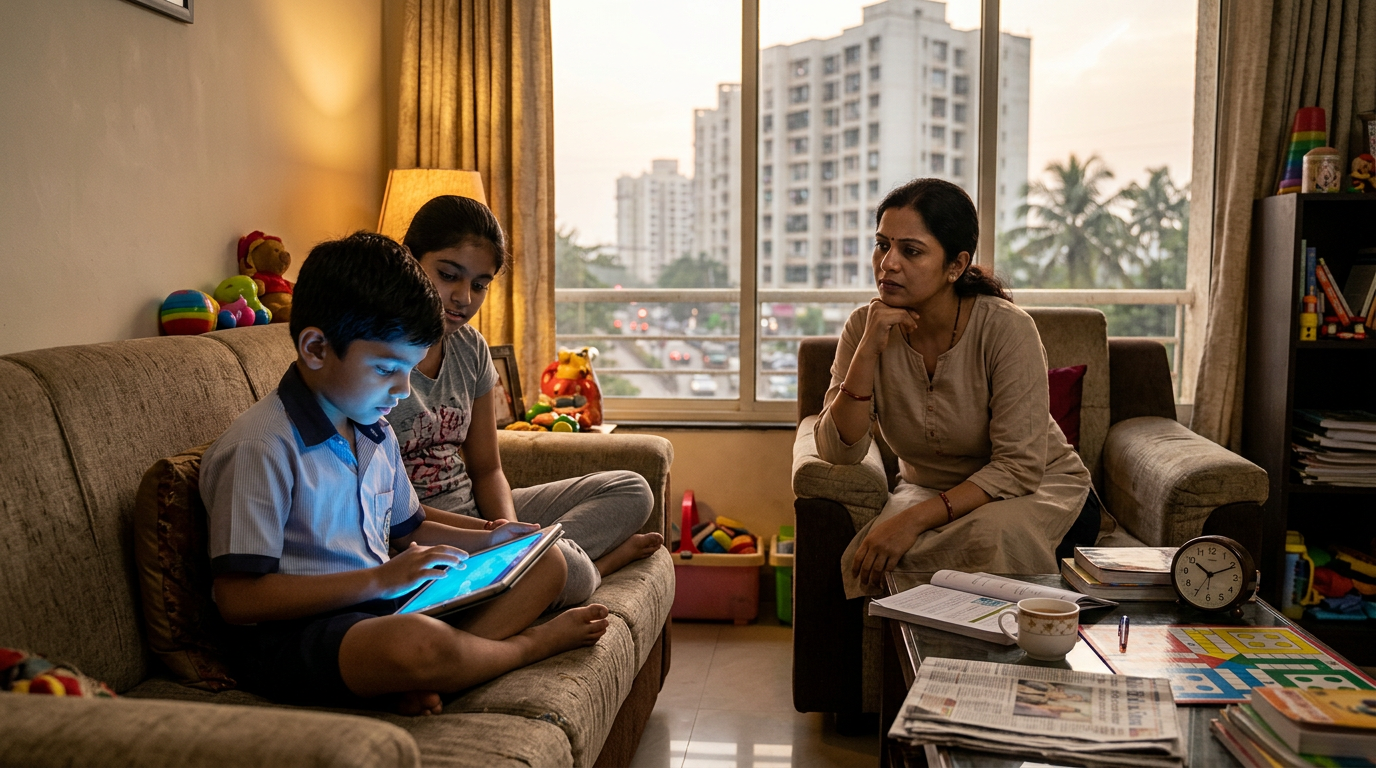
Screen Time Rules That Work for Mumbai & Navi Mumbai Kids
From Bandra to Belapur, Mumbai parents are asking how to manage tablets and phones. Here are screen time rules that actually work for our city's unique challenges.
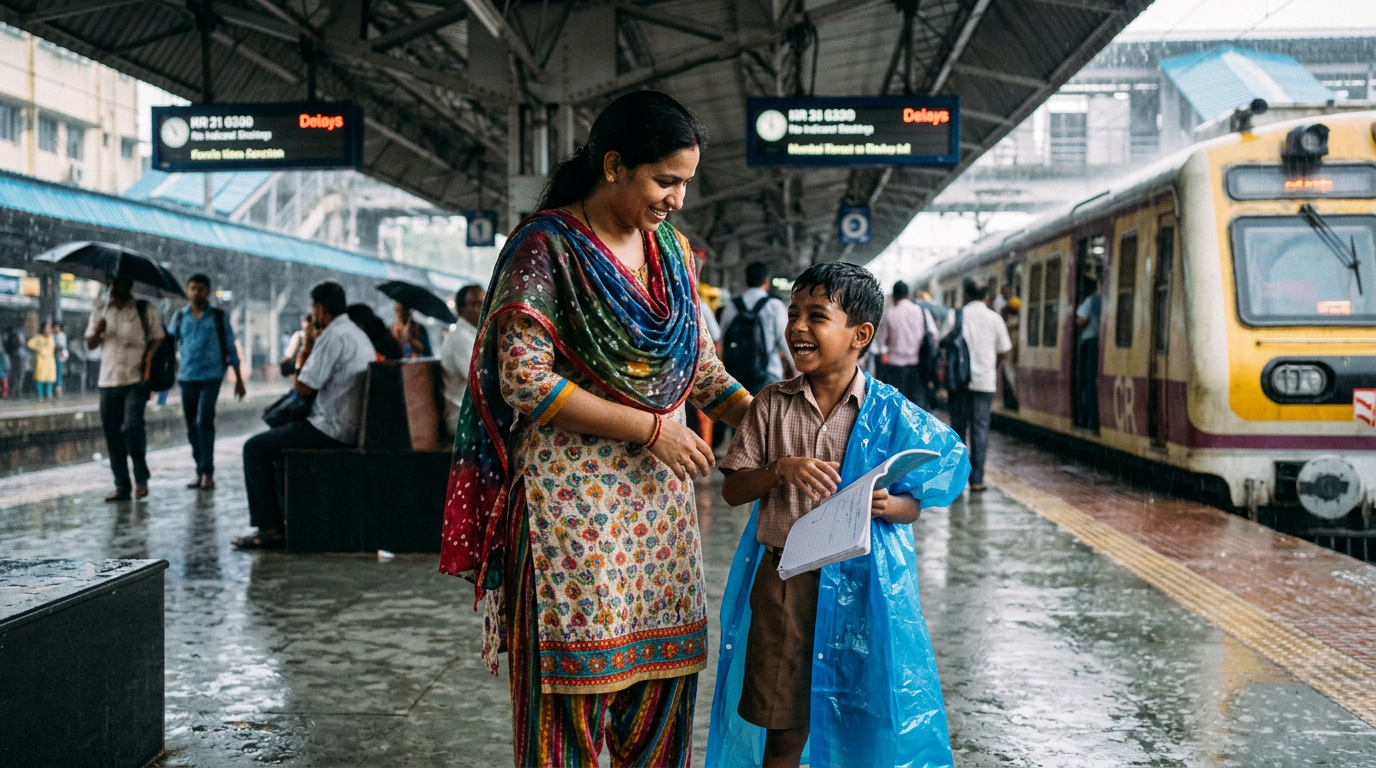
How to Raise Resilient Kids in the Heart of Mumbai
Stuck on the Harbour Line during a downpour? That's just a Tuesday. This guide explores how to raise resilient kids who can thrive amidst Mumbai's unique chaos and charm.
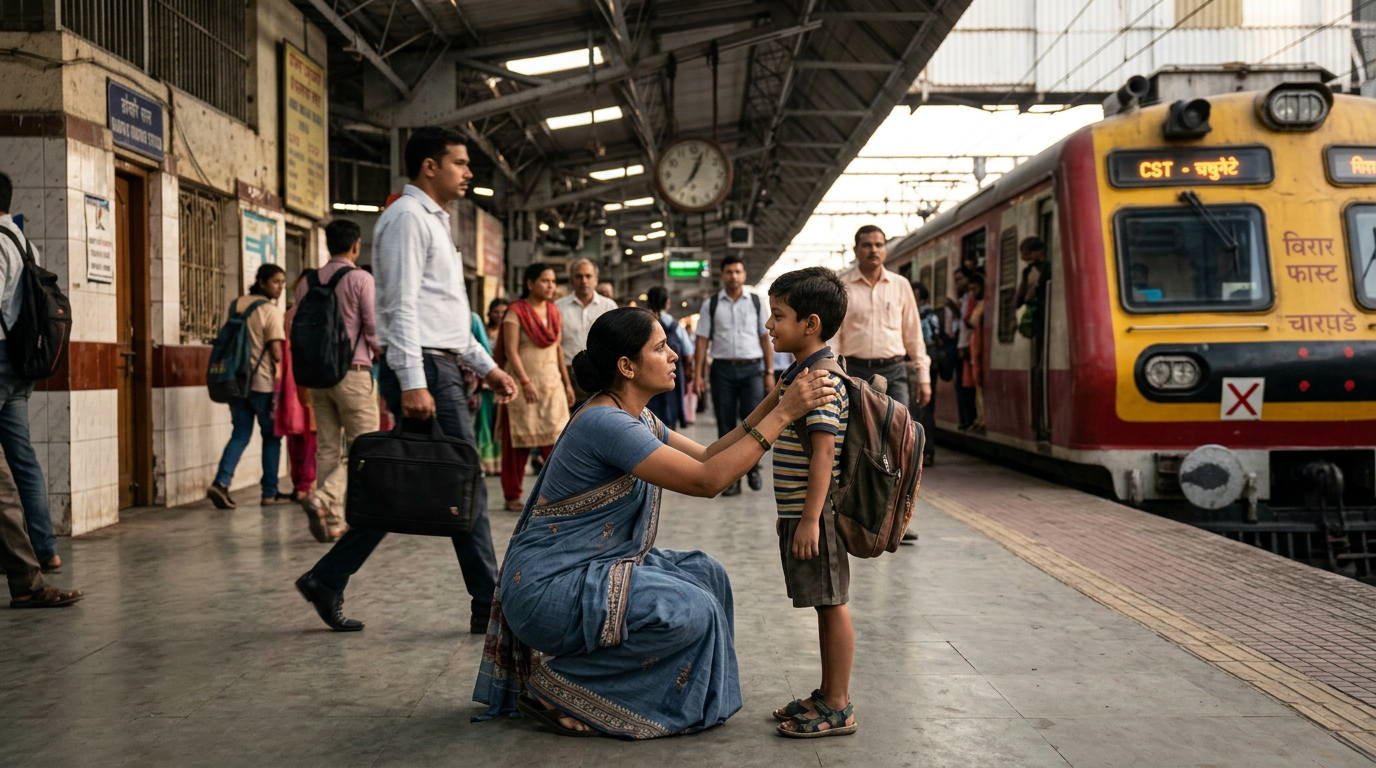
Raising Resilient Kids: A Mumbai Parent's Survival Guide
From packed local trains to intense school rivalries, Mumbai is a tough city. Here’s a practical, local’s guide on how to raise resilient kids who can thrive in the Maximum City.