
How to Raise Resilient Kids: A Mumbai Parent's Guide
Raising adaptable children in MMR means balancing fierce academic competition with emotional grit. Here is a practical, hyper-local guide for urban parents.
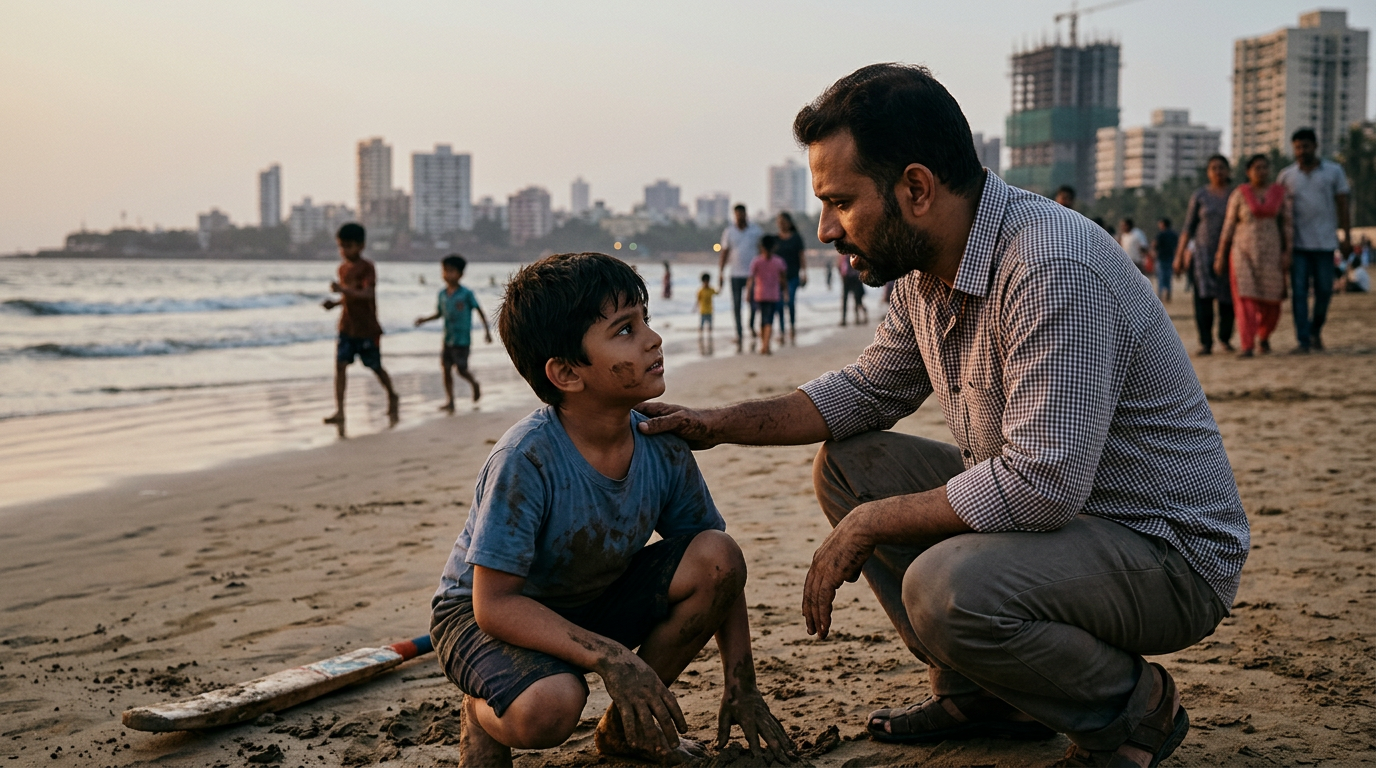
If you have ever watched your child melt down because their sports day got rained out in July, or because they were placed on an agonizing waitlist for a nursery seat in Matunga, you already know the emotional temperature of parenting in the Mumbai Metropolitan Region. Between hyper-competitive entrance exams, relentless commutes along the Western Express Highway, and the sensory overload of everyday life, our children encounter complex demands early. Learning how to raise resilient kids is no longer just an admirable psychological concept for city families; it is an urgent developmental necessity.
True resilience is not about hardening a child or teaching them to suppress their vulnerability under a stoic facade. Instead, it is the learned capacity to recover from adversity, recalibrate when circumstances shift, and maintain emotional equilibrium when things do not go as planned. In a metropolitan landscape that constantly tests patience, grit can be built organically through everyday urban experiences.
Reframing Disappointment in the High-Stakes School Circuit
From the moment nursery admission forms open across Bandra, Wadala, and Nerul, MMR children are thrust into evaluation funnels. Whether it is an entrance interview at Cathedral and John Connon, an inter-school debate competition at Podar International, or selections for a local football team at Cooperage Ground, rejection is an inevitable companion of childhood in a city of twenty million people. How parents frame that rejection determines whether a child develops chronic anxiety or adaptive resilience.
When your eight-year-old fails to win a prize at an inter-school elocution contest in Thane, the instinctive parental urge is either to blame biased judging or shower the child with unearned praise. Both approaches backfire. Over-protecting kids from disappointment robs them of the opportunity to develop emotional scar tissue. Resilient children learn to separate their intrinsic self-worth from external outcomes.
Instead of rushing to fix their bruised ego, validate the sting of losing while keeping expectations clear:
- Acknowledge the effort: Praise the hours spent rehearsing in the living room rather than relying on innate talent labels like "You are naturally gifted."
- Conduct a calm autopsy: Ask open-ended questions: "What felt strong about your performance? What part felt shaky when you were up on stage?"
- Normalize the numbers: Remind them that in Mumbai, exceptional peers surround them everywhere. Facing fierce competition is a privilege that pushes everyone to grow, not an indictment of personal inadequacy.
By treating disappointment as actionable data rather than a personal tragedy, you teach your child that a closed door is simply part of their learning timeline. For deeper insights into navigating regional schooling environments without burning out your child, read our guide on [INTERNAL_LINK: choosing the right school curriculum in Mumbai].
Fostering Everyday Independence from Vashi to Bandra
A curious paradox defines modern middle-class parenting across South Mumbai, Powai, and Palm Beach Road: we expect our children to achieve academic excellence, yet we often refuse to let them cross the street by themselves until they are teenagers. We shuttle them in air-conditioned cars, monitor their play dates via society WhatsApp groups, and hire domestic staff to pack their school bags well into middle school. This protective bubble creates fragile, anxious teenagers who struggle to make autonomous decisions.
Resilience requires agency. A child must believe that they are capable of affecting their surroundings and resolving problems without parental intervention. You do not need to drop an eleven-year-old alone at Dadar station during evening peak hours to build self-reliance, but you can build micro-independence into their weekly routine.
"Resilience is not forged during grand philosophical discussions. It is forged at the local kirana store when an eight-year-old has to ask for change, negotiate politely, and find their way back home on their own two feet."
Consider introducing scaffolded independence challenges based on your child's age and neighborhood layout:
- The Neighborhood Kirana Run: Send an eight-year-old down to your local society grocery store in Kharghar or Kandivali with ₹100 cash to buy bread and eggs. Let them calculate the balance and handle the interaction solo.
- Society Navigation: Let pre-teens manage their own logistics within gated complexes, resolving playground squabbles without running to parents to mediate disputes.
- Public Transit Milestones: By age thirteen or fourteen, guide them through taking a direct BEST bus, the Mumbai Metro Line 1 or 2A, or an auto-rickshaw across predictable distances during daylight hours.
When you allow children to encounter small, manageable friction points in the real world, their internal confidence expands. They stop looking over their shoulder for rescue and start trusting their own instincts.
Managing the Sensory Overload of the City
Living in Mumbai or Navi Mumbai requires constant processing of sound, density, visual movement, and environmental stress. A simple drive down SV Road or through the Belapur junction exposes a child to honking, construction dust, humid weather, and compressed personal space. Chronic sensory overstimulation frequently masquerades as behavioral issues, moodiness, or school refusal.
Raising resilient children involves teaching them nervous system regulation amidst this urban chaos. If children are not taught to identify sensory fatigue, they internalize the city's frantic pacing as an internal baseline state of chronic stress.
Creating Low-Stimulation Anchors at Home
Your apartment must serve as a decompression chamber. Regardless of square footage—whether living in a 2-BHK in Goregaon East or a row house in Seawoods—designate intentional quiet zones. Turn off ambient television screens during dinner, enforce digital device curfews an hour before bed, and introduce simple grounding exercises when your child returns home from an exhausting school day.
Body Literacy and Co-Regulation
Help your child map their physical sensations to their emotions. When they snap after an hour stuck in traffic near Kalanagar, help them label the experience: "Your jaw is clenched and your shoulders are up near your ears. The noise outside is really loud today, isn't it? Let us take three slow breaths together." Co-regulating their nervous system teaches them self-soothing tools they can deploy independently during stressful exams or social confrontations.
Trade Air-Conditioned Play Zones for Mud and Open Skies
On weekends, Mumbai malls from Kurla to Malad fill with parents spending ₹1,200 an hour at commercial indoor play arenas. While convenient during torrential monsoon cloudbursts, padded, temperature-controlled play areas offer limited opportunities for true physical resilience. When every surface is foam-cushioned and climate-controlled, children miss out on critical somatic feedback.
Physical grit and mental grit share deep neurological pathways. Physical resilience teaches a child that being hot, tired, scraped, or uncomfortable is tolerable—and that discomfort eventually passes.
Prioritize raw outdoor spaces that encourage unstructured risk assessment:
- Mud-Stained Play: Take your children to open maidaans like Shivaji Park in Dadar, Central Park in Kharghar, or the mud tracks of Aarey Colony. Let them run on uneven grass, skin their knees, climb trees, and get dirty.
- Monsoon Embraces: Instead of keeping children trapped indoors every time the skies open up, let them play football in the rain at an open ground. Navigating slippery surfaces teaches physical balance, spatial awareness, and resilience against minor environmental discomforts.
- Sustained Stamina: Dedicate weekend mornings to hiking the Kanheri Caves trails within Sanjay Gandhi National Park or walking the length of Marine Drive. Long walks with minimal digital distractions teach patience, physical perseverance, and an appreciation for slow progress.
When children discover that a scraped elbow or a humid, sweaty morning is not an emergency, their baseline distress tolerance rises significantly. Explore more outdoor ideas in our curated feature on [INTERNAL_LINK: best outdoor family activities in Navi Mumbai].
Normalizing Failure Over Perfection in Extracurriculars
The extracurricular landscape in the MMR has become intensely professionalized. It is common to see seven-year-olds enrolled in specialized cricket academies at Oval Maidan, competitive chess coaching in Chembur, and Trinity Guildhall piano training in Bandra—all within the same calendar week. With high financial investments (often ranging between ₹4,000 to ₹10,000 per month per activity), parents can inadvertently attach intense pressure to performance.
When extracurricular activities mimic the rigorous, evaluative nature of school exams, children develop a profound fear of failure. They become perfectionists who abandon new hobbies the moment they are not immediately good at them. This tendency is the precise antithesis of resilience.
To cultivate authentic grit, ensure your child experiences activities where they are deliberately not the star performer. If your child is academically gifted, enroll them in a theatre workshop where they might struggle with stage presence. If they are naturally athletic, introduce them to pottery or a classical instrument like the tabla, where progress requires months of slow, repetitive, unglamorous practice.
Normalize the intermediate plateau—the frustrating phase where an activity ceases to be novel, becomes difficult, but mastery is still far away. Model this mindset yourself. Talk openly about your own workplace struggles: a client pitch that fell through at your BKC office, or a project in Vikhroli that ran over budget. When children see their parents handle professional stumbles with composure and grit, they learn that failure is merely an intermediate draft of success.
The Power of Community: Moving Beyond Gated Isolation
Historically, children in traditional Mumbai neighborhoods—from Girgaon chawls to Parsi colonies in Dadar—grew up immersed in dense social ecosystems. They were corrected by neighbors, learned to share courtyard cricket bats with older kids, and navigated real-world social dynamics without adult supervision. Today, modern high-rises in areas like Lower Parel or Ghodbunder Road often isolate nuclear families within private, heavily surveilled towers.
While gated communities offer safety and manicured amenities, they can also cultivate social fragility. When children interact exclusively with peers of identical socioeconomic backgrounds, their conflict resolution skills narrow. Disagreements quickly escalate into parent-led society committee disputes rather than opportunities for peer-led problem solving.
You can counter this insulated dynamic by cultivating broader community engagement:
- Stay Out of Minor Playground Disputes: If children argue over who gets to bat next on the building turf, resist stepping in immediately. Watch from a bench. Give them twenty minutes to argue, negotiate, strike compromises, and resume playing on their own terms.
- Encourage Cross-Age Interaction: Modern society culture segregates kids by specific age brackets. Encourage your child to play with mixed-age cohorts down in the compound. Older children learn patience and mentorship, while younger kids learn to follow rules and tolerate being on the losing side without throwing tantrums.
- Engage with the Broader City: Ensure your children participate in wider community spaces—civic beach clean-ups at Juhu or Versova, public library visits in Fort, or volunteering initiatives across local animal shelters in Thane. Stepping outside their immediate social enclave builds perspective, empathy, and social adaptability.
Practical Weekly Routines That Build Mental Toughness
Translating these philosophical ideas into sustainable household habits requires clear, practical systems. Here is an actionable framework you can integrate into your home life over the coming weeks:
- The "One Hard Thing" Rule: Every member of the family (parents included) must have one ongoing challenge that requires sustained effort—whether it is training for a 5K at the Kharghar Marathon, learning Marathi, or practicing coding. Quitting is only permitted at the natural conclusion of a season or module, never in the middle of a bad week.
- Implement Problem-Solving Pauses: When your child comes to you complaining about a school conflict or a difficult homework assignment, resist offering the immediate solution. Ask: "That sounds frustrating. What are two options you have right now to deal with this?" Make them the architects of their own solutions.
- Regular Responsibility Audits: Keep chores non-negotiable. Whether clearing their steel plates after dinner, organizing their study desk, or keeping their shoes aligned by the entryway, contribution to household labor builds executive functioning and resilience.
- Debrief the Week's Stumbles: During Sunday dinners, make it a family tradition to share one mistake each person made during the week and what they learned from it. Celebrating honest errors removes the paralyzing stigma of imperfection.
Raising Anchored Children in a Relentless City
Mumbai and Navi Mumbai will not slow down for our children. The local trains will keep hurtling into platforms, the school cutoff percentages will remain exacting, and the pace of urban competition will continue its relentless climb. Our job as parents is not to smooth out every pothole along their journey; it is to equip their emotional suspension systems to handle the bumps without breaking.
When you provide unconditional emotional safety alongside high, compassionate expectations for independence, you give your child the greatest gift possible: the unshakeable knowledge that no matter what storm hits, they have the internal resources to weather it.
Start small this week. Step back at the playground. Let them carry their own school bag down to the school bus stop. Watch them stumble, catch their breath, and stand back up—stronger, wiser, and ready for this magnificent, demanding city.
Keep reading
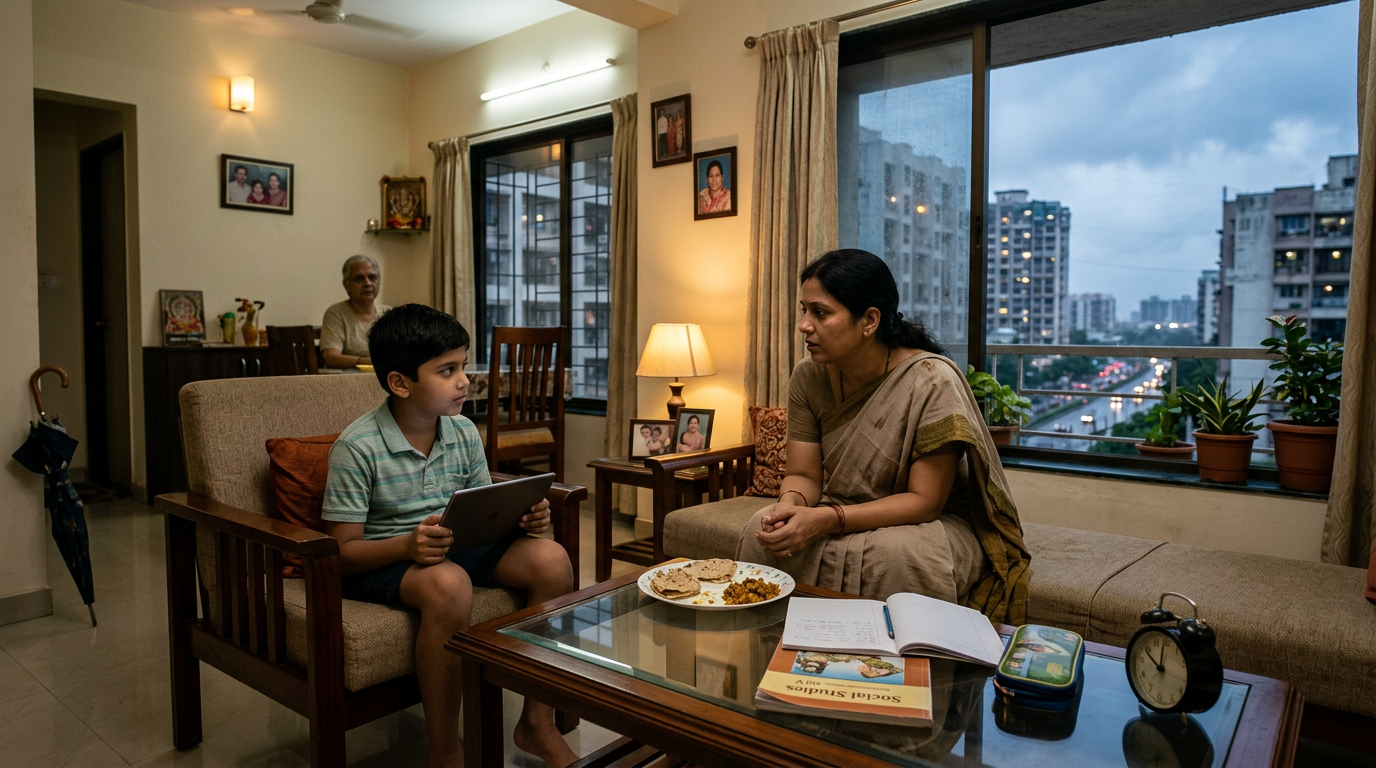
Screen Time Rules That Work for Busy Mumbai Parents
Tired of tablet battles in your Mumbai apartment? Here are realistic screen time rules that work for urban families, complete with MMR-friendly offline alternatives.
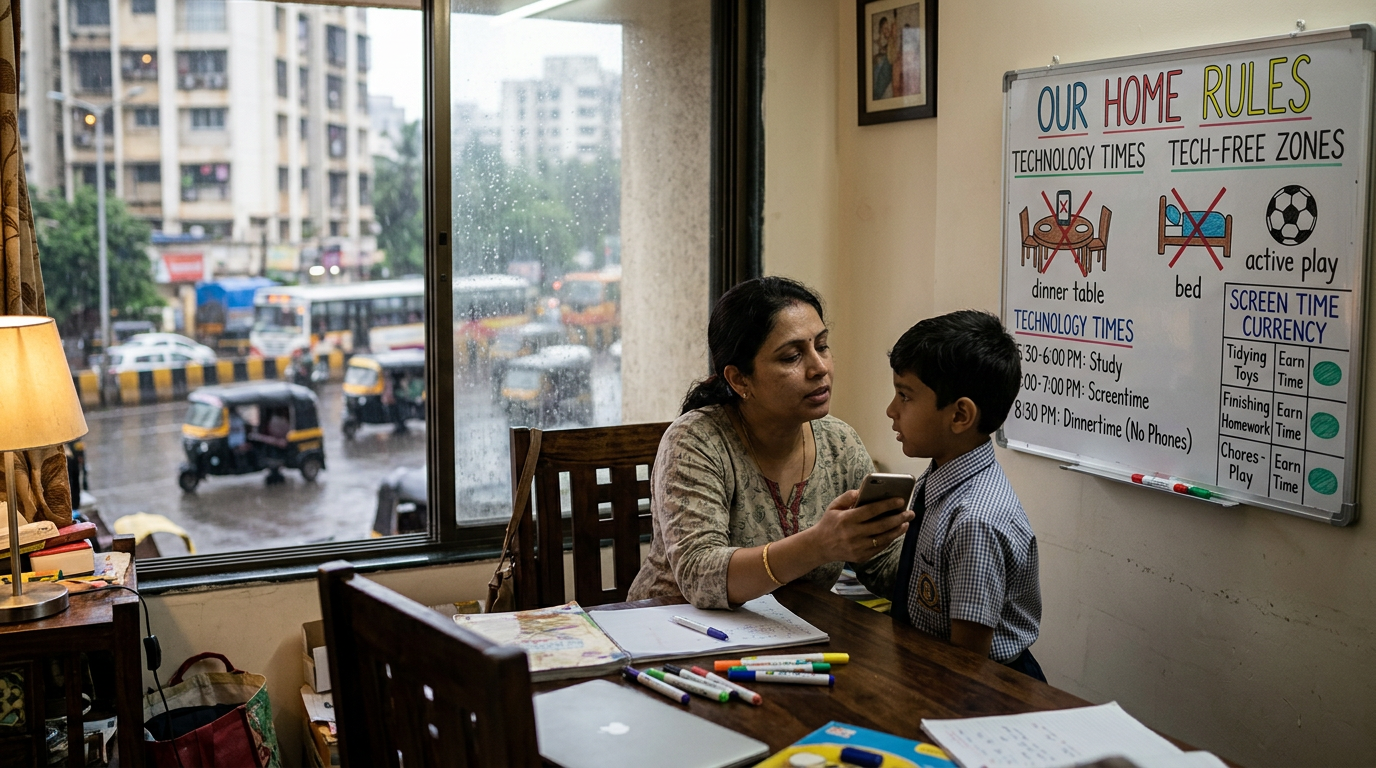
Practical Screen Time Rules for Mumbai & Navi Mumbai Parents
In a city like Mumbai, managing your child's screen time feels like a constant battle. Here are realistic screen time rules that actually work for families in the MMR, from Bandra to Belapur.
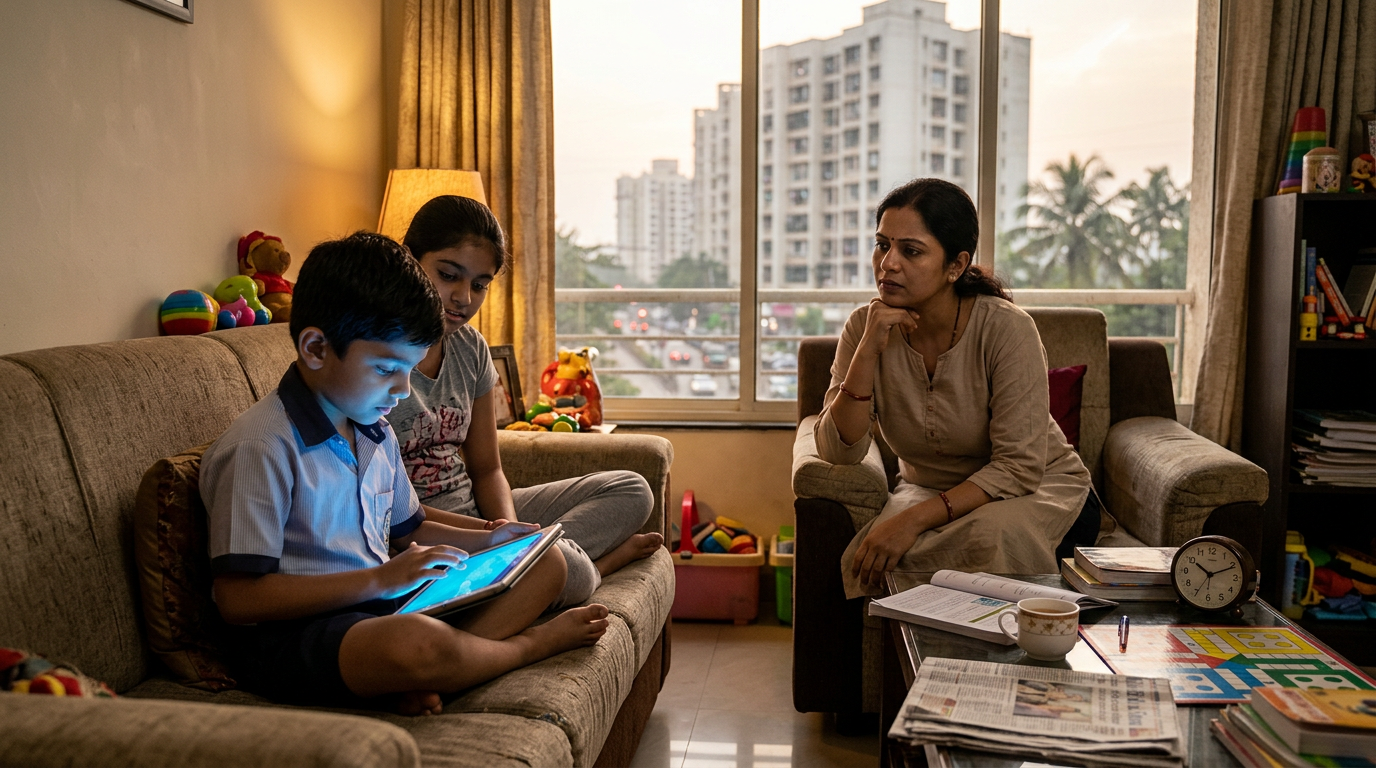
Screen Time Rules That Work for Mumbai & Navi Mumbai Kids
From Bandra to Belapur, Mumbai parents are asking how to manage tablets and phones. Here are screen time rules that actually work for our city's unique challenges.