
Screen Time Rules That Work for Mumbai & Navi Mumbai Kids
From Bandra to Belapur, Mumbai parents are asking how to manage tablets and phones. Here are screen time rules that actually work for our city's unique challenges.
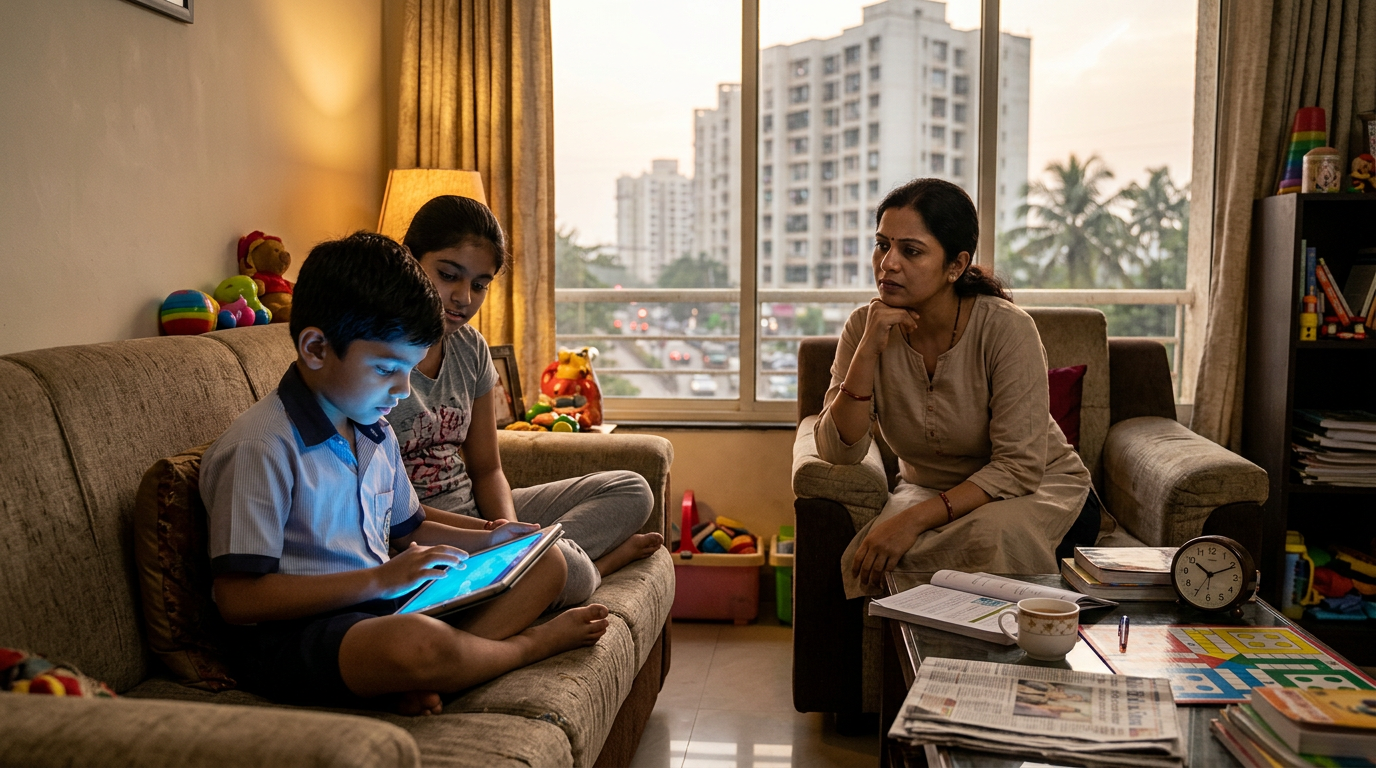
The scene is familiar in countless households from Andheri to Kharghar. You’re trying to navigate dinner, homework, or just a simple conversation, but you’re competing with the magnetic glow of a screen. Whether it’s a tablet in a high-rise apartment in Powai or a smartphone distracting a teenager who should be studying for their board exams in a Thane coaching class, the battle over screen time is real. For parents in the Mumbai Metropolitan Region (MMR), the challenge feels unique. Our smaller living spaces, notorious traffic, and demanding schedules can make screens an all-too-easy solution. But what if we could establish screen time rules that genuinely work for our families, fostering balance instead of conflict?
The "Why" Before the "How": Setting Your Family’s Digital Philosophy
Before you can set a single timer or password, the most critical step is to define your family's approach to technology. This isn't about a blanket ban; it's about intentionality. For Mumbai parents, this conversation needs to acknowledge our specific reality. Perhaps dad has a long commute from BKC to Borivali, and a video call is the only way he can 'be there' for bedtime stories. Maybe a single parent relies on an educational app to keep one child engaged while helping the other with homework. The goal isn't to eliminate screens but to ensure they serve your family's values, rather than dictate them. Sit down with your partner and discuss what you want your children to gain from technology and what you want them to avoid. Is the priority creative expression, educational support, or connection with grandparents in another city? A unified front is your greatest asset. When both parents are on the same page, presenting consistent rules becomes much easier and far more effective. This shared philosophy becomes the foundation for every rule you implement, making them feel less like arbitrary restrictions and more like a shared family commitment to a balanced life.
It’s Not Just How Much, It’s What They’re Watching
The conversation around screen time often gets stuck on hours and minutes. While time limits are important, a far more productive focus is on the quality of the content. An hour spent building a world in Minecraft or using an app like Toppr to understand a tricky science concept is fundamentally different from an hour of passively watching toy unboxing videos on YouTube. As parents, we need to become curators of our children's digital diet, just as we are with their actual food. Steer them towards content that encourages active participation, problem-solving, and creativity.
Curating a Quality Digital Diet
Take the time to explore and vet apps and games yourself. For younger kids, apps from PBS Kids or Khan Academy Kids offer excellent, well-designed educational content. For older students, there are incredible resources for coding, digital art, or even learning a new language. Frame it as a collaboration. Instead of just saying "no" to a popular but mindless game, you could say, "That game looks fun for a bit, but let's also find something where you can create your own animations." The difference is between being a consumer and a creator. A child using a tablet to research the history of the Gateway of India for a school project is engaging their mind. A child endlessly scrolling through short-form videos is not. By shifting the focus from quantity to quality, you empower your children to see screens as tools for learning and creation, not just entertainment.
Creating "No-Screen Zones" and Times in Your Mumbai Home
In a city where space is a premium, designating physical areas as "no-screen zones" is a powerful strategy. It creates predictable boundaries and protects sacred family time. Even in a compact 2BHK in Vashi, these rules can be implemented effectively. The two most important zones to establish are the dinner table and the bedroom. The dinner table should be a sanctuary for conversation and connection, a time to catch up on the day without digital interruptions. Keeping all phones and tablets in a basket in the living room during meals is a simple but transformative habit.
The Bedroom and Before Bed
The bedroom should be a place for rest, reading, and quiet reflection. The blue light emitted by screens is known to interfere with melatonin production, making it harder to fall asleep and reducing sleep quality—a major issue for students with early school start times. Implement a firm rule: all devices are charged overnight in a central location, like the kitchen or living room, not in bedrooms. This single rule eliminates the temptation for late-night scrolling. Furthermore, establish a digital curfew—no screens for at least one hour before bedtime. This allows the brain to wind down naturally. Instead of a tablet, encourage reading a physical book from a local library or a store like Crossword, listening to an audiobook, or simply talking as a family. These routines are crucial for mental and physical well-being.
The Art of the Trade-Off: Earning Screen Time
Shifting the paradigm from screen time as an automatic right to a privilege that is earned can fundamentally change your child's perspective. This approach links digital entertainment to real-world responsibilities and activities, teaching valuable lessons about balance and work ethic. It’s not a punishment; it's a system of cause and effect. You create a clear structure where desirable activities (like playing video games) are earned by completing necessary tasks. This can be tailored to your child's age and your family's priorities. The key is consistency. If the rule is "homework first, then gaming," it must be enforced every single day. This removes the daily negotiation and arguments, as the expectation is already set.
"When we stopped treating screen time as a given and started framing it as something to be earned, the dynamic in our home shifted entirely. Our kids in Belapur now understand that finishing their reading or helping with chores is part of the deal. It’s taught them a sense of responsibility we struggled to instil before." - A Navi Mumbai-based child psychologist.
Here’s a sample list of ways screen time can be earned:
- Complete All Homework: This is non-negotiable and should always be the top priority.
- Engage in Physical Activity: For every 30 minutes of screen time, require 30-60 minutes of active play. This could be cycling in the society compound, playing cricket with friends, or attending a sports class.
- Read a Physical Book: Encourage a love for reading by trading 30 minutes of screen time for 30 minutes with a book.
- Contribute to Household Chores: Simple tasks like setting the table, tidying their room, or helping put away groceries can earn them a set amount of screen time.
- Practice a Skill: Whether it's practicing the piano, working on an art project, or coding, time spent on a non-screen hobby can be rewarded.
Leveraging Mumbai's Playground: Alternatives to the Screen
One of the best ways to reduce screen time is to fill life with compelling alternatives. Thankfully, despite its concrete jungle reputation, Mumbai offers a wealth of options. The key is to plan ahead, especially for weekends, so that "What should we do?" doesn't default to turning on the TV. From exploring nature to engaging in creative classes, our city is brimming with screen-free activities.
Weekend Adventures Beyond the Mall
While a trip to Inorbit Mall or Seawoods Grand Central has its place, make an effort to explore the city's other offerings. A morning hike in Sanjay Gandhi National Park can feel like a world away from the city hustle. A visit to the flamingo sanctuary in Airoli during migration season is a breathtaking experience. Even a simple ferry ride to Elephanta Caves or a walk through the historic lanes of Fort can be a fantastic family outing. During the monsoon, when outdoor plans are tricky, consider a trip to the Nehru Science Centre or the Chhatrapati Shivaji Maharaj Vastu Sangrahalaya (formerly the Prince of Wales Museum). [INTERNAL_LINK: best museums for kids in mumbai] These outings are not only fun but also educational, sparking curiosity and creating lasting family memories.
Classes and Hobbies
Enrolling your child in a hobby or class is a fantastic way to structure their time productively. Mumbai has world-class options for every interest. Dance classes from institutes like Shiamak Davar have studios across the city. For sports, almost every neighbourhood from Bandra to Chembur has a cricket or football academy. Art and pottery classes can be found in quaint studios, and for the theatrically inclined, there are numerous children's theatre workshops. Yes, these cost money, with classes ranging from ₹3,000 to ₹10,000 per month, but view it as an investment in your child's skills and well-being. For a rainy day, indoor play areas like Playtorium in Powai or Funky Monkeys in Andheri offer a great way for kids to burn off energy for a few hundred rupees per hour. [INTERNAL_LINK: rainy day activities for kids in mumbai]
The "Boredom is Good" Principle
In our hyper-stimulated world, we’ve developed an allergy to boredom. The moment a child complains, "I'm bored!", the knee-jerk reaction for many parents is to hand them a device. We need to resist this urge. Boredom is not a problem to be solved; it is the very incubator of creativity, resourcefulness, and self-reliance. When children are left to their own devices (the non-electronic kind), they start to look around, imagine, and create. They might build a fort with bedsheets and pillows, invent a game with their toys, start drawing, or simply sit by the window of their Kandivali apartment and watch the monsoon rains, making up stories in their head. It is in these unstructured moments that their inner world flourishes. Constantly plugging them into a screen robs them of this crucial developmental process. The next time you hear "I'm bored!", try responding with, "That's wonderful! I can't wait to see what you come up with." You might be surprised by their ingenuity.
You Are the Role Model: Practicing What You Preach
This might be the most challenging rule of all. Our children are keen observers, and their digital habits are often a reflection of our own. If we preach limited screen time but are ourselves glued to our phones, the message is hypocritical and ineffective. We need to model the behaviour we want to see. Are you scrolling through WhatsApp while your child is telling you about their day? Are you bringing your phone to the dinner table? Are you spending your evening commute on the Mumbai local staring at a screen instead of reading or simply observing the world around you? Children learn more from what we do than from what we say. Make a conscious effort to be present. When you're with your kids, put your phone away—or at least turn off the notifications. Let them see you reading a book, enjoying a walk along Carter Road without checking emails, or simply being present in the moment. Your own discipline will not only make your rules more credible but will also strengthen your connection with your child, which is the ultimate goal.
Establishing healthy screen time habits is a continuous process, not a one-time fix. The rules will need to adapt as your children grow and as technology evolves. The key is not to be a rigid enforcer but an engaged and intentional guide. By focusing on quality over quantity, creating screen-free zones, and filling your family life with the vibrant, real-world experiences Mumbai has to offer, you can raise digitally savvy kids who know that the most interesting screen is the window to the world outside.
What screen time rules work for your family? Share your best tips for fellow Mumbai and Navi Mumbai parents in the comments below!
Keep reading
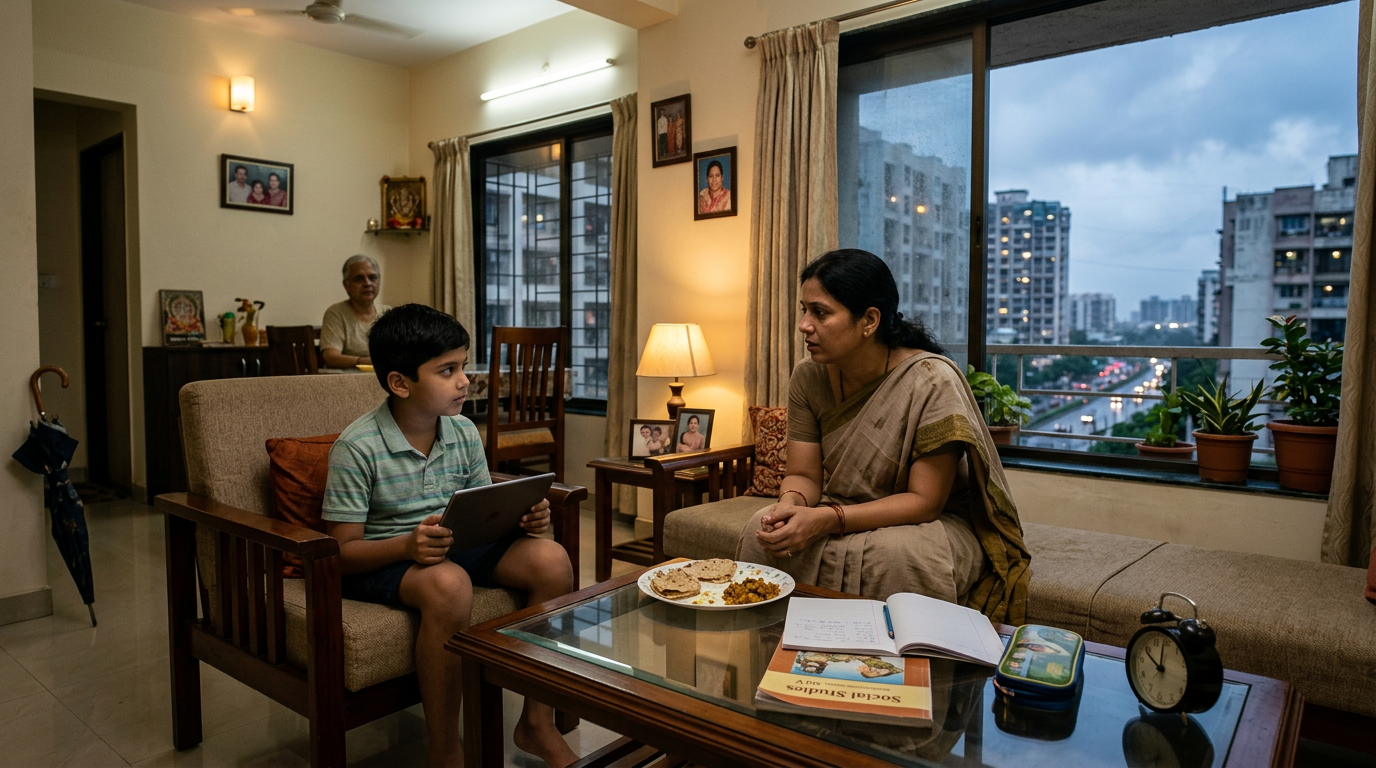
Screen Time Rules That Work for Busy Mumbai Parents
Tired of tablet battles in your Mumbai apartment? Here are realistic screen time rules that work for urban families, complete with MMR-friendly offline alternatives.
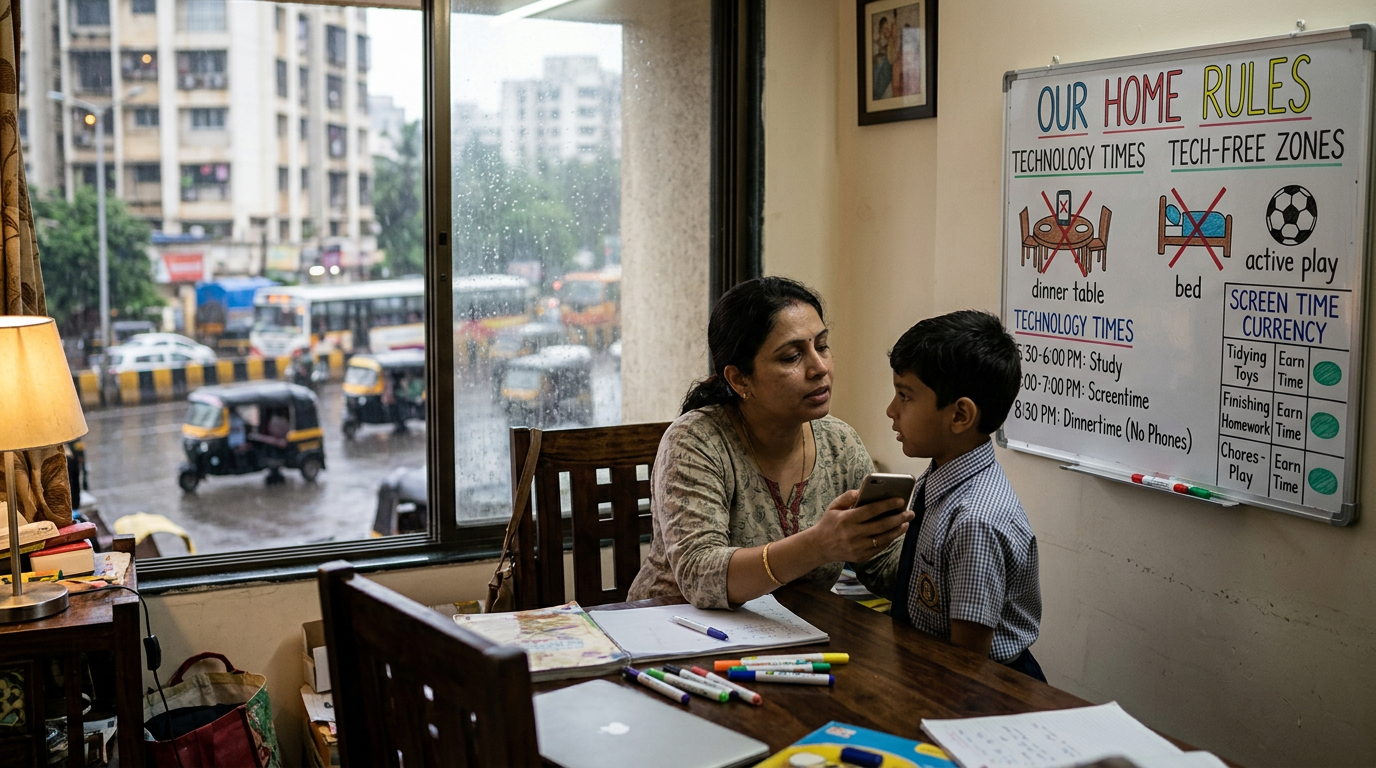
Practical Screen Time Rules for Mumbai & Navi Mumbai Parents
In a city like Mumbai, managing your child's screen time feels like a constant battle. Here are realistic screen time rules that actually work for families in the MMR, from Bandra to Belapur.

How to Raise Resilient Kids in the Heart of Mumbai
Stuck on the Harbour Line during a downpour? That's just a Tuesday. This guide explores how to raise resilient kids who can thrive amidst Mumbai's unique chaos and charm.