
Practical Screen Time Rules for Mumbai & Navi Mumbai Parents
In a city like Mumbai, managing your child's screen time feels like a constant battle. Here are realistic screen time rules that actually work for families in the MMR, from Bandra to Belapur.
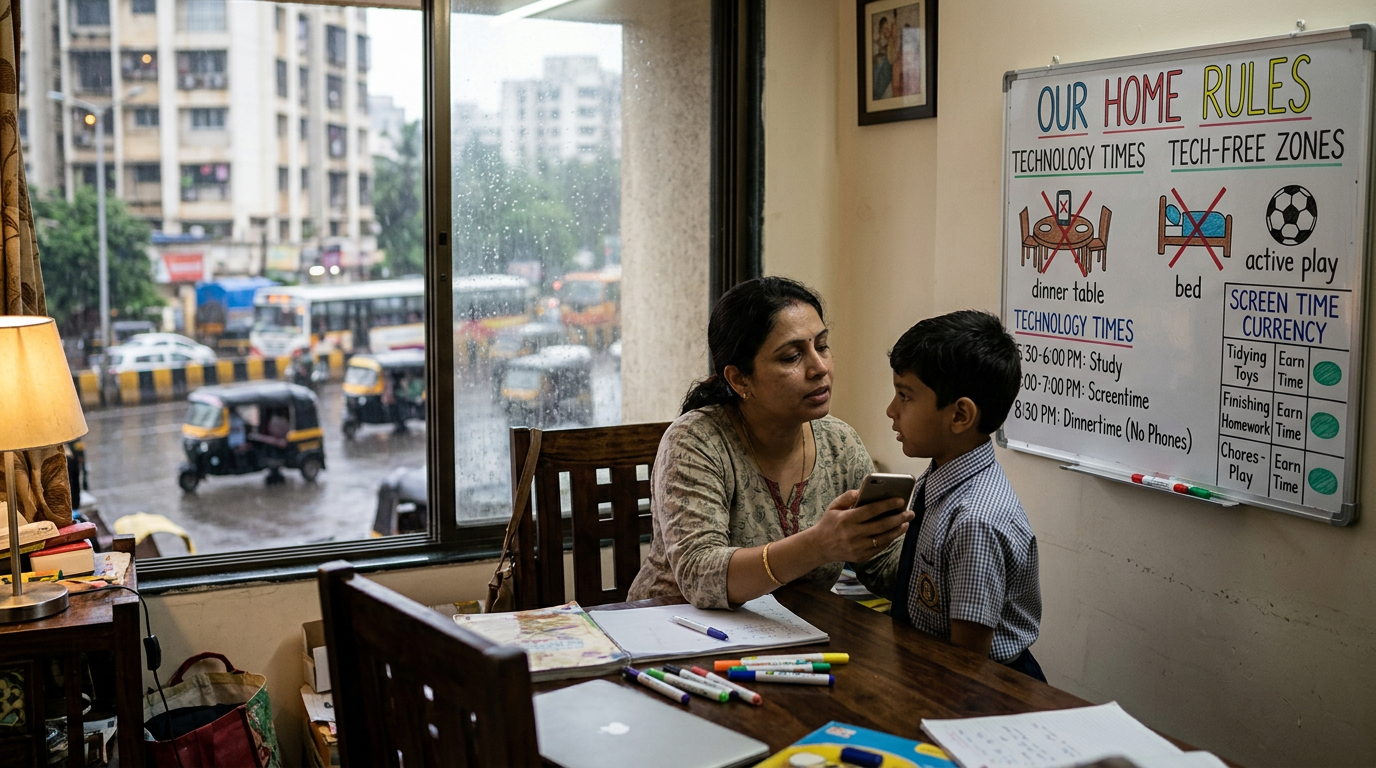
Tired of Fighting Over Tablets? Screen Time Rules That Actually Work in Mumbai
You’re stuck in traffic on the Western Express Highway, the monsoon rain is lashing against the windows, and the only thing keeping the peace in the backseat is a tablet glowing with the latest cartoon. Or perhaps you’re trying to cook dinner in your compact Powai kitchen, and the easiest way to keep your child occupied is to hand them your phone. We get it. In a city that never stops, creating and enforcing effective screen time rules can feel like an impossible task. The standard advice often feels like it was written for someone with a sprawling backyard, not a two-BHK in Borivali.
But managing screen time isn’t about total prohibition; it's about finding a balance that works for your family’s unique Mumbai life. It’s about replacing passive consumption with active engagement, both online and off. This guide is for Mumbai and Navi Mumbai parents who need practical strategies that acknowledge our space constraints, long commutes, and the vibrant, chaotic energy of our city.
Why One-Size-Fits-All Rules Don't Work in Andheri
Many parenting articles suggest a simple two-hour daily limit. This sounds great in theory, but it fails to consider the realities of life in the Mumbai Metropolitan Region (MMR). A child living in a spacious villa in Nerul's Seawoods Estate has vastly different opportunities for physical play than a child in a smaller flat in Ghatkopar. The former might have a private garden, while the latter relies on the building's society park, which may be crowded or closed during the monsoon.
Then there’s the commute. If you're travelling from Virar to your office in Bandra Kurla Complex (BKC), you might be gone for 12 hours a day. In these situations, grandparents or caregivers might rely on screens more heavily. Furthermore, many Mumbai families live in joint-family setups, where different adults have different rules, making a single, rigid policy difficult to enforce. The key isn't to adopt a generic rule from a Western parenting blog, but to build a framework that is flexible and considers your specific home environment, your work schedule, and the local opportunities available to you, whether you're in Thane or Tardeo.
The 'When' and 'Where': Creating Tech-Free Zones and Times
One of the most effective strategies is to define not just how much screen time is allowed, but when and where it can happen. This shifts the conversation from a constant negotiation over minutes to a clear, respected household structure. These zones and times become non-negotiable parts of the family routine.
Designate Tech-Free Zones
In a Mumbai home, space is a premium, but you can still carve out sacred screen-free areas. The most important one is the dining table. Even if it's a small foldable table in your Dadar apartment, making it a rule that no phones, tablets, or even a switched-on TV are present during meals encourages conversation and connection. The second critical zone is the bedroom. Keeping screens out of the bedroom improves sleep hygiene, as the blue light from devices can interfere with melatonin production. This applies to parents, too! Charge all devices overnight in the living room or kitchen.
Establish Tech-Free Times
Just as important as physical zones are temporal ones. The hour before bedtime should be screen-free, dedicated to reading a book, listening to music, or just talking. Another powerful rule is 'no screens for the first hour of the morning.' This prevents a groggy slide into YouTube and encourages a more mindful start to the day. Also consider family-specific times: no personal devices during the evening Ganpati aarti, or during your weekend family walk along Carter Road promenade or the Palm Beach Galleria in Vashi. These small, consistent boundaries create pockets of disconnected time that are vital for family bonding.
Quality Over Quantity: Not All Screen Time is Junk Food
We need to move beyond thinking of screen time as a monolithic evil. Just as there’s a nutritional difference between a vada pav and a bowl of dal khichdi, there's a world of difference between various types of digital content. An hour spent passively watching unboxing videos on YouTube is not the same as an hour spent on an interactive learning app or video-calling grandparents in another city.
Encourage your children to engage with high-quality, creative, and educational content. This could include:
- Educational Apps: Platforms like Byju's, Toppr, or even Duolingo for learning a new language offer structured, beneficial screen time.
- Creative Tools: Apps that allow kids to create digital art, compose music, or even try basic coding (like on WhiteHat Jr.) turn them from passive consumers into active creators.
- Virtual Exploration: They can take a virtual tour of the Chhatrapati Shivaji Maharaj Vastu Sangrahalaya, watch documentaries about marine life before a trip to the Taraporewala Aquarium, or use Google Earth to explore the world from your living room in Kandivali.
- Connected Play: Playing a collaborative online game with a cousin or friend can be a positive social activity, provided it's balanced and monitored.
The goal is to teach them digital discernment. Help them build a 'balanced digital diet' by asking questions like, "What did you learn from that video?" or "How did that game make you feel?" This helps them become more mindful of what they're consuming.
The 'Screen Time Currency' System: A Gamified Approach
For older children, constant monitoring can feel restrictive and lead to rebellion. A more empowering approach is to treat screen time like a currency they can earn, save, and spend. This system teaches responsibility, delayed gratification, and budgeting—valuable life skills that extend far beyond a smartphone screen.
Here’s how to set it up:
- Establish the 'Exchange Rate': Decide what activities earn screen time minutes. For example, 30 minutes of reading a physical book could earn 15 minutes of screen time. An hour of outdoor play at Shivaji Park or Central Park in Kharghar might earn 30 minutes. Completing homework without fuss could be another way to 'earn'.
- Create a 'Bank': Use a simple chart on the fridge or a shared digital note where they can track their earned and spent minutes. This visual representation makes the concept tangible.
- Let Them 'Spend' Freely (Within Reason): Once they've earned their time, allow them the autonomy to choose how to spend it—be it on gaming, watching videos, or chatting with friends. This sense of control can reduce power struggles. You still maintain veto power over inappropriate content, of course.
- Set a 'Weekly Cap': To prevent binge-watching, you can establish a maximum number of minutes that can be spent per day or week, regardless of how much they've earned. This prevents them from 'cashing in' all their time on a Saturday and spending the entire day glued to a screen.
This system reframes screen time from an entitlement to a privilege that is earned through positive, real-world behaviours. For a Mumbai kid, this could mean earning 20 minutes for helping to sort the laundry or for accompanying you to the local market in Matunga without complaining.
Log Off and Live: Rediscovering Mumbai's Offline Charms
The most powerful tool against excessive screen time isn't an app blocker; it's a compelling alternative. Mumbai and its surroundings are bursting with activities that can easily outshine a tablet screen. Your mission is to make these offline experiences accessible and exciting.
"Children learn from what they see. If they see their parents finding joy, connection, and relaxation in activities away from a screen, they are infinitely more likely to do the same. Your example is the most powerful rule you can set."
Instead of another hour of cartoons, suggest an impromptu trip to Juhu Beach to watch the sunset. Replace a lazy Sunday morning of gaming with a ferry ride to Elephanta Caves or a walk through the lush greenery of the Sanjay Gandhi National Park. For Navi Mumbai residents, a cycle ride around the Belapur Fort area or a visit to the Wonders Park in Nerul can be a fantastic screen-free outing. Check out our guide to [INTERNAL_LINK: best-play-areas-mumbai] for more ideas.
Think smaller, too. It doesn't always have to be a grand expedition. It can be:
- A board game marathon on a rainy afternoon.
- Trying a new recipe together.
- Visiting the local library or a bookstore like Kitab Khana in Fort.
- Enrolling them in a local class—be it dance at Shiamak Davar's institute, cricket coaching at a nearby gymkhana, or a pottery workshop in Bandra.
- Simply sitting on the balcony, watching the world go by, and talking.
These activities build memories and skills that last a lifetime, long after the appeal of the latest mobile game has faded. Explore more options in our [INTERNAL_LINK: weekend-getaways-from-mumbai] guide.
Lead by Example: Your Digital Habits Are Their Blueprint
This is often the hardest rule to follow. We can set all the limits we want for our children, but if they see us constantly scrolling through Instagram, checking work emails from our BKC office at the dinner table, or watching Netflix on the local train all the way to Thane, our words lose their power. Children are expert mimics; they absorb our habits and attitudes towards technology.
Make a conscious effort to model the behaviour you want to see. When you're with your kids, be present. Put your phone away during conversations. Announce that you're putting your phone on silent for an hour to read a book or focus on a hobby. Talk about your own struggles with digital distraction and how you manage them. This vulnerability makes you a relatable ally rather than a dictatorial enforcer.
If you work from home, a common scenario in many Navi Mumbai and Thane households now, create clear boundaries. Have a dedicated workspace and work hours. When you log off, truly log off. Avoid the temptation to check just one more email. Your child's perception of 'normal' screen use is being shaped by your actions every single day. By demonstrating a healthy, balanced relationship with technology, you're giving them a powerful, lifelong lesson.
Navigating Social and School Pressures
"But all my friends from school are on this game!" "The entire class coordinates on a WhatsApp group!" These are familiar refrains in any household with a school-aged child, from the top international schools in South Mumbai to the local schools in Chembur. Peer pressure is a significant factor, and a complete ban on certain apps can lead to social isolation.
This is where communication and compromise come in. Talk to your children about why they want to be on a particular platform. Is it for genuine connection, or is it driven by FOMO (Fear Of Missing Out)? Have open conversations about online safety, digital footprints, and the curated, often unrealistic, nature of social media feeds.
For school-related apps like WhatsApp, you can set clear boundaries:
- The phone/device is kept in a common area, not the bedroom.
- Notifications for non-essential groups are turned off.
- A strict cut-off time (e.g., 9 PM) is enforced for all school-related chats.
This acknowledges the necessity of these tools for modern school life while preventing them from taking over your child's evening and sleep. It's about teaching them to use technology as a tool, not to be used by it. For more advice, see our [INTERNAL_LINK: parenting-tips-mumbai] section.
Finding Your Family's Digital Rhythm
Ultimately, there is no magic number of hours or one perfect set of screen time rules that will work for every family in the MMR. The goal isn't to win a daily battle over minutes, but to cultivate a family culture where technology serves you, not the other way around. It's a continuous conversation, a process of trial and error, and a commitment to staying connected in the real world.
By being intentional, setting clear boundaries, offering compelling alternatives, and—most importantly—modeling a healthy digital life yourself, you can raise children who are not just tech-savvy, but tech-wise. You can find a rhythm that works for your family, whether you're navigating the bustling streets of Bandra or the planned avenues of Kharghar.
What screen time rules have you found effective for your family in Mumbai or Navi Mumbai? Share your successes and challenges in the comments below!
Keep reading
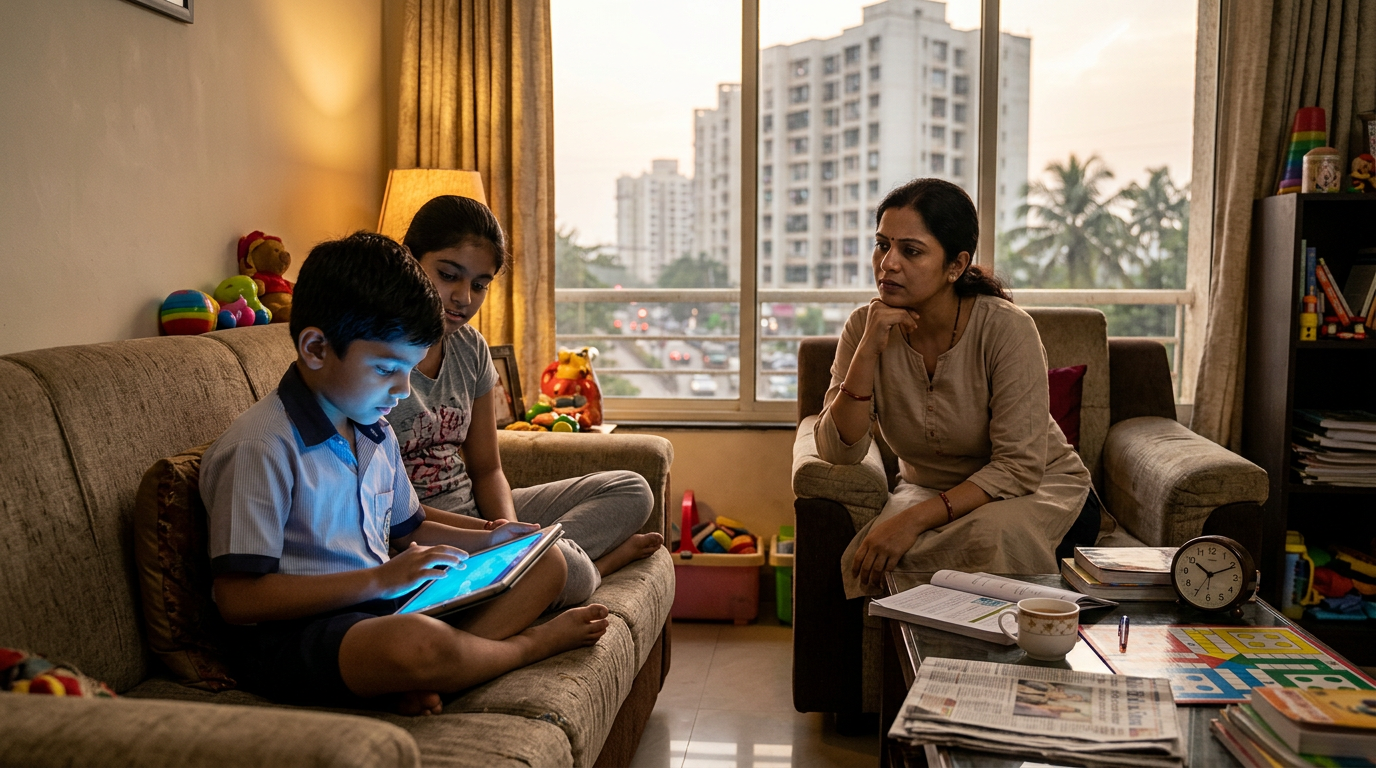
Screen Time Rules That Work for Mumbai & Navi Mumbai Kids
From Bandra to Belapur, Mumbai parents are asking how to manage tablets and phones. Here are screen time rules that actually work for our city's unique challenges.

How to Raise Resilient Kids in the Heart of Mumbai
Stuck on the Harbour Line during a downpour? That's just a Tuesday. This guide explores how to raise resilient kids who can thrive amidst Mumbai's unique chaos and charm.
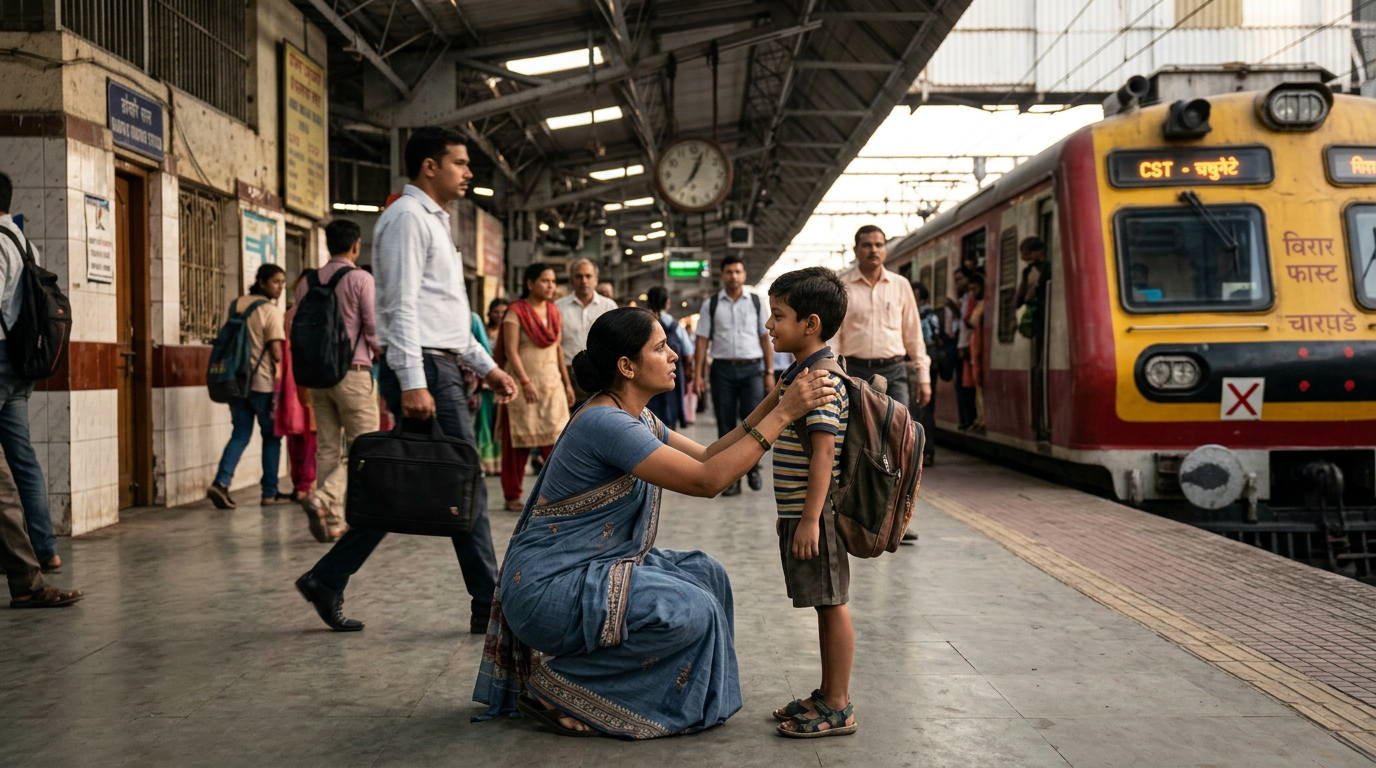
Raising Resilient Kids: A Mumbai Parent's Survival Guide
From packed local trains to intense school rivalries, Mumbai is a tough city. Here’s a practical, local’s guide on how to raise resilient kids who can thrive in the Maximum City.