
How to Raise Resilient Kids in the Heart of Mumbai
Stuck on the Harbour Line during a downpour? That's just a Tuesday. This guide explores how to raise resilient kids who can thrive amidst Mumbai's unique chaos and charm.
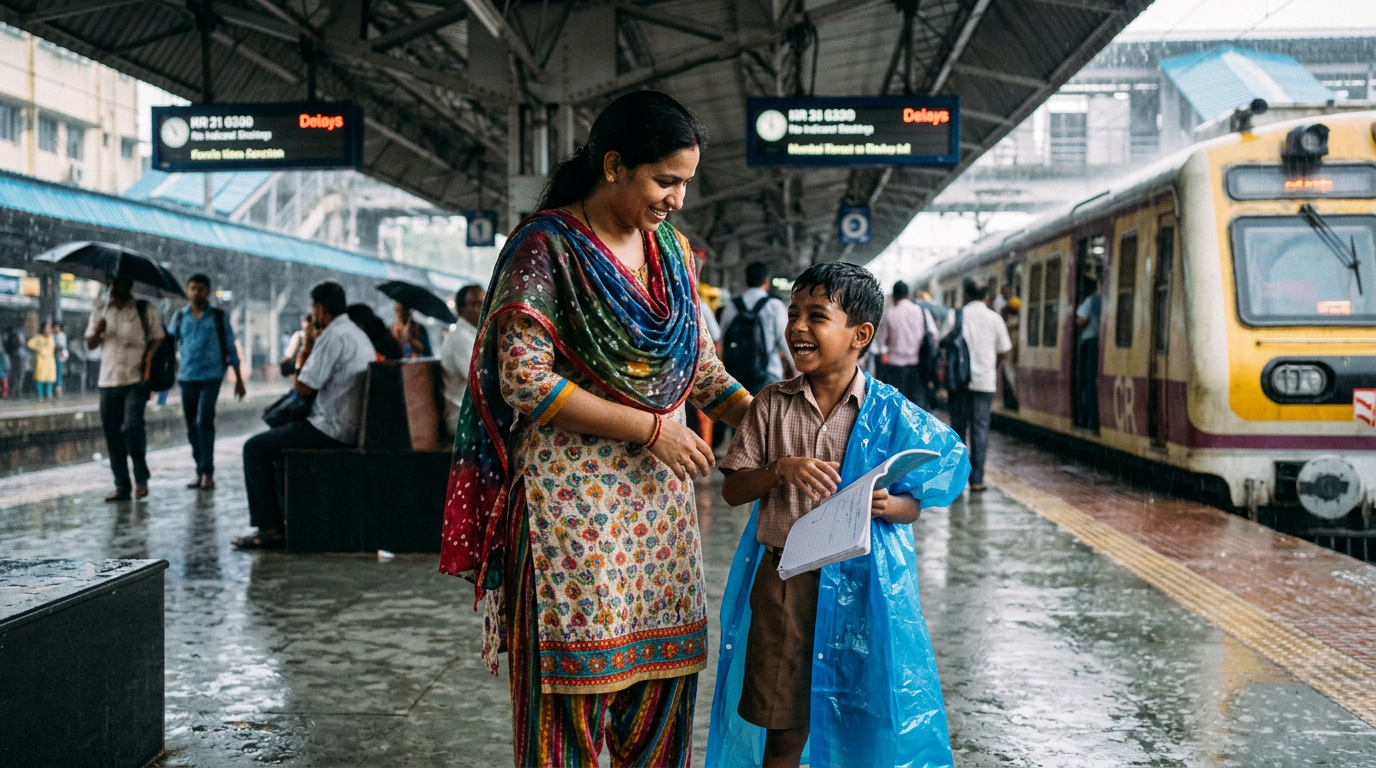
Watching the rain lash down on the platform at Kurla station, you get the dreaded notification: ‘Trains on Central Line delayed by 20 minutes’. As adults, we sigh, check for alternate routes, and mentally adjust. But for our children, these daily Mumbai moments—from a missed school bus in Thane to a sudden water cut in your Andheri society—are powerful, unplanned lessons. The real question for parents across the Mumbai Metropolitan Region is not just how to get through these challenges, but how to raise resilient kids who can navigate them with grace and grit. Resilience isn’t an abstract trait; in this city, it’s a vital life skill, as essential as knowing which local to catch.
Embrace the 'Jugaad' Mindset: Fostering Problem-Solving Skills
The spirit of Mumbai is intrinsically tied to jugaad – that uniquely Indian knack for finding ingenious, low-cost solutions to any problem. Instead of shielding our children from every inconvenience, we can teach them to embrace this mindset. When you’re stuck in traffic on the Western Express Highway and late for a birthday party in Bandra, don't just fume. Involve your child in the solution. “Okay, the map shows a 30-minute jam. Should we try the service road, or call and say we'll be late?” This small shift transforms them from passive passengers into active problem-solvers. This doesn't mean putting adult burdens on them, but rather giving them a stake in navigating small-scale, everyday hurdles.
Over-scheduling is the enemy of this creative thinking. A calendar packed with back-to-back classes in Powai or Vashi leaves no room for boredom, and boredom is the incubator of ingenuity. Let your child have unstructured time in their room. Let them figure out what to do when their favourite toy breaks instead of immediately ordering a replacement online. Can it be fixed with tape? Can its parts be used to build something new? These are the micro-lessons that build a problem-solving muscle, teaching them that resourcefulness, not just resources, is the key to overcoming obstacles. By allowing them to tinker, fail, and figure things out on their own, you’re handing them a mental toolkit that will serve them far beyond the four walls of their home.
The Art of the 'No': Setting Boundaries in a City of Excess
From the gleaming storefronts of Palladium in Lower Parel to the endless scroll of food delivery apps offering every cuisine imaginable, Mumbai is a city of overwhelming choice and instant gratification. Teaching children resilience means teaching them the power of delayed gratification. It’s the ability to say ‘no’ not just to others, but to their own immediate impulses. This is a foundational skill for emotional regulation and long-term success. Instead of giving in to every request for a new toy at Crossword or a treat from a fancy patisserie in Colaba, create opportunities for them to earn it or wait for it. Explain the concept of saving their pocket money (that ₹200 a week) for a larger goal, whether it’s a graphic novel or a trip to the trampoline park in Ghatkopar.
This principle extends beyond material possessions. Setting firm boundaries around screen time is particularly challenging but crucial. It’s easy to hand over a tablet during a long drive to a relative’s place in Dombivli, but resisting that easy fix teaches children to manage their own boredom and engage with the world around them. When you say, “No more screen time for today,” and hold that line despite the whining, you’re not being mean. You are teaching them that limits are a healthy and necessary part of life. Model this yourself. Have device-free dinners where the family connects, discussing their day without the constant pinging of notifications. This consistency shows them that self-control and boundaries are values your family lives by, not just rules you impose on them.
Navigating Social Currents: From the Building Compound to the Classroom
The social landscape of a Mumbai child is incredibly complex. It can range from playing cricket with children from diverse backgrounds in the building compound in Belapur to navigating the cliquey corridors of a South Mumbai school. These interactions are fertile ground for building social resilience. Instead of trying to solve every social squabble for them, equip them with the tools to handle it themselves. This starts with empathy. Encourage them to see situations from another's perspective. “Why do you think Rohan was upset when you didn't pass him the ball? Maybe he felt left out.”
Building Social Toolkits
Role-playing is an incredibly effective technique. Practice how to politely decline a peer's invitation, how to stand up for a friend who is being teased, or how to apologise when they've made a mistake. Give them the language to express their feelings clearly and respectfully. Rather than, “He’s being mean,” encourage, “I feel hurt when he says that.” This empowers them to manage conflict constructively. Discuss the social dynamics they observe. Talk about inclusivity and the importance of being kind to the new child in class who just moved from another city. By openly discussing these social challenges, you demystify them and give your child the confidence to handle the intricate social web of school, hobby classes, and their own neighbourhood with greater assurance and kindness.
Failure Is Not a Missed 9:47 Virar Fast; It's Just a Stepping Stone
Every Mumbaikar knows the feeling of sprinting down the platform only to watch the 9:47 Virar fast pull away without them. Is it frustrating? Yes. Is it the end of the world? No. The 9:52 slow is right behind it. This is perhaps the most critical lesson in resilience: teaching our kids that failure is not a final destination but a temporary detour. In a city hyper-focused on achievement—getting into the ‘best’ school, the top-tier coaching class in Andheri, or scoring above 95%—the fear of failure can be paralyzing for children.
We need to consciously reframe failure. When your child comes home disappointed with their exam marks, resist the urge to immediately focus on the score. Instead, start with empathy: “You must be feeling really disappointed. I know you studied hard for this.” Then, shift the focus to effort and strategy: “Let’s look at the paper together. What parts were tricky? What could we try differently next time?” This approach separates their self-worth from their academic performance. It teaches them that the valuable part was the effort they put in, and the outcome is simply data for the next attempt. As noted by child development experts:
“Children who are praised for their effort rather than their innate ability are more likely to embrace challenges and persist through setbacks. They see failure as an opportunity to learn and grow, not as a reflection of their intelligence or worth.”Sharing your own ‘missed trains’—mistakes you’ve made at work, projects that didn't go as planned—normalizes setbacks and models a healthy response to them. It shows them that everyone stumbles, but resilient people get back up and wait for the next train.
Building a Support System: Your Mumbai 'Family'
In a transient city where many of us live far from our ancestral homes and extended families, the concept of a support system takes on a new meaning. It’s the neighbour who keeps an eye on your child when you’re running late from work, the parents in the school WhatsApp group who share notes, and the close friends who have become our chosen family. Teaching children to build and lean on this network is a cornerstone of resilience. They need to know that their world is filled with people who care about them, not just their parents.
Encourage them to nurture these connections. Simple things like sharing a snack with a friend in the school bus, helping a neighbour carry their groceries, or participating in the building’s Ganpati festival committee can foster a sense of community and belonging. Crucially, teach them how to ask for help. Normalize saying, “I’m struggling with this math problem, can you help me?” to a friend, or “I’m feeling sad today,” to a trusted teacher or a friend’s parent. This skill counters the dangerous belief that they must handle everything alone. By fostering these relationships, you’re weaving a safety net that will catch them when they fall, reminding them that in the vastness of Mumbai, they are never truly on their own.
Unplug and Recharge: Finding Calm in the City That Never Sleeps
Living in Mumbai is a constant sensory experience—the non-stop traffic, the cacophony of horns, the sheer density of people. While this energy is exhilarating, it can also be draining, especially for children. A key part of resilience is learning how to self-regulate and find moments of peace amidst the chaos. It’s our job to introduce them to the city’s many reset buttons, proving that you don’t need to leave Mumbai to find tranquility.
- Connect with Nature: Make regular trips to the city's green lungs. A weekend trek through the lush trails of Sanjay Gandhi National Park in Borivali or the Yeoor Hills in Thane can work wonders. A simple evening stroll along the Marine Drive promenade, the Worli Sea Face, or Nerul’s Jewel of Navi Mumbai can be a meditative experience. Even watching the flamingos at the Sewri mudflats is a powerful reminder of the nature that coexists with our concrete jungle.
- Engage in Mindful Activities: It doesn't have to be formal meditation. It could be a quiet hour spent at the David Sassoon Library, drawing at a table overlooking the Powai lake, or simply lying on the grass at Horniman Circle Gardens. The goal is to engage in an activity that requires focus and quiet, allowing their minds to decompress from the day's stimulation.
- Unstructured Play: Protect time for simple, unstructured play. Let them run around a local park in Matunga or fly a kite at a ground in Kharghar. This is how children process their experiences and release pent-up energy and stress.
The Resilience of Routine: Anchors in a Chaotic City
While spontaneity has its charms, the bedrock of a child's sense of security is routine. In a city where life is often unpredictable—a sudden downpour flooding the roads, a surprise BMC work project causing a diversion—predictable routines at home act as powerful anchors. They create a stable foundation from which children can confidently face the external world's uncertainties. This doesn't mean a rigid, military-style schedule. It's about creating small, consistent rituals that punctuate the day with a sense of calm and order.
These anchors can be simple:
- A family dinner where everyone shares one good and one challenging thing about their day.
- A consistent bedtime routine that includes 20 minutes of reading together.
- A weekend ritual, like making poha for breakfast on Saturdays or getting fresh idlis from the local Udupi joint on Sundays.
- A designated homework time in a quiet corner of the house.
Final Thoughts: Raising a Mumbaikar, Through and Through
Raising resilient kids in Mumbai isn't about bubble-wrapping them from the city's sharp edges. On the contrary, it’s about using the city itself as a training ground. It’s about teaching them to find the opportunity in the obstacle, to solve problems with a 'jugaad' spirit, to handle failure like a missed local, and to find their community in a city of millions. It’s about showing them how to find pockets of peace at Carter Road and how to lean on the anchor of routine when a cyclone warning is issued. By doing this, we don’t just raise children who survive Mumbai; we raise resourceful, adaptable, and empathetic Mumbaikars who are poised to thrive, not in spite of their city, but because of it. What are your go-to strategies for building resilience in your children? Share your Mumbai-specific tips and experiences in the comments below!
Keep reading
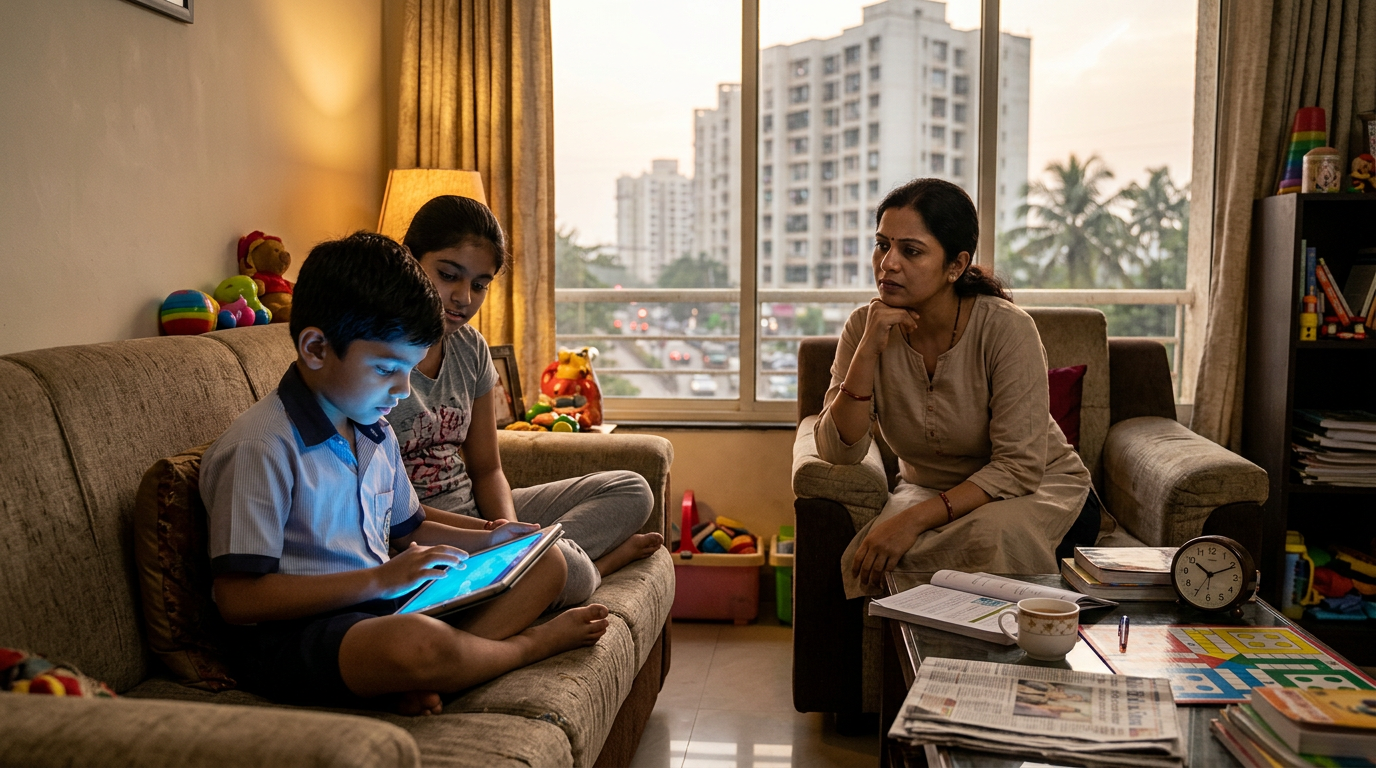
Screen Time Rules That Work for Mumbai & Navi Mumbai Kids
From Bandra to Belapur, Mumbai parents are asking how to manage tablets and phones. Here are screen time rules that actually work for our city's unique challenges.
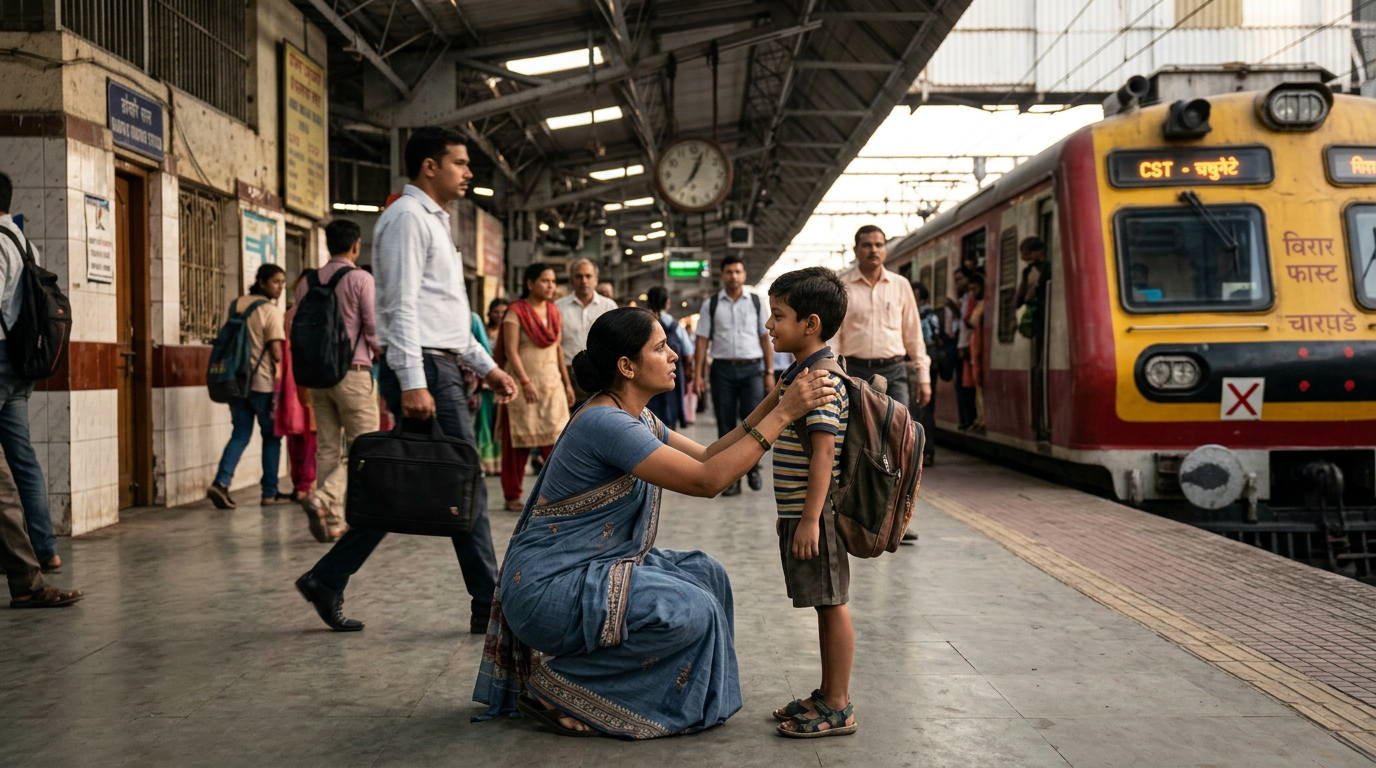
Raising Resilient Kids: A Mumbai Parent's Survival Guide
From packed local trains to intense school rivalries, Mumbai is a tough city. Here’s a practical, local’s guide on how to raise resilient kids who can thrive in the Maximum City.
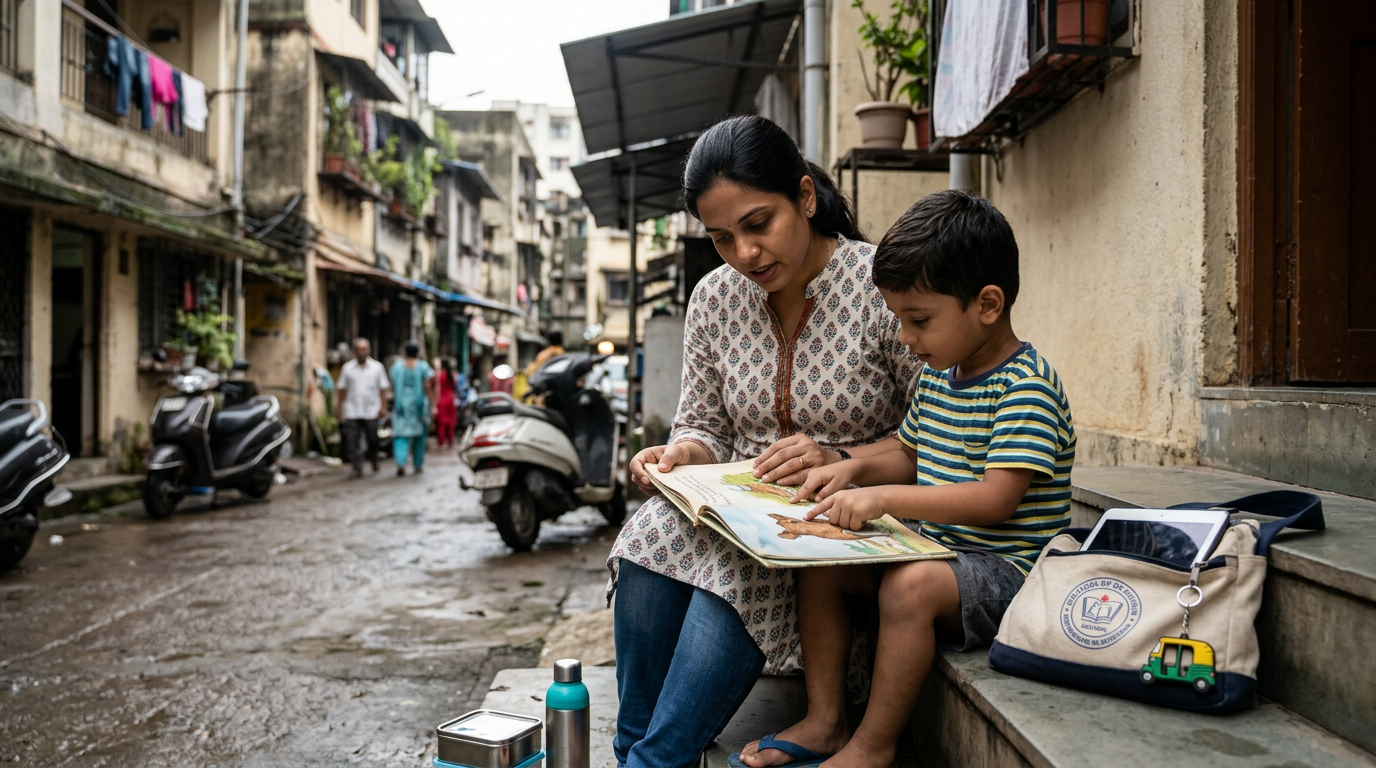
Sensible Screen Time Rules for Mumbai Kids That Actually Work
From tiny apartments in Borivali to monsoon days in Thane, managing screen time in Mumbai is tough. Here are practical screen time rules that work for local families.