
7 Beginner Investing Mistakes to Avoid in Mumbai and Navi Mumbai
Living in Mumbai or Navi Mumbai comes with steep costs and big ambitions. Avoid these critical beginner investing mistakes to protect your capital and grow lasting wealth.
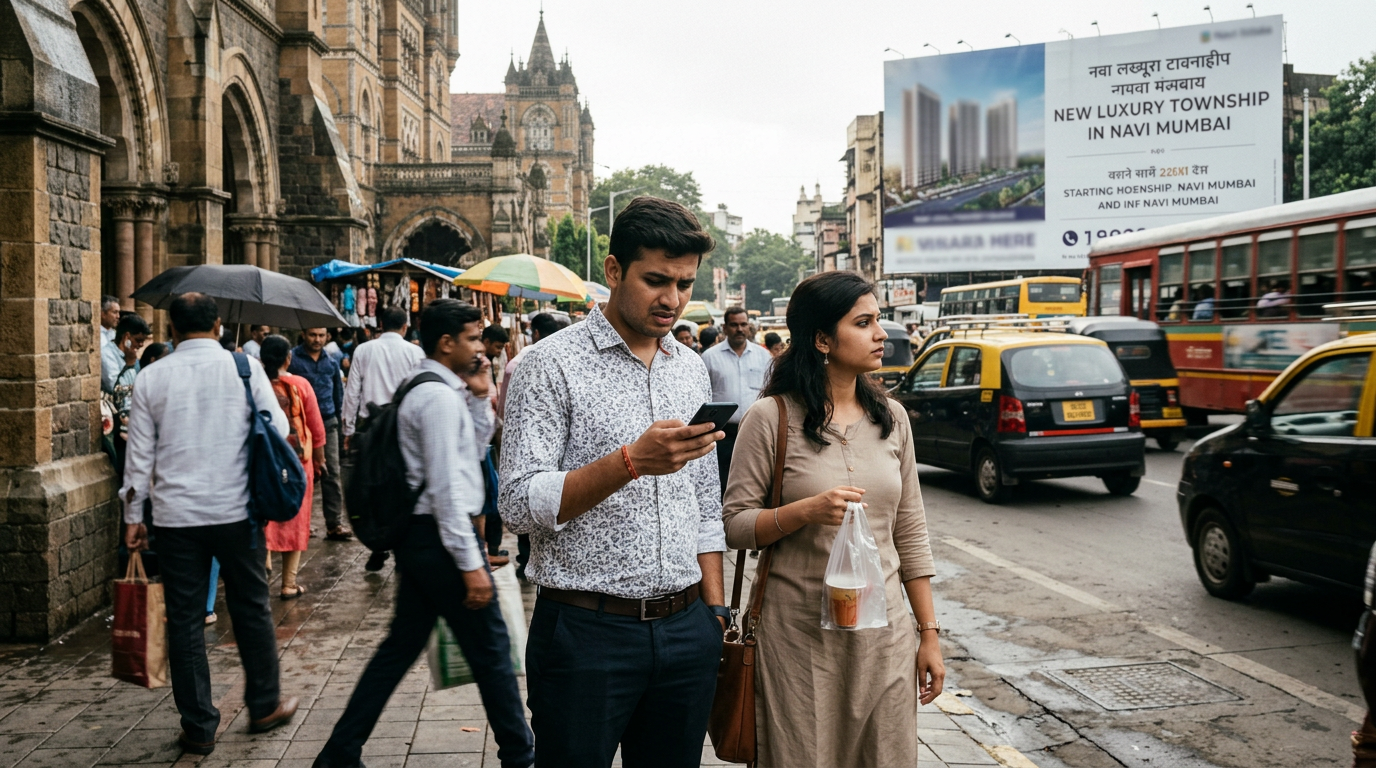
Walk through the bustling concourse of Chhatrapati Shivaji Maharaj Terminus during peak morning hours, or listen to conversations over cutting chai outside an IT park in Airoli, and you will hear one common topic: money. The Mumbai Metropolitan Region (MMR) runs on raw ambition. Whether you are earning your first corporate salary in Bandra-Kurla Complex (BKC) or managing a growing business in Vashi, the urge to grow your wealth quickly is intense. However, enthusiasm without strategy is a recipe for disaster. Identifying the classic beginner investing mistakes to avoid will save you years of financial setbacks in one of the country's most expensive urban hubs.
Many new investors in Mumbai dive headfirst into the markets during bull runs, influenced by social media influencers or watercooler chatter about overnight windfalls. They treat wealth creation like a sprint on the Western Express Highway instead of a disciplined marathon. By understanding the common pitfalls upfront, you can construct a resilient portfolio tailored to surviving and thriving amidst the economic realities of the MMR.
1. Chasing Hot Dalal Street Tips and Social Media Gurus
Dalal Street is part of Mumbai's cultural identity. From the legendary trading stories around Fort to modern FinTech meetups in Powai, market talk permeates the city. Unfortunately, one of the most destructive beginner investing mistakes to avoid is buying stocks based on unsolicited tips from WhatsApp groups, Telegram channels, or viral video reels.
When novice investors see a screenshot showing 300% returns on a penny stock or an obscure mid-cap, FOMO (fear of missing out) kicks in. They commit substantial capital without understanding the underlying business fundamentals, debt ratios, or management integrity. By the time a "hot tip" trickles down to retail investors commuting on the Harbour Line, institutional funds and early insiders are already preparing their exit strategies.
The Reality of Pump-and-Dump Schemes
Operators frequently target retail traders by inflating low-liquidity scrips before dumping them at market peaks. As a rule of thumb, if an investment idea promises guaranteed, market-beating returns within weeks, it is not an investment; it is an orchestrated trap. Sustainable wealth in Indian equities comes from compounding over market cycles, not hunting for the next speculative rocket.
- Verify before you commit: Study annual reports on the BSE and NSE portals before deploying capital.
- Ignore cold messages: Block SMS alerts and social messaging channels offering guaranteed stock picks.
- Focus on earnings quality: Look for businesses with consistent ROCE (Return on Capital Employed) and sustainable operating cash flows.
2. Overleveraging in the High-Risk Derivatives Market
The Securities and Exchange Board of India (SEBI) has repeatedly published startling data showing that roughly 9 out of 10 individual retail traders in the Futures and Options (F&O) segment incur net losses. Despite these warnings, young professionals across Thane, Andheri, and Belapur continue to treat equity derivatives like lottery tickets.
Using high leverage makes option buying look deceptively affordable. An out-of-the-money call option might cost only ₹500, tempting a beginner to buy hundreds of contracts on weekly expiry days. What many fail to understand is that options lose value every single hour due to time decay (theta). When the index moves sideways, that option premium shrinks to zero, wiping out the entire principal.
"Leverage is like driving a sports car without brakes down the Mumbai-Pune Expressway. It feels exhilarating while you are moving fast, but any unexpected bump will result in total capital destruction."
If you are in the foundational phase of your investment career, your primary goal is capital preservation. Stay away from intraday leverage and speculative derivatives trading until you have mastered fundamental analysis, risk management, and cash market mechanics.
3. Over-Committing to Illiquid Real Estate Too Early
The cultural obsession with property ownership in the Mumbai Metropolitan Region is legendary. Older generations often push young earners to book an under-construction 1BHK or 2BHK in developing pockets like Ulwe, Karanjade, Dronagiri, or extended Thane as soon as they secure their first pay raise. While real estate can form a legitimate part of a balanced portfolio, diving into high-ticket property purchases prematurely is a massive financial burden.
A heavy home loan EMI severely constrains your cash flow. If you earn ₹1,20,000 per month living in a rented flat in Malad and commit ₹65,000 toward an EMI for a distant apartment in outer Panvel, your flexibility vanishes overnight. You no longer have sufficient discretionary income to invest in [INTERNAL_LINK: equity mutual funds], build an emergency reserve, or pursue career upgrades.
The True Cost of Early Property Acquisitions
- Stagnant Rental Yields: Residential properties in the MMR typically yield between 2% and 3.5% annually, which rarely covers mortgage interest rates hovering around 8.5% to 9%.
- Project Delay Risks: Under-construction properties carry regulatory and execution risks, potentially leaving you paying both rent and pre-EMIs simultaneously for years.
- Complete Illiquidity: You cannot sell a bedroom when you need emergency liquidity. Selling a property in Mumbai requires months of marketing, paperwork, and capital gains planning.
4. Skipping an Emergency Cushion Tailored to Mumbai's Living Costs
Living in Mumbai or Navi Mumbai is notoriously expensive. Between high security deposits, market rents in neighbourhoods like Bandra, Khar, or Seawoods, auto-rickshaw meters, and surging lifestyle costs, monthly burn rates can escalate rapidly. One of the quietest yet most dangerous beginner investing mistakes to avoid is throwing every spare rupee into volatile markets while keeping zero liquid cash in reserve.
Imagine investing your entire savings into mid-cap equities, only for an unexpected medical bill or sudden job transition to occur while the Nifty is undergoing a 15% correction. Without an emergency fund, you will be forced to redeem your equities at a steep loss, locking in permanent capital damage.
Before allocating money toward equity mutual funds or sovereign gold bonds, construct a liquid emergency fund covering at least six to nine months of non-negotiable living expenses. This fund should cover:
- Your monthly rent and society maintenance charges.
- Utility bills, Wi-Fi, and groceries.
- Existing loan EMIs (education, vehicle, or personal loans).
- Insurance premiums and basic family healthcare outlays.
Park this money in a mix of high-yield savings accounts, conservative sweep-in fixed deposits, and liquid debt mutual funds. This cash is not meant to beat inflation; it is meant to provide sleep-at-night security so your equity portfolio can compound uninterrupted.
5. Relying Exclusively on Traditional Fixed Deposits and Gold
While some beginners chase excessive risk in penny stocks, others commit the opposite error: hyper-conservatism. Influenced by parents who grew up in an era of double-digit interest rates, many young professionals in Ghatkopar, Dadar, and Borivali park nearly all their savings in bank fixed deposits and physical gold jewellery from Zaveri Bazaar.
While fixed deposits offer capital safety, their post-tax returns regularly fail to beat the real rate of inflation. If a five-year bank FD offers 7% interest and you fall into the 30% tax bracket, your post-tax yield drops to approximately 4.9%. If real urban inflation across food, healthcare, and schooling in Mumbai runs at 6.5% to 7.5%, your purchasing power is actually shrinking year after year.
Similarly, buying physical gold jewellery incurs substantial making charges (ranging from 10% to 25%) and GST, eating into returns before the asset even appreciates. While gold serves as an effective hedge against currency debasement, it should generally be held through digital mechanisms like Sovereign Gold Bonds (SGBs) or Gold ETFs, capped at 5% to 10% of your total net worth. You must combine defensive assets with productive assets like equities to outpace Mumbai's escalating cost of living.
6. Trying to Time the Market Instead of Staying Consistent
"The market is at an all-time high; I will wait for a correction before starting my Systematic Investment Plan (SIP)." Financial planners in Nariman Point hear this sentence every single week. Attempting to time the market is a classic beginner investing mistake to avoid.
Stock indices like the Nifty 50 and Sensex spend long periods consolidating before staging massive runs in relatively short windows. If you sit on the sidelines waiting for the perfect market bottom, you invariably miss the sharpest upside rallies. Trying to forecast macroeconomic shifts, global central bank interest rate decisions, and geopolitical events is practically impossible for an individual investor.
The Power of Rupee Cost Averaging
Setting up an automated SIP on the 5th or 10th of every month ensures you buy units regardless of market headlines. When prices drop, your fixed monthly allocation buys more mutual fund units; when prices rise, your accumulated units grow in value. Over five- to ten-year horizons, rupee cost averaging removes emotion from investing and consistently outperforms erratic attempts at market timing.
If you are ready to construct a streamlined SIP framework, review our comprehensive breakdown on [INTERNAL_LINK: building a balanced mutual fund portfolio] to choose index funds and flexi-cap schemes that align with your horizon.
7. Neglecting Basic Insurance Coverage Before Investing
Investing without adequate insurance protection is like constructing a high-rise in coastal Worli without deep foundation piling. A single severe medical emergency at a private hospital in Mumbai can drain ₹10 lakh to ₹15 lakh in a matter of days, completely derailing your investment targets.
Many beginners mistake corporate group health cover provided by their employers for sufficient protection. If you switch jobs, launch a startup, or face corporate restructuring, you could easily find yourself without active coverage. Furthermore, standard corporate policies frequently feature room rent caps, co-pay clauses, and limited coverage amounts that fall short during serious illnesses.
Two Pillars of Defensive Personal Finance
- Comprehensive Health Insurance: Secure an individual or family floater health plan of at least ₹15 lakh to ₹25 lakh with no room-rent capping, paired with a super top-up policy to handle major catastrophic events.
- Pure Term Life Insurance: If you have financial dependents (aging parents in Dombivli, a spouse, or children), purchase a pure term life insurance policy offering coverage equal to 10 to 15 times your annual gross income. Avoid investment-cum-insurance hybrids (ULIPs and endowment plans), which typically deliver poor insurance coverage combined with sub-par investment returns.
Once your safety net is locked down through term and health insurance, every rupee you allocate to the market can remain invested for the long term without being diverted to settle medical bills.
8. Falling Victim to Lifestyle Creep and Poor Expense Tracking
Mumbai has a way of absorbing whatever income you earn. An incremental promotion at your office in Lower Parel often leads to moving into a pricier building, dining at high-end cafes in Bandra West, or upgrading your vehicle before paying off outstanding balances. This phenomenon—lifestyle creep—prevents thousands of ambitious professionals from achieving financial independence despite rising incomes.
Building wealth is not merely a function of what you earn; it is determined by the gap between what you earn and what you spend, and how consistently you invest that difference. If your salary doubles over five years but your savings rate stays locked at zero, you are financially stagnant, regardless of the brand on your car or the pin code of your apartment.
How to Reverse the Dynamic
Apply the classic "pay yourself first" model. The day your salary hits your account, route your predetermined investment amount immediately into your SIPs, recurring deposits, or PPF before allocating funds to discretionary entertainment, weekend getaways to Alibaug or Lonavala, and shopping. Treat your investments as non-negotiable monthly expenses.
Beginners who conquer lifestyle creep early build significant financial runway within a decade, granting them career flexibility, entrepreneurial freedom, and lasting peace of mind.
Build a Resilient Financial Future in the MMR
Navigating the complex financial terrain of Mumbai and Navi Mumbai requires discipline, emotional control, and clarity of purpose. By bypassing high-risk speculative trading, steering clear of unsolicited stock tips, resisting the rush to buy illiquid suburban real estate prematurely, and securing strong emergency reserves, you put the odds of long-term success firmly in your favour.
Wealth creation is not about striking gold overnight on Dalal Street; it is about building sensible habits, controlling expenses in an expensive metropolitan environment, and letting compounding work uninterrupted over decades. Take control of your balance sheet today: audit your current monthly spending, set up an emergency fund, cancel unverified stock trading subscriptions, and initiate systematic investments in well-diversified assets. The financial choices you make this month will define your security and lifestyle across the MMR for years to come.
Keep reading

How to Save Money on Groceries: A Realistic Mumbai and Navi Mumbai Guide
Tired of soaring monthly ration bills in MMR? Here is an insider guide to cutting your food expenses across Mumbai, Thane, and Navi Mumbai without sacrificing quality.

Best High Yield Savings Accounts in Mumbai (2024 Guide)
In a city as expensive as Mumbai, your savings need to work harder. Discover the best high-yield savings accounts that offer up to 7.5% interest, far outpacing traditional banks.
7 Beginner Investing Mistakes Every Mumbaiite Must Avoid
New to investing in Mumbai? This guide breaks down the critical beginner investing mistakes to avoid, from FOMO on hot stocks to underestimating real estate in Thane or Panvel.