
Smart Home Devices Worth Buying for Mumbai and Navi Mumbai Apartments
Tackle coastal humidity, stubborn construction dust, and high power bills with our curated guide to smart home devices genuinely worth buying for Mumbai apartments.
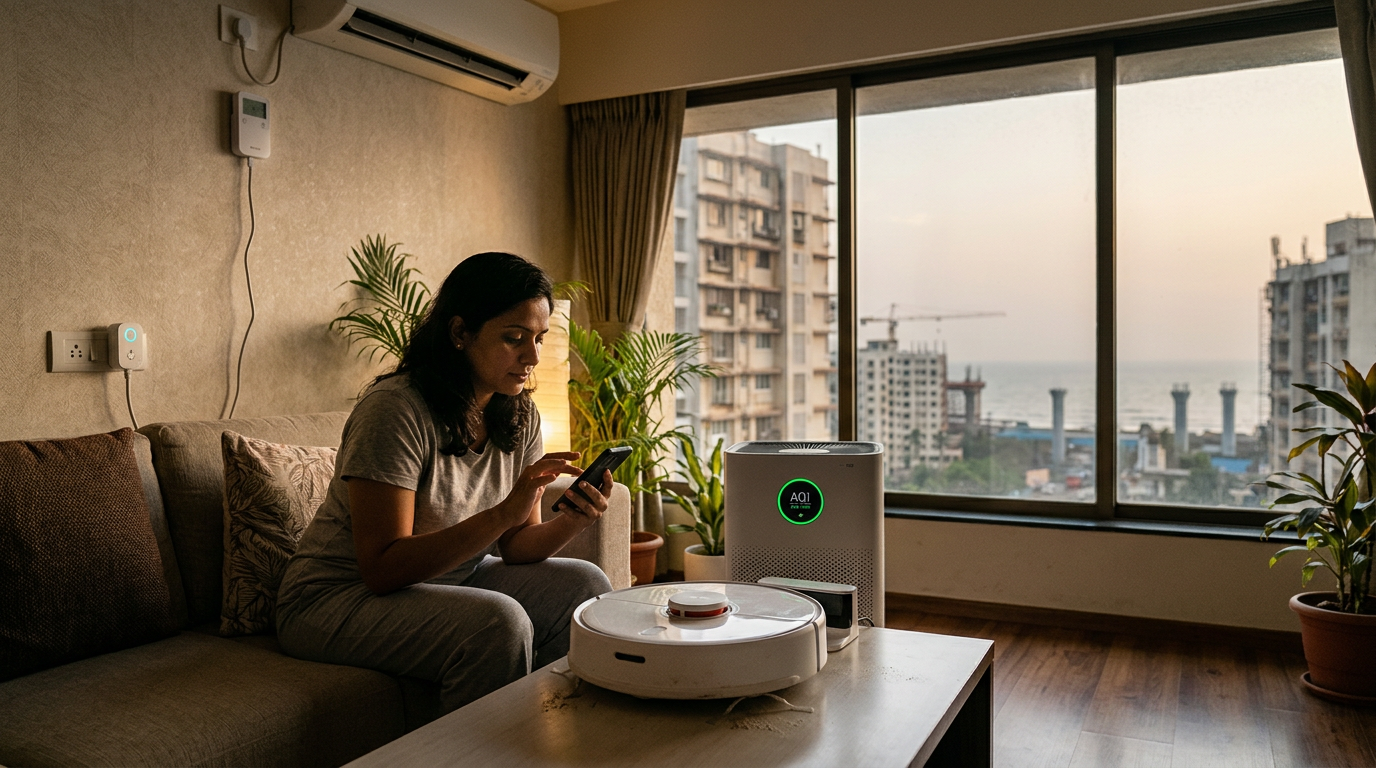
Anyone who has spent an hour crawling through traffic on the Western Express Highway or squeezed into a crowded evening local from Churchgate to Borivali knows the feeling: you just want to step into an apartment that works without fuss. Yet, modern apartment living across the Mumbai Metropolitan Region (MMR) brings unique friction. We battle intense coastal humidity, relentless construction dust from metro lines and flyovers, steep power tariffs from Adani Electricity and Tata Power, and the daily logistics of domestic staff and parcel deliveries. Selecting the right smart home devices worth buying is not about turning your flat into a science fiction set; it is about solving these exact urban headaches efficiently.
Too many smart tech roundups recommend expensive connected toasters or complex ecosystem hubs imported from the US that fail under local Indian voltage swings. In a high-rise in Lower Parel, a 2BHK in Andheri West, or a sprawling cooperative housing society in Vashi, automation needs to deliver tangible value. We have stress-tested hardware against local conditions to pinpoint the gadgets that earn their keep every single day.
Intelligent Climate Control: Smart AC Controllers and Thermostats
Air conditioning accounts for the lion’s share of electricity bills across Mumbai and Navi Mumbai from March through October. Leaving a split AC running all afternoon so your bedroom is cool when you return from your office in BKC wastes thousands of rupees. Conversely, stepping into a sweltering flat after a humid commute is miserable. This is where smart AC controllers like the Sensibo Air, the Cielo Breez Plus, and the locally engineered Qubo Smart AC Remote become essential investments.
Unlike simple timer plugs that cut power abruptly to the compressor—which can ruin the appliance—these units communicate through infrared to mirror your remote control. They track both ambient temperature and relative humidity. In coastal belts like Worli, Bandra, and Seawoods, high humidity often makes a room feel ten degrees warmer than it actually is. Smart controllers can trigger your inverter AC’s "Dry Mode" automatically when relative humidity crosses 70 percent, reducing mugginess while drawing significantly less power than full refrigeration cooling.
Through geofencing, these systems can sense when your phone leaves your office in Powai or crosses the Vashi Bridge, powering on the AC at a sensible 24°C so your space is comfortable the moment you turn the key. When connected to home energy meters, users regularly report a 15 to 22 percent drop in summer power consumption, allowing the device to pay for itself within six to eight months.
Video Doorbells and Smart Locks: Managing Domestic Staff and Deliveries
Apartment living in MMR is built around community logistics. On any given morning, your doorbell rings for the milk run, the newspaper vendor, your cook, the housekeeping staff, and multiple deliveries from Blinkit, Zepto, and Amazon. If you are stuck at work or traveling, coordinating flat access via phone calls down to the society security gate is tedious.
A resilient smart lock paired with a battery-backed video doorbell completely changes this dynamic. Systems from brands like Yale, Qubo, and Aqara offer localized digital keypad access that eliminates the need to hide duplicate physical keys under the doormat or entrust them to neighbors.
Key Features to Prioritize for Indian High-Rises
- Time-Restricted One-Time Passwords (OTPs): Generate codes valid only between 8:00 AM and 10:00 AM for your maid or cook. If your helper arrives outside these hours, the code simply will not work.
- Emergency Mechanical Keys: Never install a digital lock that lacks an external physical key override; salt-laden coastal sea air can eventually corrode battery contact terminals.
- Two-Way Intercom via Video Doorbell: Speak directly to couriers while sitting in an office meeting in Nariman Point and instruct them to leave the parcel behind the safety grill.
- Chime with Local Storage: Cloud subscriptions add unnecessary monthly costs. Choose models that accept high-endurance microSD cards or sync with [INTERNAL_LINK: home-network-storage-solutions].
A good smart lock should make daily access invisible to you while providing clear logs of who entered your home and when. In housing societies with strict visitor protocols, it eliminates daily gatekeeper friction.
Robotic Vacuum Cleaners Built for Fine Mumbai Dust
Between the ongoing construction of the Mumbai Metro corridors, the Coastal Road extensions, and real estate redevelopment in Chembur and Kharghar, particulate matter in local apartments is relentless. Open a balcony door for twenty minutes on an breezy afternoon, and a gritty film settles over your vitrified tiles. Standard vacuum cleaners only handle visible debris, while traditional sweeping often just flings fine PM10 particles into the air.
Modern hybrid robot vacuums equipped with LiDAR navigation and active wet mopping have evolved into legitimate appliances rather than gimmicks. Devices from Dreame, Ecovacs (such as the Deebot series), and Xiaomi map complex Indian floor layouts with precision, navigating around heavy teak furniture, dining chairs, and low door thresholds.
- Dual Rotating Mop Pads: Avoid cheap robots that merely drag a damp microfiber cloth behind them; Mumbai dust turns that cloth into a mud streak. Look for dual rotating pads that scrub down salt residue and stubborn kitchen grease.
- Scheduled Dual-Pass Runs: Set the robot to run its dry suction pass at 11:00 AM after everyone leaves for work, followed by a wet mopping pass thirty minutes later.
- No-Go Zones for Puja Areas and Balconies: Map out marble mandirs, low water traps in utility areas, and wet bathroom entrances using companion smartphone apps to prevent the machine from getting stranded.
While these units do not fully replace a deep manual scrubbing before Diwali or Ganpati festivities, they keep floors consistently barefoot-clean during the workweek, significantly cutting down on the domestic workload.
Smart Plugs with Energy Monitoring: Taming Voltage and Monsoon Surges
Monsoons in the Mumbai Metropolitan Region test electrical infrastructure. Waterlogged feeder pillars and lightning strikes frequently cause brief spikes and brownouts. Simultaneously, high-wattage appliances like storage water heaters (geysers), oil-filled radiators, and washing machines quietly inflate monthly power bills if left running inadvertently.
Heavy-duty 16A smart plugs from brands like TP-Link Tapo, Havells, and Wipro are among the lowest-cost, highest-return smart home devices worth buying. These plugs connect directly to your 2.4 GHz Wi-Fi network and handle heavy loads without melting contacts, a common hazard with unbranded hardware.
By plugging your 25-litre bathroom geyser into a 16A smart plug, you can build automation routines tailored to your routine. Set the water heater to run for exactly 18 minutes starting at 6:45 AM, ensuring scalding-hot water before your morning sprint to the train station without leaving the 2000-watt heating element humming for hours. The integrated energy-monitoring dashboards also reveal whether older appliances—like that ten-year-old refrigerator in your Dadar rental—are drawing excessive current due to failing compressors, helping you decide when an upgrade is economically justified.
Air Purifiers with Integrated AQI Automation
There was a time when Mumbai residents boasted of clean coastal sea breezes blowing away industrial pollution. That narrative has shifted. Winter inversions regularly push the Air Quality Index (AQI) across Mazgaon, BKC, Deonar, and parts of Thane into the "Poor" and "Very Poor" categories, with PM2.5 levels hovering well above safe limits.
A manual air purifier requires you to remember to toggle speeds, which often leads to units being left on minimum whisper mode when pollution spikes, or forgotten on loud turbo mode overnight. Smart purifiers—including top-performing models from Coway, Philips, and Dyson—integrate high-precision laser particle sensors directly with smart home platforms like Apple Home, Google Home, and Home Assistant.
By establishing conditional routines, your indoor air cleaning system runs autonomously. If local outdoor PM2.5 levels spike above 120 µg/m³ (monitored via local weather integrations or your balcony sensor), the purifier ramps up its brushless motor to scrub bedroom air. Once indoor readings stabilize under 25 µg/m³, it settles back to near-silent operation to preserve filter life. For anyone living near major arterial corridors like the Eastern Express Highway or Ghodbunder Road, having automated air scrubbing running before bedtime dramatically improves sleep quality and cuts morning sinus congestion.
Smart Lighting: Cutting Through Dreary Monsoon Skies
From mid-June to late August, Mumbai skies can remain completely overcast for weeks. The natural daylight filtering into high-density buildings—where apartments often face internal courtyards or narrow alleys in areas like Matunga or Lalbaug—turns dim, cold, and gray. This prolonged gloom can severely impact focus and mood when working from home.
Smart lighting systems from Philips Hue, WiZ, and Nanoleaf allow you to counter these dreary seasonal patterns by introducing dynamic biological rhythms indoors:
- Circadian Rhythm Matching: Program living room lights to emit crisp, energizing 5000K cool white light at 10:00 AM to simulate clear sunshine, shifting automatically to a soft, amber 2400K warm glow by 7:30 PM to encourage melatonin production.
- One-Touch Scene Automation: Set an "Evening Wind-Down" scene that dims overhead fixtures and turns on warm shelf accent lighting, instantly calming the apartment after a hectic work schedule.
- Motion-Activated Night Paths: Place low-cost battery PIR sensors along hallways leading to the washroom. At 2:00 AM, walking into the corridor illuminates baseboard light strips at a dim 5 percent brightness, guiding your steps without shocking your eyes awake.
To avoid spending a fortune replacing every decorative fixture, focus on smart switches rather than individual smart bulbs for main ceiling lights. A single smart switch module tucked behind your existing switchboard keeps standard tubelights and LED panels controllable via voice, app, or physical wall toggles, preserving physical control for visiting parents or household staff.
Mesh Wi-Fi Systems: Piercing Dense RCC Walls
None of your smart cameras, locks, plugs, or streaming hubs will function reliably if your wireless network is fragile. Most Mumbai apartments are constructed using thick Reinforced Cement Concrete (RCC) pillars, robust shear walls, and heavy red brick or AAC block internal partitions. A standard dual-band router provided by local internet service providers like JioFiber, Airtel Xstream, or Tata Play Fiber typically fails to push a stable 5 GHz signal past two concrete walls.
The result? Smart locks drop off the network, video doorbells stutter when streaming live feeds, and voice assistants constantly announce that they are "having trouble connecting to the internet." Investing in a tri-band or dual-band Mesh Wi-Fi system—such as the TP-Link Deco series, Amazon Eero, or Netgear Orbi—is the foundational hardware purchase that guarantees all other automation succeeds.
Place the primary node near your fiber optical terminal in the living room and position satellite nodes within clear line-of-sight down internal passageways. This eliminates dead zones in rear master bedrooms and utility balconies where your smart washing machine and water heater plugs live. For larger homes in Navi Mumbai’s planned sectors like Kharghar or Palm Beach Road, ensure your nodes support an Ethernet backhaul, allowing nodes to communicate across rooms via wired LAN ports for absolute zero latency.
Budgeting, Protocols, and Electrical Compatibility in India
Before rushing to purchase gear at electronics retailers in Phoenix Palladium or scanning online sales, take a structured approach to ensure everything integrates cleanly without adding unnecessary complexity.
1. Choose Your Wireless Protocol Carefully
Beginners often buy dozens of standalone Wi-Fi accessories because they seem cheap. However, consumer Wi-Fi routers begin choking when tasked with maintaining active connections for 40 or 50 simultaneous smart devices alongside your laptops, televisions, and smartphones. For deep setups, look into Zigbee or the newer Matter standard. Devices using Zigbee communicate via a dedicated hub, creating a self-healing local mesh network that leaves your primary home Wi-Fi bandwidth completely free for work and 4K entertainment.
2. Account for the Missing Neutral Wire
Older buildings across Dadar, Mahim, and Chembur frequently lack a neutral wire run inside light switchboards—electricians historically ran only the live phase wire down to wall toggles. If you plan to install in-wall smart switch relays, open a switch plate safely (or hire a certified electrician) to verify whether a black neutral cluster is present. If not, specifically purchase "No-Neutral Required" switches from brands like Sonoff, Zemismart, or Aqara to avoid having to run fresh wiring through your conduit pipes.
3. Sample Tiered Budgets in Indian Rupees
You do not need to wire your entire flat in one weekend. Building out your setup over three deliberate stages keeps spending manageable and prevents buyer's remorse:
- Starter Tier (₹12,000 – ₹18,000): A dependable two-node mesh router, two 16A smart plugs for your geysers, one IR remote blaster for the master bedroom AC, and an entry-level voice assistant speaker.
- Mid-Range Comfort Tier (₹35,000 – ₹60,000): Add an intelligent robotic vacuum cleaner, a digital smart lock with keypad entry, and an air purifier running automated AQI schedules.
- Full Apartment Integration (₹1,00,000 – ₹1,75,000): Complete multi-node wired mesh network, in-wall smart lighting relays across all rooms, motorized smart curtain tracks for balcony glass sliders, video doorbell with local NVR backup, and an advanced Zigbee/Matter hub for offline local automation.
By focusing your initial capital on tackling humidity, energy waste, and dust management, you will experience the functional rewards of home automation immediately, rather than collecting novelty gadgets that end up sitting idle on a shelf.
Upgrading Your Space with Devices That Truly Deliver
Modern home technology should never demand more attention than the everyday chores it was designed to replace. When thoughtfully deployed, the right devices eliminate ambient friction: your flat stays cool without inflating your summer electricity bill, fine dust is cleaned before it settles on your furniture, deliveries are accepted securely while you work across town, and your morning routine functions like clockwork.
Audit the persistent daily inconveniences of your specific living situation—whether that is an unpredictable domestic help schedule, an energy-draining old split AC, or severe Wi-Fi dropouts through reinforced walls. Start by picking one or two targeted, reliable devices from this list that solve those immediate problems. You will quickly build a streamlined, highly functional home that offers a quiet sanctuary from the chaotic energy of the city outside.
Keep reading
Best AI Productivity Tools for Mumbai Working Professionals
Stuck on the WEH or balancing high-stakes client meetings in BKC? Here is our curated guide to the best AI productivity tools transforming daily work across the Mumbai MMR.

How to Spot AI Generated Images: A Mumbaikar's Guide
Think that photo of a traffic-free Sea Link is real? Our guide helps Mumbaikars learn how to spot AI generated images, from fake real estate to uncanny food pics.

How to Spot AI Generated Images: A Mumbai Guide
From fake Powai apartment listings to too-perfect food photos from a Bandra cafe, AI fakes are everywhere. Here’s your guide on how to spot AI generated images in Mumbai.