
How to Spot AI Generated Images: A Mumbai Guide
From fake Powai apartment listings to too-perfect food photos from a Bandra cafe, AI fakes are everywhere. Here’s your guide on how to spot AI generated images in Mumbai.
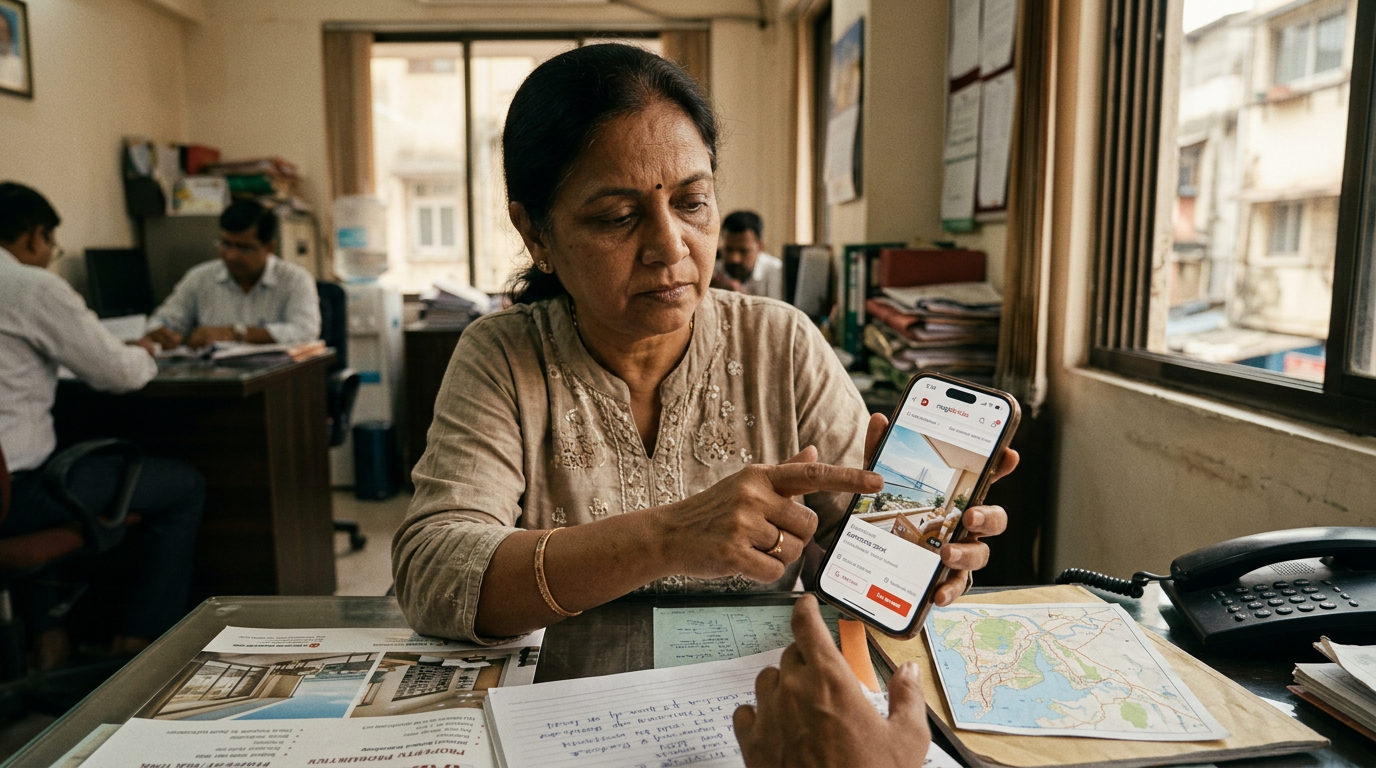
You’re scrolling through a property portal and you see it: a stunning, sun-drenched 2BHK in Bandra West with an uninterrupted view of the Sea Link, all for a surprisingly reasonable rent. The marble floors gleam, the furniture looks like it's straight out of a design magazine, and there isn't a single sign of Mumbai's humidity on the windows. It seems too good to be true. And in 2024, it very well might be. As generative AI becomes more sophisticated, learning how to spot AI generated images is no longer a niche skill for techies; it's an essential tool for every Mumbaikar trying to navigate the digital world. These fakes are no longer blurry or obvious; they're polished, persuasive, and popping up everywhere from real estate listings in Navi Mumbai to restaurant promotions in Andheri.
The Uncanny Valley of Mumbai Real Estate Listings
The Mumbai Metropolitan Region's property market is notoriously competitive, making it a prime target for deception. Unscrupulous brokers or fake listings now use AI to create enticing images of apartments that simply don't exist. Imagine being lured to a viewing in Kharghar based on pictures of a sprawling, modern flat, only to find a cramped, poorly maintained space. These AI-generated interiors often share common flaws. Look for an unnatural perfection. Are the cushions on the sofa perfectly plump with no wrinkles? Is the reflection in the mirrored wardrobe a little too clean, perhaps missing the camera or person who supposedly took the photo? AI struggles with complex reflections and the beautiful, organised chaos of a real home. Look at the view from the window. An AI might generate a generic skyline or a view of the Vashi bridge from an impossible angle. It might also fail to capture the specific character of a neighbourhood—the mix of old and new buildings in Dadar, the specific type of tree-lined street in Chembur, or the hazy glow of the city lights. Always be skeptical of listings that feature only pristine, magazine-quality interior shots without any pictures of the building's exterior, lobby, or the actual street view. Cross-reference the location on Google Maps Street View to see if the promised 'panoramic view' is even possible. For more on this, check out our guide to [INTERNAL_LINK: best-real-estate-apps-mumbai].
The Six-Fingered Hand and Other Physical Glitches
While AI is getting better, it still frequently stumbles on the complexities of human anatomy. This is one of the most reliable ways to spot a fake. The next time you see a picture of a smiling family enjoying the sunset at Juhu Beach or a group of friends at a trendy Powai cafe, zoom in on their hands. AI is notorious for adding or subtracting fingers. You might see a hand with six fingers, or four, or fingers that bend at impossible angles. This happens because AI models are trained on millions of images, but they don't have a fundamental understanding of biology. They know what hands generally look like, but assembling a correct one from scratch, especially when intertwined or holding an object, is difficult.
Beyond the Hands
The glitches don't stop at fingers. Look closely at other parts of the body:
- Teeth: AI can sometimes generate a smile with a perfectly uniform, unnaturally bright, or strangely arranged set of teeth. It might look more like a row of white blocks than individual teeth.
- Limbs: Arms and legs might appear too long, too short, or connect to the body at an odd angle. A person's forearm might seem to merge with the table they are resting on.
- Ears and Jewellery: Look at earrings. Does one person have two different earrings, or does an earring seem to melt into the earlobe? AI often struggles with the symmetry and delicate details of jewellery.
When you see a promotional image for a new gym in Thane or a fashion shoot supposedly set against the backdrop of the Bandra-Worli Sea Link, take a moment to perform this anatomical audit. The human body is incredibly complex, and for now, that complexity is our ally in spotting the fakes.
Context is King: Does It Look Like Mumbai?
One of the most powerful tools you have is your own local knowledge. AI image generators are trained on global datasets, and they often lack the specific, nuanced understanding of a particular city's culture, architecture, and environment. Ask yourself: does this image *feel* like Mumbai? For instance, you might see a picture of a street food vendor selling what looks like vada pav, but the cart's design is wrong, or the surrounding architecture looks more European than like the bustling streets of Ghatkopar. An AI might generate a picture of the Gateway of India, but place it next to a beach with white sand and turquoise water, completely ignoring the reality of the Arabian Sea at the harbour. Or it might create an image of a local train that is spotlessly clean, devoid of crowds, and has signage in a language that isn't Marathi, Hindi, or English. Pay attention to the small things that define our city. Are the auto-rickshaws the correct black-and-yellow? Are the 'BEST' buses the right shade of red? Do the street signs and shop hoardings have that distinct Mumbai flavour? A photo of a monsoon scene with perfectly clear skies and no waterlogging would be an immediate red flag for any seasoned Mumbaikar. Your lived experience is an incredibly effective detection algorithm.
The Telltale Sheen: Light, Shadows, and Textures
The real world is governed by the laws of physics, something AI is still learning to replicate perfectly. Light and shadow are often the first things to betray an AI-generated image. In a real photo, all shadows should be cast from the same light source and fall in a consistent direction. In an AI image, you might notice that the shadow of a person falls to the right, while the shadow of the lamppost next to them falls to the left. Reflections are another weak point. Look at sunglasses, windows, or a puddle of water on a pavement in Colaba after a brief shower. Does the reflection accurately mirror the surroundings? Often, AI will create a blurry, generic, or completely incorrect reflection.
"The devil isn't just in the details; with AI, the devil *is* the details. Zoom in, and the illusion often shatters. That perfectly smooth brinjal at the Dadar market photo might have the texture of plastic upon closer inspection."
Texture is another significant giveaway. AI can sometimes over-smooth surfaces, giving them a glossy, plastic-like sheen. A brick wall might look too uniform, a wooden table might lack a natural grain, or the fabric of a designer lehenga in a boutique ad might appear unnaturally fluid and pattern-less. Conversely, AI can also create bizarre, nonsensical textures. You might see hair that looks like spaghetti, or skin that has a strange, waxy quality. When you see an image that feels slightly 'off', start by analysing the light. Trace the sources, check the shadows, and scrutinize the textures. The physics of our world are, for now, harder to fake than a pretty picture.
Scrutinizing the Background and Fine Print
While the subject of an AI image might be convincing, the background is often where the entire composition falls apart. Generative models excel at creating a focal point, but they can get lazy with the periphery. If you see a photo of a celebrity supposedly shopping on Linking Road, zoom in on the crowd behind them. You might find faces that are distorted, duplicated, or unnervingly similar. The AI might have just copied and pasted a few background characters to fill the space. Similarly, examine the details of the environment. A bookshelf in the background might be filled with books that have warped, unreadable spines. Text on shop signs, posters, or even a newspaper being read by someone in the frame is a huge tell. AI struggles to generate coherent, legible text. You'll often find strings of nonsensical characters, letters that morph into each other, or words that look like English or Marathi but are complete gibberish. This is a dead giveaway that you're not looking at a photograph. So, before you believe that picture of a new menu item from a popular Belapur restaurant, zoom in on the menu in the background. If the text looks like an alien script, you're likely being served an AI-generated dish.
Tools of the Trade: Using Tech to Fight Tech
While your eyes and your brain are the best first line of defence, there are some simple digital tools you can use to further investigate a suspicious image. These methods aren't foolproof, as AI technology is constantly evolving, but they can provide valuable clues.
- Reverse Image Search: This is the easiest and most effective first step. Use services like Google Images or TinEye to upload the suspicious image or paste its URL. A reverse image search can tell you where else the image has appeared online. If it shows up on stock photo sites, in other contexts, or is identified by multiple sources as an AI creation, you have your answer. It might also show you the original, un-edited photo if the image has only been slightly manipulated.
- Look for AI Watermarks or Artifacts: Some AI image generators, like DALL-E 2, used to add a small, coloured bar watermark in the bottom right corner. While many generators no longer do this, and these marks can be cropped out, it's worth checking for. Also, look for strange artifacts—small, geometric patterns or weird blockiness in certain areas that look out of place.
- AI Detection Tools: Several websites claim to be able to detect AI-generated images. You can upload an image, and the tool will give you a probability score. However, use these with caution. Their accuracy can be hit-or-miss, especially with newer AI models. They are best used as a secondary tool to confirm suspicions you already have, rather than as a definitive arbiter of truth.
- Check the Source: Where did you see this image? Was it from a reputable news source like a major Mumbai newspaper, or was it forwarded in a WhatsApp group with no context? Was it on the official, verified social media account of a brand, or on a new, unverified account with few followers? Always consider the credibility of the source posting the image. For more tips on staying safe online, see our [INTERNAL_LINK: guide-to-digital-security-in-mumbai].
The Social Dilemma: AI Fakes in Your Feeds and Groups
The real battleground for image authenticity isn't a gallery; it's your smartphone. From WhatsApp groups for your housing society in Vashi to local interest pages on Instagram, AI-generated images spread like wildfire. We've all seen them: the unbelievably dramatic photo of the sea waves crashing over the Marine Drive promenade during monsoon, a picture of a politician inaugurating a metro line that isn't even finished, or a poster for a flea market at a location that doesn't exist. The speed and ease of sharing on these platforms mean that a single fake image can reach thousands of people in the Mumbai Metropolitan Region within minutes, often presented as fact. The danger here lies in casual acceptance. When we see a visually stunning or emotionally charged image, our first instinct is to believe and share, not to scrutinize. This is how misinformation about public safety, local events, or even political sentiment can spread. The next time someone forwards an image in your family WhatsApp group about a new 'rule' implemented by the Mumbai Police, accompanied by a convincing but unverified image, pause. Take a minute to apply the checks we've discussed. Does the uniform look right? Is the background contextually correct? Encourage this same level of critical thinking within your social circles. A simple question like, "Hey, where is this from? It looks a bit strange," can be enough to break the chain of effortless sharing and prompt a more critical look.
Ultimately, navigating this new visual landscape requires a shift in our mindset. We must move from being passive consumers of images to active, critical observers. The ability to spot AI-generated fakes is more than just a party trick; it's a vital component of digital literacy in our city. It protects you from scams, whether it's a fake rental deposit for a non-existent flat in Andheri or a QR code on a fake event poster. It helps you stay grounded in reality and less susceptible to the misinformation that can cause real-world confusion and harm. So, the next time you're scrolling, remember to look closer, question the perfection, and trust your local knowledge. Your Mumbaikar instincts might just be the best AI detector you have. What's the most convincing fake AI image you've seen recently? Share your experience in the comments below, and don't forget to share this article with friends and family to help everyone stay sharp.
Keep reading
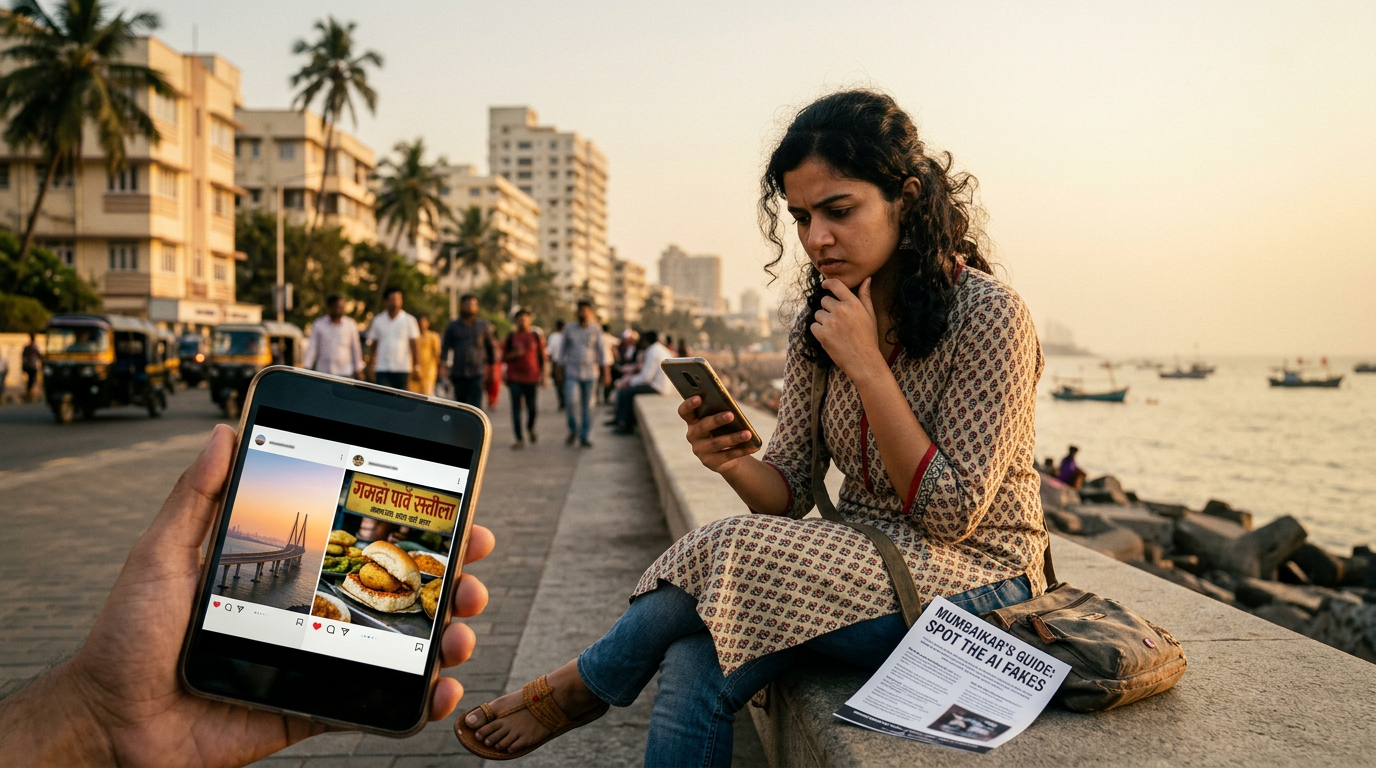
How to Spot AI Generated Images: A Mumbaikar's Guide
Think that photo of a traffic-free Sea Link is real? Our guide helps Mumbaikars learn how to spot AI generated images, from fake real estate to uncanny food pics.
Mumbai's Guide to the Best AI Productivity Tools for Professionals
In Mumbai's relentless hustle, staying ahead is key. This guide reveals the best AI productivity tools to automate tasks, manage projects, and reclaim your time, whether you're in BKC or Vashi.
Best AI Productivity Tools for Mumbai & Navi Mumbai Professionals
Tired of the Mumbai grind? We review the best AI productivity tools that can help professionals from Bandra to Belapur save time, streamline tasks, and conquer their to-do lists.