
7 Signs of Emotional Intelligence That Help You Thrive in Mumbai
Is it just 'jugaad' or something deeper? We explore the crucial signs of emotional intelligence that help Mumbaikars not just survive, but truly thrive in this city.
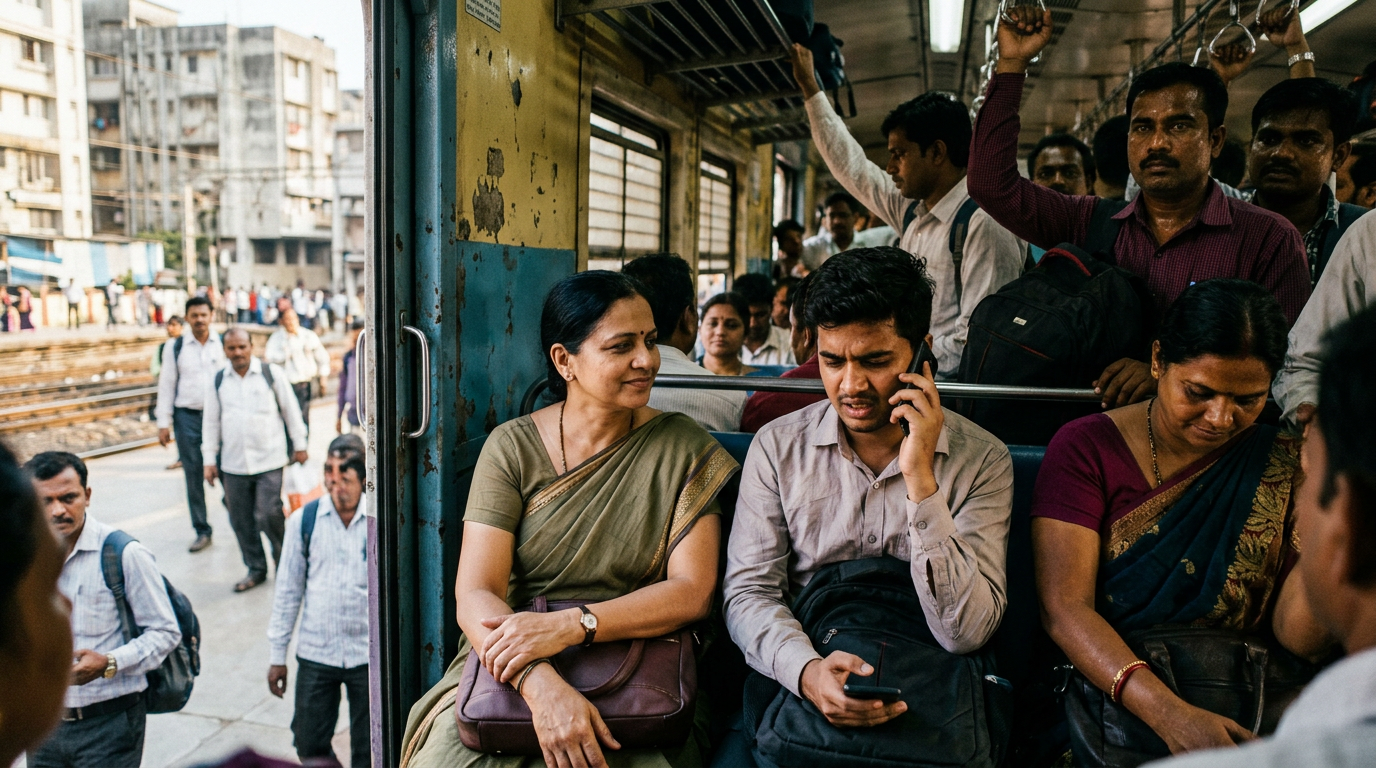
Are You Emotionally Intelligent? A Guide for Mumbaikars
We’ve all seen it. The person who remains calm when the 8:47 AM Virar fast is cancelled. The colleague who gracefully handles a client’s tantrum over a delayed deadline. The friend who listens, really listens, when you’re venting about your landlord in Khar. In a city that tests your patience at every turnstile and traffic signal, technical skills and a fat paycheck can only get you so far. The real superpower for navigating this glorious, chaotic metropolis is something else entirely. We're talking about the crucial signs of emotional intelligence (EQ), the subtle skill set that separates those who merely survive Mumbai from those who truly thrive here. It’s the invisible framework that supports your career, relationships, and mental peace from Colaba to Panvel.
1. Self-Awareness: Your Internal Compass in the City’s Chaos
Self-awareness is the foundation of emotional intelligence. It’s the ability to recognise and understand your own moods, emotions, and drives, as well as their effect on others. In Mumbai, this is your personal anchor. It’s the difference between snapping at an auto driver in Bandra and realising your anger is actually leftover stress from a tough morning meeting in BKC. It’s understanding that the Sunday evening blues hitting you in your Powai apartment aren’t about the weekend ending, but about anxiety over the week’s looming targets.
Someone with high self-awareness can accurately identify their feelings. They don't just feel 'bad'; they can pinpoint if it's disappointment, anxiety, or frustration. This clarity allows them to manage their feelings proactively. Maybe they take a long walk along Marine Drive to clear their head, spend an hour at a quiet cafe in Vashi with a book instead of doomscrolling, or use their commute time on the Harbour Line to listen to a calming podcast. They understand their emotional triggers and can predict their reactions. This isn't about suppressing emotions, but understanding them. It's the quiet introspection that prevents you from carrying the stress of a crowded Dadar station into your home and personal relationships.
2. Self-Regulation: Keeping Your Cool When the Signal at WEH is Endless
If self-awareness is knowing you feel a storm brewing inside, self-regulation is the ability to control that storm. It’s thinking before you act. Mumbai provides a daily, high-stakes training ground for this skill. Picture this: you're stuck in bumper-to-bumper traffic on the Western Express Highway, and you're already 20 minutes late for a first date in Andheri. The driver behind you is honking relentlessly. The low-EQ response is to roll down your window and yell. The high-EQ response? Take a few deep breaths, maybe put on some music, and accept the situation for what it is—outside your control. You send a polite message explaining you're stuck in traffic and will be a little late.
This skill is vital in the workplace too. When a project goes south or a colleague makes a mistake that affects your work, self-regulation stops you from firing off a passive-aggressive email. Instead, you pause, assess the situation calmly, and focus on solutions. People with good self-regulation are known for being trustworthy and reliable. They don't make impulsive decisions based on fleeting emotions. They are the friends who don't bail on plans last minute because they 'don't feel like it' and the leaders who can steer a team through a crisis without panicking. It's a quiet strength that earns respect in a city that often rewards the loudest voice.
3. Empathy: Seeing the City Through Another's Eyes
Empathy is the ability to understand the emotional makeup of other people. It's the skill of treating people according to their emotional reactions. In a city as diverse as Mumbai, where the CEO in a high-rise and the chai-wallah on the street below have vastly different daily realities, empathy is the social glue. It’s about understanding that your domestic help, who travels two hours from a distant suburb, might be late because of a signal failure on the Central Line, and showing compassion instead of frustration.
Putting Yourself in Their Shoes
Emotionally intelligent people are adept at reading social cues. They can sense when a friend is putting on a brave face at your favourite hangout spot in Juhu, or when a junior colleague in your Thane office is too intimidated to ask for help. They listen to what is being said, but more importantly, they listen to what isn't being said. This ability to see things from another's perspective is a game-changer in negotiations, collaborations, and personal relationships.
"Empathy in Mumbai isn’t just a soft skill; it's a survival tactic. It allows you to build alliances, defuse conflicts, and create genuine connections in a sea of millions. From bargaining respectfully at Crawford Market to understanding a client’s unspoken needs, empathy is your most valuable currency."
It’s about recognising the humanity in everyone, whether it’s the security guard in your building or the high-flying executive you’re trying to impress. This understanding fosters deeper, more meaningful relationships that go beyond superficial networking. [INTERNAL_LINK: Building a Social Circle in Mumbai]
4. Motivation: Chasing the 'Mumbai Dream' Without Burning Out
Living and working in the Mumbai Metropolitan Region requires a special kind of fuel. The long commutes, the high cost of living, the relentless competition—it can be draining. This is where intrinsic motivation, a key sign of emotional intelligence, comes in. Emotionally intelligent individuals are driven for reasons beyond external rewards like money or status. They have a deep-seated passion for what they do, a desire to achieve for the sake of achievement itself.
This is the software engineer in Navi Mumbai's IT parks who codes on personal projects over the weekend because she genuinely loves building things. It's the artist in a small studio in Vasai who continues to create, even with little recognition, because the process itself is fulfilling. People with high intrinsic motivation are more optimistic and resilient. When they face a setback—a failed startup, a project rejection, or a missed promotion—they see it as a learning opportunity, not a personal failure. This resilient mindset is what defines the 'Spirit of Mumbai'. It’s the ability to get knocked down by a monsoon flood or a professional disappointment and still show up the next day, ready to try again. It's chasing your dream, not just the paycheck.
5. Social Skills: Building Bridges from Bandra to Belapur
Social skill is the culmination of the other dimensions of emotional intelligence. It’s not just about being chatty or extroverted; it’s about managing relationships to move people in the desired direction. In a city built on networks, this is paramount. From finding a flat through a friend-of-a-friend to landing a job via a LinkedIn connection you met at a networking event in Lower Parel, your ability to build rapport is critical.
People with strong social skills are masters of collaboration and communication. They know how to find common ground and build consensus. Think of the team leader who can unite a diverse group of people from different backgrounds to work towards a common goal. They are excellent at persuasion, not through manipulation, but by understanding others' needs and framing a message in a way that resonates.
Key social skills evident in emotionally intelligent Mumbaikars include:
- Effective Communication: Articulating their thoughts clearly and, more importantly, listening actively without interrupting.
- Conflict Resolution: Mediating disputes between friends or colleagues by finding a middle path that satisfies everyone.
- Leadership: Inspiring and guiding individuals and groups, whether it’s organising a Ganesh Chaturthi celebration in their society or leading a multi-crore project.
- Building Rapport: Quickly establishing a connection with new people, making them feel seen and heard.
6. You Welcome Constructive Feedback (Even When It Stings)
Receiving criticism is tough. Our natural instinct is to get defensive. However, a hallmark of high EQ is the ability to not just handle but actively welcome constructive feedback. In the high-pressure work environments of Mumbai—be it finance, media, or tech—feedback is constant. An emotionally intelligent person doesn't view their boss’s critique of their presentation as a personal attack. Instead, they see it as valuable data for improvement.
They listen without immediately formulating a defense. They ask clarifying questions to fully understand the other person’s perspective. For example, instead of saying, "But I worked all weekend on that!" they might ask, "Could you give me a specific example of where the report lacked clarity? That would be really helpful for the next version." This approach disarms tension and turns a potentially negative interaction into a productive one. It signals maturity, confidence, and a commitment to growth—qualities that are highly valued in any professional setting, especially in a city that demands continuous learning and adaptation. They understand that feedback, even when delivered imperfectly, is a gift that helps them get better.
7. You Set Healthy Boundaries in a City That Never Sleeps
Mumbai's hustle culture is famous, but it can also be toxic. The expectation to be 'always on' can lead to burnout. One of the most practical and powerful signs of emotional intelligence is the ability to set and maintain healthy boundaries. This means understanding your own limits and communicating them clearly and respectfully.
It’s about protecting your time, energy, and mental health in a city that constantly demands more. Examples of healthy boundaries in a Mumbai context include:
- Politely declining a last-minute social plan in SoBo when you know you need a quiet evening at home in Thane to recharge.
- Not checking work emails after 8 PM, allowing your brain to switch off from the pressures of your job in Andheri MIDC.
- Saying "no" to taking on an extra project you don't have the bandwidth for, even if you’re worried about disappointing your boss.
- Limiting time with friends or family members who consistently drain your energy.
Your EQ Is Your Greatest Asset in Mumbai
While a sharp intellect and technical expertise can open doors in Mumbai, it's your emotional intelligence that will determine how far you walk through them and how much you enjoy the journey. These signs aren't about being 'nice' all the time; they are about being smart with your emotions and the emotions of others. EQ is a skill, and like any skill, it can be developed with conscious effort and practice.
So, the next time you navigate a crowded platform, a difficult conversation, or a challenging project, pay attention. Are you just reacting, or are you responding with awareness and intention? Mastering that difference is the key to not just succeeding, but truly flourishing in the heart of the Mumbai Metropolitan Region.
What are your thoughts? What's the most emotionally intelligent act you've witnessed in Mumbai? Share your story in the comments below!
Keep reading
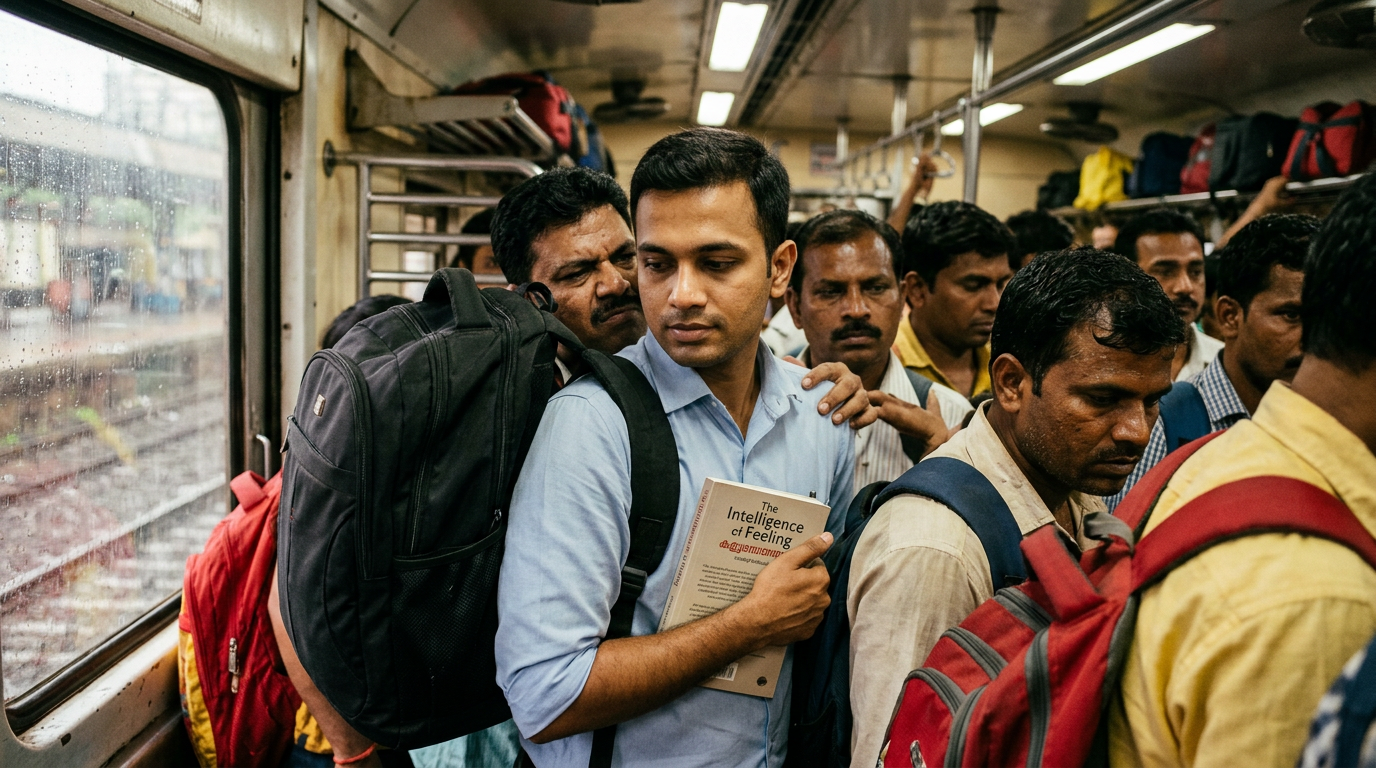
Signs of Emotional Intelligence for Thriving in Mumbai
In a city that never sleeps, emotional intelligence isn't a luxury; it's a survival skill. From packed local trains to high-pressure jobs, these are the signs of EQ in Mumbai.
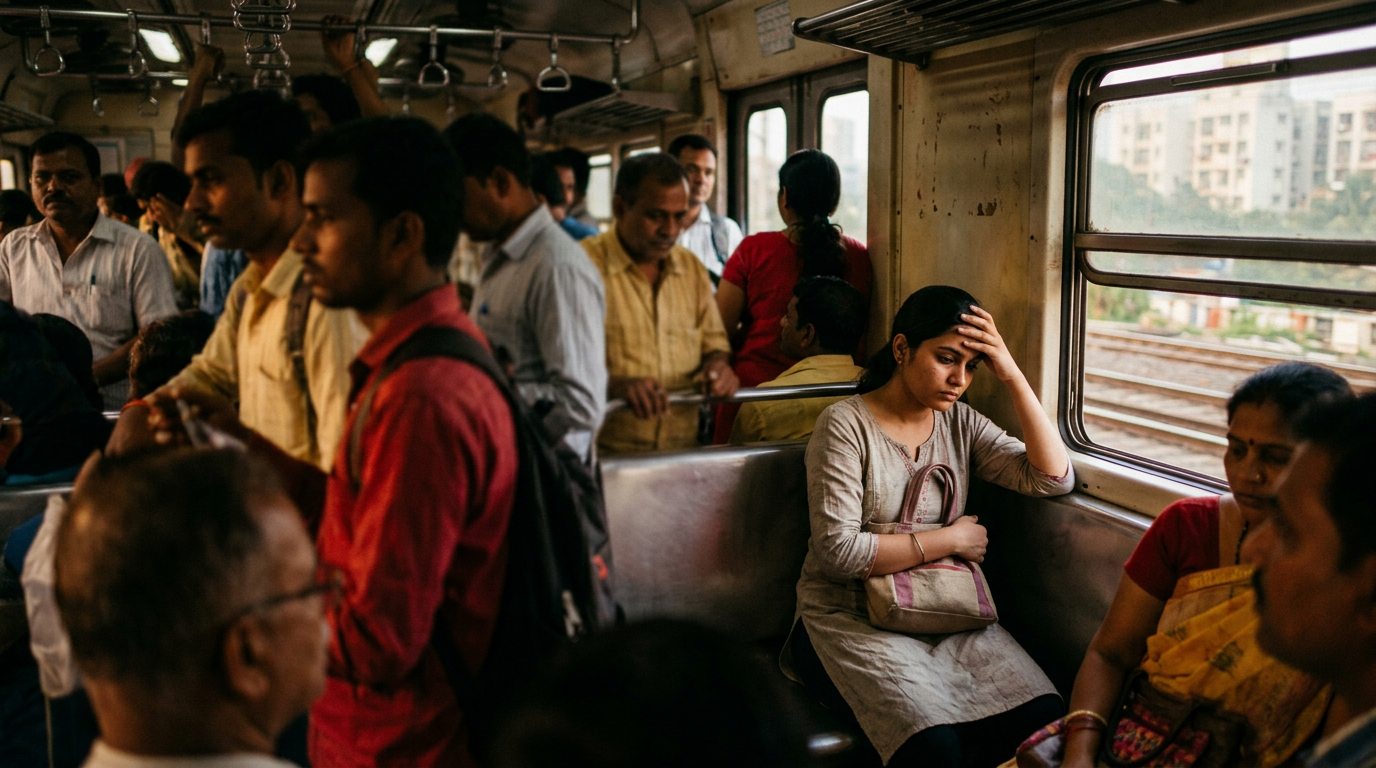
Overcoming Social Anxiety: A Mumbaikar's Practical Guide
Feeling anxious in crowded Mumbai locals or at Bandra parties? Our guide offers practical, local strategies for overcoming social anxiety in the city that never stops.
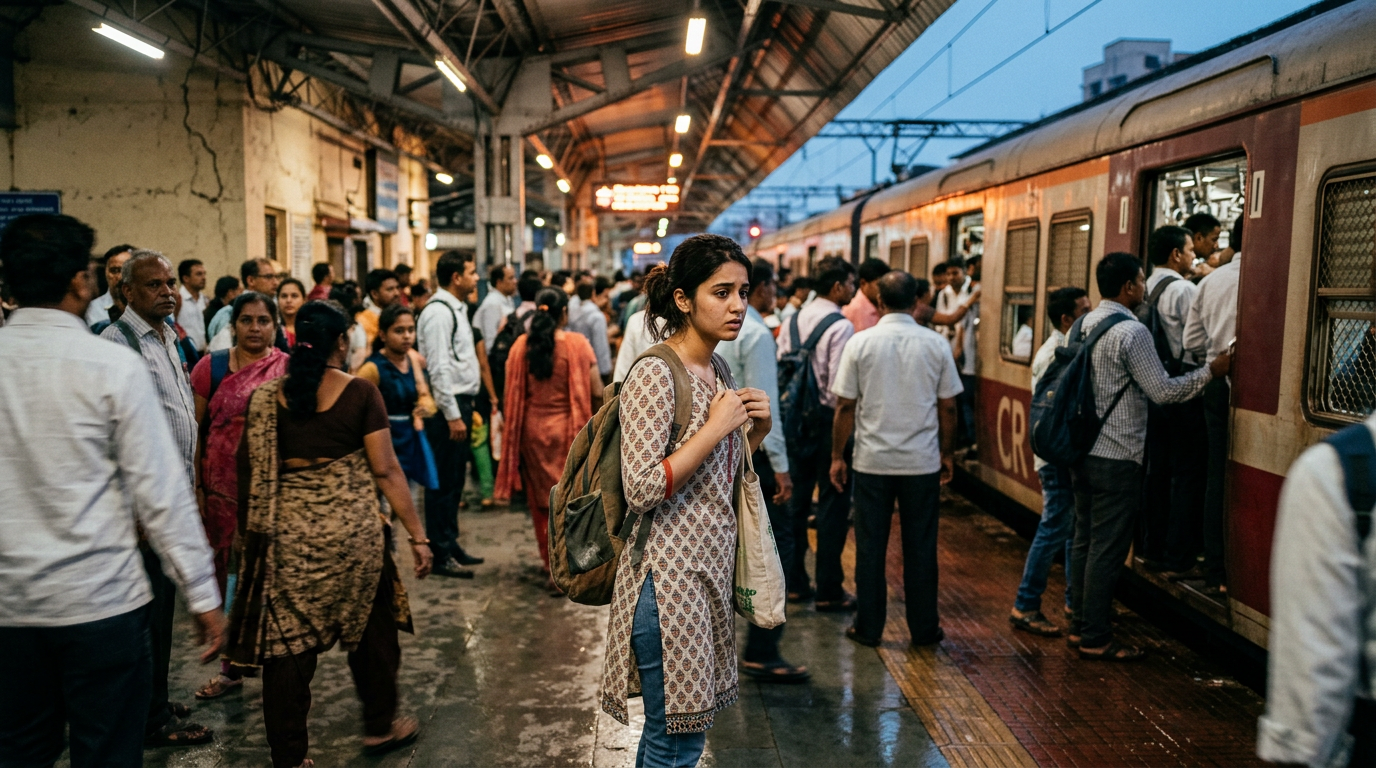
Overcoming Social Anxiety: A Practical Guide for Mumbaikars
In a city of millions, feeling alone is a common paradox. This guide offers practical, Mumbai-specific strategies for overcoming social anxiety and finding your place.