
Overcoming Social Anxiety: A Practical Guide for Mumbai Life
Struggling with social anxiety in Mumbai? Here is a practical, grounded roadmap to overcoming social anxiety while living in one of the world's most crowded urban centres.
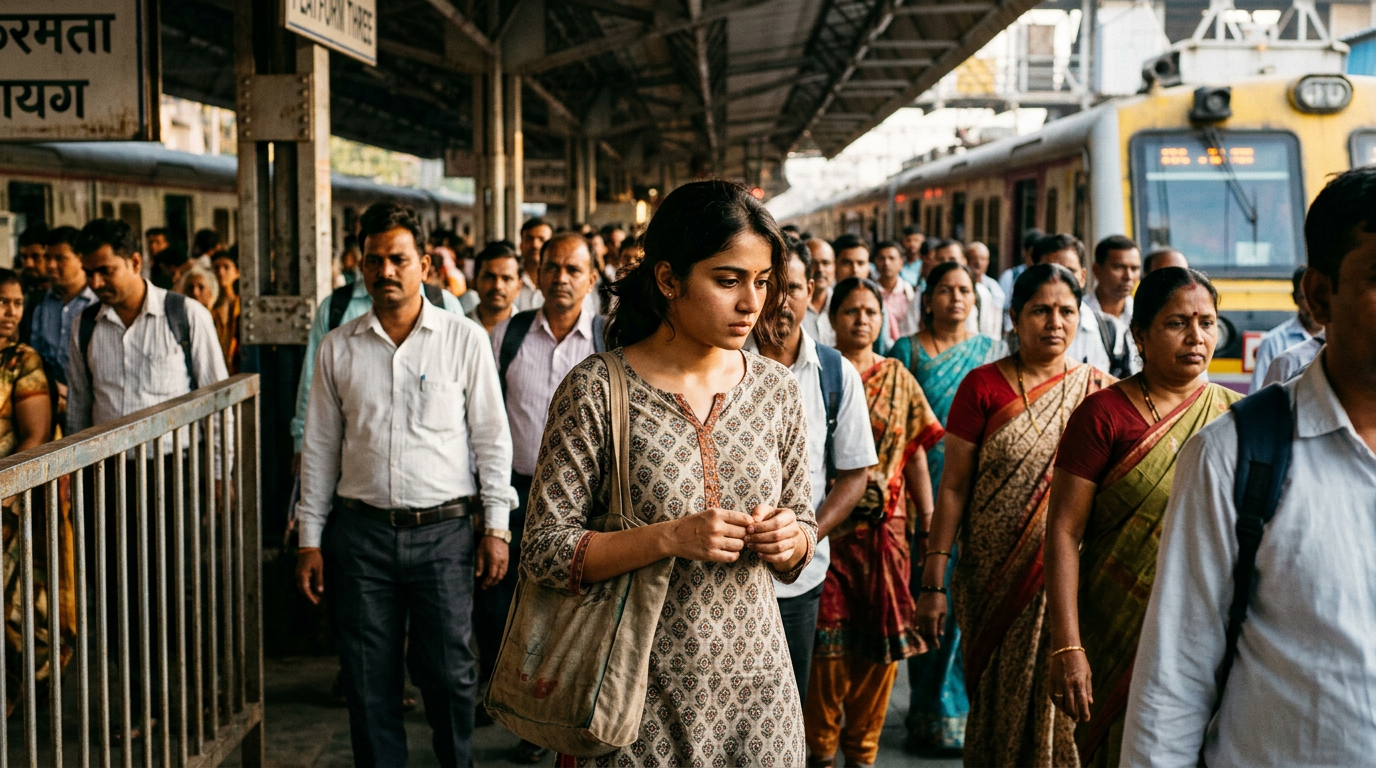
You are standing on platform three at Dadar station at 8:42 AM. The platform is a sea of commuters waiting for the Churchgate fast. Your chest tightens, your palms turn clammy, and a sudden, irrational certainty takes over: everyone is tracking your movements, judging how you stand, and noticing that your hands are trembling. Later that evening, an invitation to a mixer at a rooftop bar in Lower Parel produces the exact same physical panic. Living in the Mumbai Metropolitan Region means you are rarely alone, yet for thousands of residents, overcoming social anxiety feels like an insurmountable battle against sensory overload and relentless social scrutiny.
Social anxiety disorder is not simply ordinary introversion or being a quiet person who loves spending a monsoon afternoon reading at home in Kharghar. It is a persistent, overwhelming dread of social situations, driven by an acute fear of being judged, embarrassed, or rejected. In a sprawling megalopolis of over twenty million people, the sheer physical proximity of others often intensifies these cognitive distortions. You might assume that living in a hyper-dense city forces you to get used to crowds, but physical crowding often triggers the opposite reaction: hyper-vigilance, emotional exhaustion, and severe avoidance.
Decoding the Mumbai Paradox: High Density, Deep Isolation
There is a distinct urban paradox that defines life from Colaba to Kalyan: you can be shoulder-to-shoulder with strangers on a suburban local or stuck in bumper-to-bumper traffic along the Western Express Highway, yet feel profoundly, achingly disconnected. When you live with social anxiety in Mumbai, the nervous system rarely gets a genuine reset. Sensory inputs—honking auto-rickshaws, crowded lift lobbies in Goregaon corporate towers, and bustling vegetable markets in Vashi Sector 9—constantly register as potential social threats.
This persistent sensory stress lowers your emotional bandwidth. By the time Friday evening rolls around and your colleagues plan drinks at a brewpub in Powai, your brain has interpreted five straight days of close-quarters commuting and office interactions as an unbroken gauntlet of social evaluations. The immediate impulse is retreat: cancelling plans at the eleventh hour, retreating behind closed bedroom doors, and ordering dinner on Swiggy to avoid speaking to another human face.
Recognizing this dynamic is the starting point for progress. Your distress is not personal weakness; it is a predictable nervous-system reaction to chronic environmental stimulation paired with conditioned threat perception. Overcoming social anxiety in this environment requires working with the city’s natural rhythm rather than pretending you live in a quiet mountain retreat.
Step 1: Dismantle the Spotlight Effect on the Local Train
The single most pervasive cognitive distortion in social anxiety is the spotlight effect—the belief that people around you are paying far more attention to your appearance, gestures, and nervous slips than they actually are. In Mumbai, the reality provides your greatest relief: almost nobody is looking at you.
Think about your last commute between Thane and Kurla. How many people’s footwear can you recall? Did you notice whether the passenger standing two feet away had sweat rings on their shirt, or if their voice trembled when asking for the train door to be cleared? Almost certainly not. Everyone in this city is absorbed in their own immediate survival: tracking their train stop, scanning Instagram reels, rehearsing client presentations, or worrying about rising rent in Chembur.
"Anxiety whispers that you are on stage under harsh stadium lights. The reality of Mumbai is that everyone else is frantically adjusting their own spotlight to notice yours."
Whenever you feel a spike of public self-consciousness—whether walking past the outdoor tables at a Bandra cafe or entering a crowded gym in Belapur—run a quick reality-check exercise:
- Externalize your attention: Pick three random people nearby and quietly observe what they are doing. You will quickly notice that 95% of them are entirely checked out, staring at their phones or lost in thought.
- Accept physical symptoms: If your heart races or your face flushes, drop the internal fight. Tell yourself, "My nervous system is pumping adrenaline right now. That is uncomfortable, but it is not dangerous, and nobody here is analyzing it."
- Label the distortion: Silently name the thought: "My spotlight effect is acting up again." Giving it a clinical label strips it of its emotional authority.
Step 2: Use Graded Exposure Tailored to MMR Neighbourhoods
Avoidance is the engine that keeps anxiety alive. When you cancel plans because your chest feels tight, your brain registers relief and concludes: "Fleeing saved our life. We must flee next time, too." To break this loop, clinical psychologists rely on graded exposure therapy—facing feared situations in small, systematically planned increments until your nervous system habituates.
You do not begin by giving a keynote speech at the NESCO centre in Goregaon or hosting a 20-person dinner party in Juhu. You construct an exposure hierarchy using the city’s varied urban environments, moving from low-friction spaces to high-friction interactions.
Low-Stakes Exposures (Sensory tolerance without forced dialogue)
Begin by spending intentional time in public spaces where interaction is minimal or optional. Spend forty-five minutes with a book on the steps of the Asiatic Library in Fort on a quiet Sunday morning, or walk the perimeter of Central Park in Kharghar. Sit at an outdoor table at an Irani cafe like Kyani & Co. or Koolar & Co. in Matunga during non-peak hours (between 3:00 PM and 5:00 PM). Your sole assignment is to sit with the presence of others without retreating to your phone the entire time.
Medium-Stakes Exposures (Micro-interactions with clear boundaries)
Next, seek out routine, brief transactional interactions. Order your chai at a local tapri and make deliberate, gentle eye contact while saying "thank you." Ask a retail clerk at a departmental store in Inorbit Mall Vashi where a specific item is located, even if you already know the aisle. When boarding a shared auto at Bandra station, speak up clearly to state your destination instead of waiting for someone else to initiate. These micro-interactions build behavioral proof that brief exchanges are safe.
High-Stakes Exposures (Sustained social participation)
Once medium-stakes interactions feel manageable, introduce semi-structured social settings. Attend a weekend workshop, join a small studio fitness batch in Andheri West, or sit at a communal table in an artisanal coffee shop in Pali Hill and offer a basic greeting to your table neighbor. If you need deeper guidance on handling interpersonal dynamics, explore our roadmap on [INTERNAL_LINK: managing interpersonal boundaries] to keep these steps sustainable.
Step 3: Shift from High-Pressure Networking to Low-Pressure Hobbies
When adults decide to tackle social isolation, they frequently jump straight into high-stakes environments: industry mixers in the Bandra-Kurla Complex (BKC), singles mixers, or chaotic house parties. For an anxious individual, these unstructured settings are terrifying because the rules are ambiguous and the pressure to perform charm on command is enormous.
A far more sustainable approach is using activity-focused social anchors. When the focus is directed outward toward a shared task, the burden of maintaining constant small talk disappears. Consider these low-pressure alternatives available across MMR:
- Board game meetups: Groups meeting at quiet cafes in Lower Parel, Dadar, and Navi Mumbai provide built-in structure. The conversation revolves around rules, turns, and board mechanics, which eliminates awkward conversational pauses.
- Citizen volunteering and cleanups: Weekend cleanups along Versova Beach or tree-planting drives in the Kharghar hills bring together pragmatic, civic-minded people. Physical work side-by-side naturally reduces eye contact pressure, allowing casual conversation to develop organically.
- Walking and heritage tours: Groups exploring the Art Deco architecture of Oval Maidan or the historic lanes of Ranwar Village in Bandra allow you to move in a group setting while the tour guide does the heavy verbal lifting. You can chat when you want, or simply listen when you feel drained.
- Run clubs and fitness communities: Early morning weekend runs along Carter Road or Marine Drive let you share collective energy without having to pitch yourself or make witty banter.
By engaging in an activity you genuinely enjoy, you interact with people who share that specific interest, dramatically increasing the odds of authentic, friction-free connection.
Managing Workplace Anxiety in Corporate Hubs
For many professionals working in Mindspace Malad, Nesco Goregaon, or the corporate parks of Airoli, social anxiety does not manifest at parties—it manifests in the boardroom. Imposter feelings combine with social dread, turning daily occurrences like speaking up on a Zoom call or eating lunch in the common cafeteria into major sources of panic.
In competitive corporate environments, silence is frequently misconstrued as disinterest or a lack of competence. To protect your career trajectory while working through anxiety, adopt practical operational rules:
The First-Five-Minutes Rule
In cross-functional meetings, make a deliberate commitment to speak within the first five minutes. It does not require a profound insight; validating a colleague’s observation or asking a clarifying question about a deadline is enough. The longer you wait to speak, the larger the psychological barrier becomes. Intervening early dispels the physical tension before it can peak.
Redefining the Office Lunch
You do not need to attend every group lunch at the office food court. If you find the midday noise draining, join the group two days a week and use the other three days for a quiet walk or lunch at your desk. When you do attend, ask open-ended questions about projects, commutes, or local food recommendations. People enjoy speaking about themselves, and being an attentive listener earns professional goodwill without demanding constant verbal output on your end.
If workplace dynamics are straining your emotional reserves, learning to identify [INTERNAL_LINK: burnout recovery signs] will help you distinguish between routine anxiety and chronic professional exhaustion.
Handling Demanding Family Circles and Nosy Relatives
Any discussion about overcoming social anxiety in an Indian city must address the domestic sphere. Western psychology frameworks often assume individualistic social lives where you can simply cut off uncomfortable acquaintances. In Mumbai, family networks are tightly knit. Whether it is a family wedding at a hall in Matunga, a society festival gathering in Ghatkopar, or a family dinner in Vashi, social evaluation often comes from relatives asking probing questions about your salary, relationship status, or body weight.
This dynamic triggers intense anticipatory anxiety. The key to navigating these gatherings is moving from passive defense to structured assertiveness:
- Have scripted exit lines ready: When an intrusive aunt asks why you have not settled down or bought an apartment in Thane yet, avoid defensive justifications. Use neutral, closed answers: "Things are moving at their own pace, Kaku. Right now I am focused on my current role. How is Rohit doing in his new job?" Immediately pivot the topic back to them.
- Schedule your time limits: Never arrive at large social functions with an open-ended timeline. Decide in advance that you will stay for ninety minutes, congratulate the hosts, eat dinner, and politely depart. Knowing you have a defined exit plan prevents panic from escalating.
- Locate safe allies: Identify the one or two cousins or younger family members who understand you, and check in with them when the room feels stifling.
When to Seek Professional Support Across MMR
While behavioral adjustments and self-directed exposure are powerful, moderate to severe social anxiety often requires structured clinical intervention. If you regularly experience panic attacks, avoid leaving your home for basic necessities, or find that anxiety is stalling your career and relationships, professional therapy is essential.
Cognitive Behavioral Therapy (CBT) and Acceptance and Commitment Therapy (ACT) are the gold standards for anxiety disorders. In the Mumbai Metropolitan Region, access to licensed clinical psychologists and psychiatrists has grown substantially:
- Private Clinical Care: Private practices in areas like Bandra, Khar, Powai, and Vashi offer individual psychotherapy. Private session fees generally range between ₹1,500 and ₹4,000 per consultation.
- Subsidized Institutional Support: For affordable mental health services, premier institutions such as Tata Institute of Social Sciences (TISS) provide community counseling initiatives. Public hospitals like KEM Hospital in Parel and Sion Hospital have dedicated outpatient psychiatry departments providing consultations for nominal fees.
- Tele-Mental Health Platforms: Non-profit helplines and specialized services like Mann Talks and The MINDS Foundation offer confidential, accessible guidance if leaving your apartment to attend an in-person session feels too overwhelming right now.
A licensed professional can help you calibrate your exposure hierarchy, challenge deep-seated core beliefs about unworthiness, and determine whether short-term pharmacotherapy might help calm physical symptoms while you build psychological skills.
Taking Your Next Small Step Today
Overcoming social anxiety is not an overnight transformation from a reclusive commuter into the life of every party in Bandra. It is a series of quiet, deliberate choices to remain present when your instincts urge you to run away. It is looking up from your phone while waiting for your order at the local bakery, holding brief eye contact with the auto driver, and attending a low-key hobby meetup even when your stomach feels unsettled.
You do not need to conquer the entire city tomorrow. Mumbai will always be loud, crowded, and unapologetically intense, but your world does not have to shrink in response. Pick one small, manageable friction point today: walk into that independent bookstore in Fort, take a seat at a neighborhood cafe without reaching for your screen, or greet the security guard in your building with a steady voice. Step into the street, take a steady breath of sea air, and claim your rightful place in the city.
Keep reading
7 Signs of Emotional Intelligence That Help You Thrive in Mumbai
Is it just 'jugaad' or something deeper? We explore the crucial signs of emotional intelligence that help Mumbaikars not just survive, but truly thrive in this city.
Signs of Emotional Intelligence for Thriving in Mumbai
In a city that never sleeps, emotional intelligence isn't a luxury; it's a survival skill. From packed local trains to high-pressure jobs, these are the signs of EQ in Mumbai.
Overcoming Social Anxiety: A Mumbaikar's Practical Guide
Feeling anxious in crowded Mumbai locals or at Bandra parties? Our guide offers practical, local strategies for overcoming social anxiety in the city that never stops.