
Sensible Screen Time Rules for Mumbai Kids That Actually Work
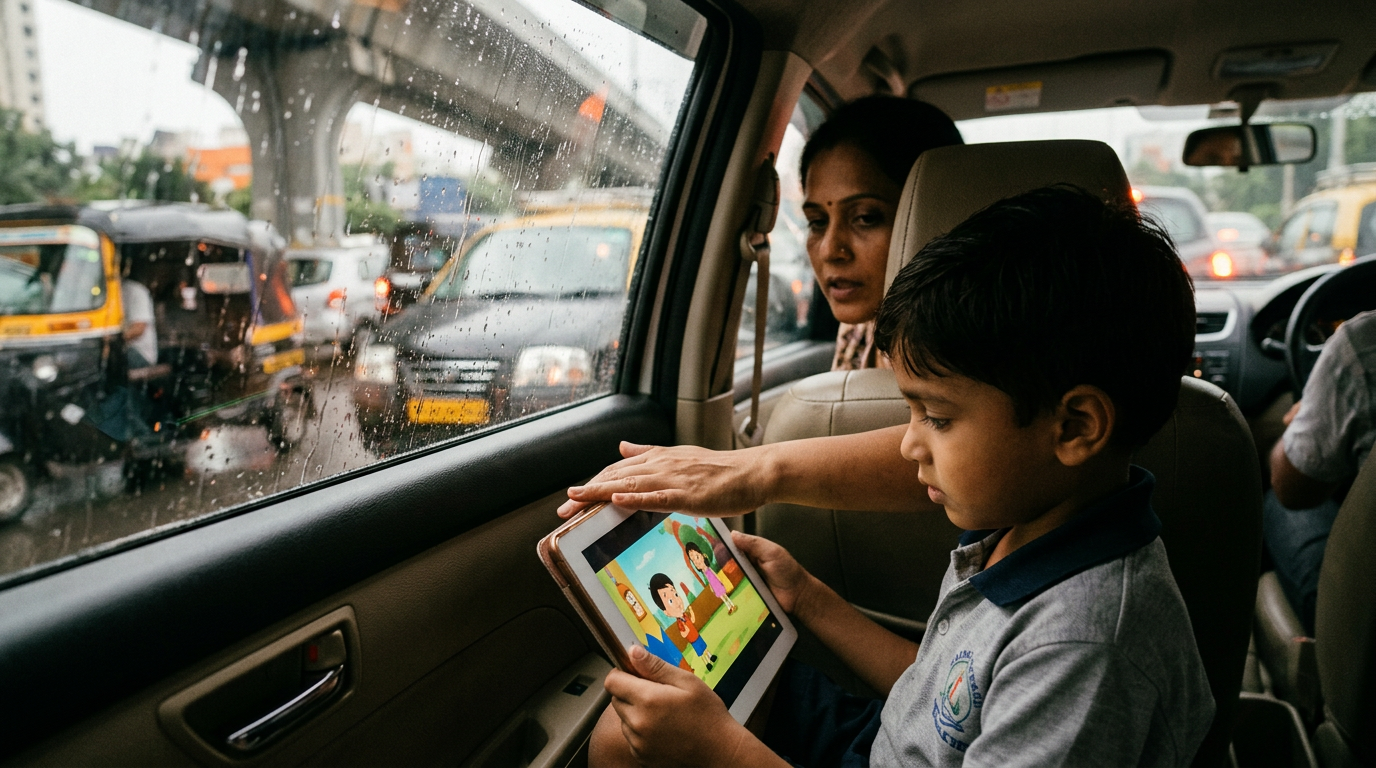
It's a classic Mumbai scene: stuck in traffic on the WEH, and the only thing keeping the peace is a tablet. But how much is too much? Here are screen time rules that actually work.
Tackling the Screen Time Dilemma in the City of Dreams
It’s a familiar scene for any Mumbai parent. You’re crawling along the Western Express Highway, the monsoon rain is lashing down, and the only thing preventing a full-blown meltdown in the backseat is a Peppa Pig episode on your phone. Or maybe it’s a quiet Sunday afternoon in your Powai high-rise, and the kids are glued to a tablet, giving you a precious hour of peace. We get it. In a city this demanding, screens can feel less like a luxury and more like a crucial parenting tool. The challenge, however, is finding a balance. We need effective screen time rules that don't just feel like another source of conflict but genuinely help our children thrive amidst the unique backdrop of the Mumbai Metropolitan Region (MMR).
The goal isn't to demonise technology. After all, many of our kids' school projects from their ICSE or IB schools require online research, and coding is the new cricket in some circles. The aim is to create a digital diet that is as balanced and thoughtful as the meals we try to put on the table. It’s about ensuring that a childhood in this vibrant city is defined more by trips to the Gateway of India and games in the society park than by the glow of a six-inch screen. This guide offers practical, Mumbai-centric strategies that acknowledge our reality while empowering our kids.
The 'Why' Before the 'How': Define Your Family's Digital Philosophy
Before you start downloading timer apps or creating elaborate schedules, take a step back. The most effective rules stem from a clear family philosophy. Why do you want to limit screen time? The answer to this question will be your North Star when your pre-teen argues that “everyone” is online. Is your primary goal to improve academic focus for the upcoming school year? Maybe you live in a Navi Mumbai complex with great amenities and want to encourage more physical activity. Or perhaps you’re concerned about social skills and want more face-to-face family time, free from the pings of WhatsApp.
In a city like Mumbai, the 'why' can be very specific. For instance, your goal might be to free up time for your daughter’s Bharatnatyam classes in Dadar or your son’s cricket coaching at Shivaji Park. It could be about creating space for unstructured play, a rarity in our highly scheduled lives. Maybe you've noticed your child's sleep is suffering, a major issue when they have a 6 AM school bus to catch from Thane to a school in the city. Having a conversation as a family about these goals makes the rules feel less like arbitrary punishments and more like a shared objective. Frame it positively: “We’re going to have less screen time so we can have more time for [family board games / weekend trips to Lonavala / learning to cook].” This collaborative approach builds buy-in from the start.
Rule #1: Create Sacred Tech-Free Zones and Times
One of the most powerful and simple rules to implement is cordoning off certain spaces and times as completely screen-free. This isn’t about deprivation; it’s about protecting parts of your day for connection and rest. The beauty of this rule is its clarity. There are no negotiations, no “just one more minute.” It’s a simple, binary state: on or off.
The Where: Tech-Free Zones
Whether you’re in a sprawling villa in Juhu or a cozy 2BHK in Borivali, some areas should be non-negotiable screen-free zones. The most important of these is the dining table. Meals are a primary opportunity for family connection, a time to talk about the day without the distraction of buzzing phones. Another critical zone is the bedroom. Numerous studies show that the blue light from screens interferes with melatonin production, wrecking sleep quality. For a Mumbai kid facing long commutes and demanding school days, quality sleep is non-negotiable. Enforce a rule where all devices—including phones, tablets, and laptops—are charged overnight in a central location like the living room, not in bedrooms.
The When: Tech-Free Times
Just as important as tech-free places are tech-free times. The first hour after waking up and the hour before bedtime are ideal candidates. This allows the brain to ease into the day and wind down for sleep without digital stimulation. Consider car rides as well. While it’s tempting to use screens for peace during a jam on the Bandra-Worli Sea Link, these moments can also be for conversation, I Spy, or simply watching the incredible city go by. A family walk along Carter Road or Marine Drive is another perfect opportunity to have a “phones-in-pockets” rule, for parents and kids alike.
Rule #2: The Content Contract — Focus on Quality, Not Just Quantity
An hour spent creating a stop-motion movie with an app is vastly different from an hour spent passively watching toy unboxing videos. Not all screen time is created equal. Shifting your focus from just the duration to the actual substance of the content can be a game-changer. This approach allows you to lean into the educational and creative potential of technology while setting firm boundaries against the digital equivalent of junk food.
Work with your child to create a “Content Contract.” This doesn’t have to be a formal legal document, but a simple, agreed-upon list of what constitutes “quality screen time.” This could include:
- Creative Apps: Digital drawing, music composition, coding for kids.
- Educational Content: Documentaries on platforms like CuriosityStream, language-learning apps like Duolingo (perfect for learning Marathi!), or virtual tours of places like the Chhatrapati Shivaji Maharaj Vastu Sangrahalaya.
- Active Games: Games that require problem-solving, strategy, or even physical movement.
- Connecting with Family: Video calls with grandparents or cousins who live outside Mumbai.
Passive consumption, like endlessly scrolling through YouTube Shorts or Instagram Reels, could be given a much shorter time limit. By categorizing content, you empower your child to make better media choices. They learn to see screens as tools for creation and learning, not just for passive entertainment. This way, when they do have screen time, it’s more likely to be a brain-building activity rather than a brain-numbing one.
Rule #3: The 'Earn Your Screen Time' Economy
One way to reduce entitlement and teach the value of both time and responsibility is to frame recreational screen time as a privilege to be earned, rather than a right. This isn’t about creating a punitive system, but about connecting digital rewards to real-world efforts. This “work-for-play” model helps children understand opportunity cost and makes them more mindful of how they spend their precious screen time minutes.
The “currency” for earning screen time can be tailored to your family’s values and your child’s age. Here are some Mumbai-friendly examples:
- Chores and Responsibilities: Simple tasks like helping sort the recycling for the raddi-wala, setting the table, or tidying up their room can earn them 15-20 minutes of screen time.
- Reading: For every 30 minutes spent reading a physical book (a trip to Kitab Khana in Fort can make this exciting), they earn 15 minutes of game time.
- Outdoor Play: An hour spent playing cricket or football in the society compound in Kharghar or Panvel earns them an equivalent amount of screen time later.
- Homework and Academics: Completing all their homework without fuss could unlock a 45-minute block for their favourite game on a weekday evening.
Rule #4: The Mumbai Weekend Swap — Trade Digital for Real-World Adventures
Weekends and school holidays are the main battlegrounds for screen time. The siren call of unlimited gaming or binge-watching is strong. The best defence is a good offence: make real life more appealing than screen life. Propose a “Weekend Swap,” where you trade hours of potential screen time for genuine Mumbai adventures. The key is to make the alternatives genuinely exciting and engaging.
"Children need models more than they need critics. We can’t expect our kids to disconnect if we are constantly glued to our own screens. A family digital detox, even for an afternoon, shows them that joy and connection exist beyond the pixelated world." - Dr. Anjali Joshi, Child Psychologist, Bandra
Instead of battling over the iPad, plan a compelling itinerary. The options in and around Mumbai are endless. Here are a few swaps to get you started:
- Swap YouTube for Nature: Instead of watching nature videos, take a trip to the Sanjay Gandhi National Park for a walk or the Maharashtra Nature Park in Dharavi. In Navi Mumbai, the Kharghar Hills or Parsik Hill offer great trails.
- Swap a Movie for Live Theatre: Trade a Netflix movie for a children’s play at the Prithvi Theatre in Juhu or the NCPA at Nariman Point. It's a completely different and far more immersive experience.
- Swap Video Games for Real Games: Replace a session of FIFA on the console with a visit to a local turf for a game of football. Or swap a racing game for go-karting at a place like Smaaash in Lower Parel.
- Swap Social Media for Socializing: Organize a playdate at a local park like Jogger's Park in Bandra or the sprawling Central Park in Kharghar. Check out [INTERNAL_LINK: best indoor play areas in Mumbai for toddlers] for rainy-day options.
The investment in time and energy (and sometimes money, with ticket prices from ₹300 to ₹1000 per person) pays off immensely. You’re not just reducing screen time; you’re building a bank of family memories rooted in the city you call home.
Rule #5: Acknowledge School Demands and Social Pressures
Let's be realistic. In 2024, a zero-screen policy is not just impractical, it's impossible. Schools across Mumbai, from the venerable Bombay Scottish to the newer international schools in the suburbs, rely heavily on technology. Google Classroom, online research portals, and educational apps are now standard. It's essential to differentiate between screen time for school and recreational screen time. Have a clear conversation with your child about this distinction. School-related screen use doesn't count against their recreational allowance.
Then there's the social pressure. The dreaded “But all my friends are playing BGMI online!” is a common refrain in many Mumbai households. FOMO (Fear Of Missing Out) is a powerful force for kids and teens. Ignoring this will only lead to them finding sneaky ways to get online. Instead, address it head-on.
- Talk to Other Parents: Connect with parents from your child's school or your building society. You might be surprised to find many share your concerns. Creating a united front, where several families have similar rules, can ease the social pressure on your child.
- Schedule Social Gaming: Rather than an outright ban, allow online gaming with friends within their allocated screen time. You could schedule a specific “gaming window” on a Saturday afternoon, for example.
- Teach Digital Citizenship: Use these games as a teaching moment. Talk to them about online safety, cyberbullying, and the importance of being respectful to other players. This helps them build critical life skills for the digital age. Check our guide on [INTERNAL_LINK: teaching kids about online safety].
Rule #6: Walk the Talk — Model the Behaviour You Want to See
This might be the hardest rule of all. You can have the most well-designed charts and timers, but if you’re mindlessly scrolling through Facebook while asking your child about their day, your rules will lack integrity. Children are astute observers. They absorb our habits, not just our instructions. Our own screen use sets the digital tone for the entire household.
Take an honest look at your own habits. Do you bring your phone to the dinner table? Are you checking work emails during family time? Do you fall into a rabbit hole of Instagram Reels before bed? Known as “phubbing” (phone snubbing), this behaviour sends a clear message: my screen is more important than you right now. As parents in a high-pressure city, our phones often feel like lifelines to work, logistics, and the outside world. But it's crucial to model the same boundaries we expect from our kids.
Commit to your own tech-free times and zones. When you’re with your kids at the playground in your Kandivali complex, be present. Put the phone away and engage with them. When you declare a family movie night, put your phone on silent and in another room. Your actions are the most powerful lesson you can teach. When your kids see you choosing connection over your device, they are far more likely to do the same.
Crafting a Balanced Digital Life, Mumbai-Style
Managing screen time in a city as dynamic and demanding as Mumbai is a continuous balancing act, not a one-time fix. There will be days—stuck in traffic, during a relentless monsoon downpour, or when you’re on a work deadline—where you rely on screens more than you’d like. And that’s okay. The objective is not perfection but progress. It's about setting a clear direction for your family's digital wellness, one that prioritizes real-world experiences, genuine connection, and mindful use of technology.
By defining your 'why,' creating screen-free zones, focusing on quality content, and, most importantly, modeling healthy habits yourself, you can move beyond the constant battles. You can raise children who are prepared for a digital future but are equally grounded in the tangible, chaotic, and wonderful reality of growing up in Mumbai. You're not just making rules; you're building a foundation for a healthier, more balanced life.
What screen time rules have worked for your family in Mumbai or Navi Mumbai? Share your tips and local-friendly ideas in the comments below!
Keep reading
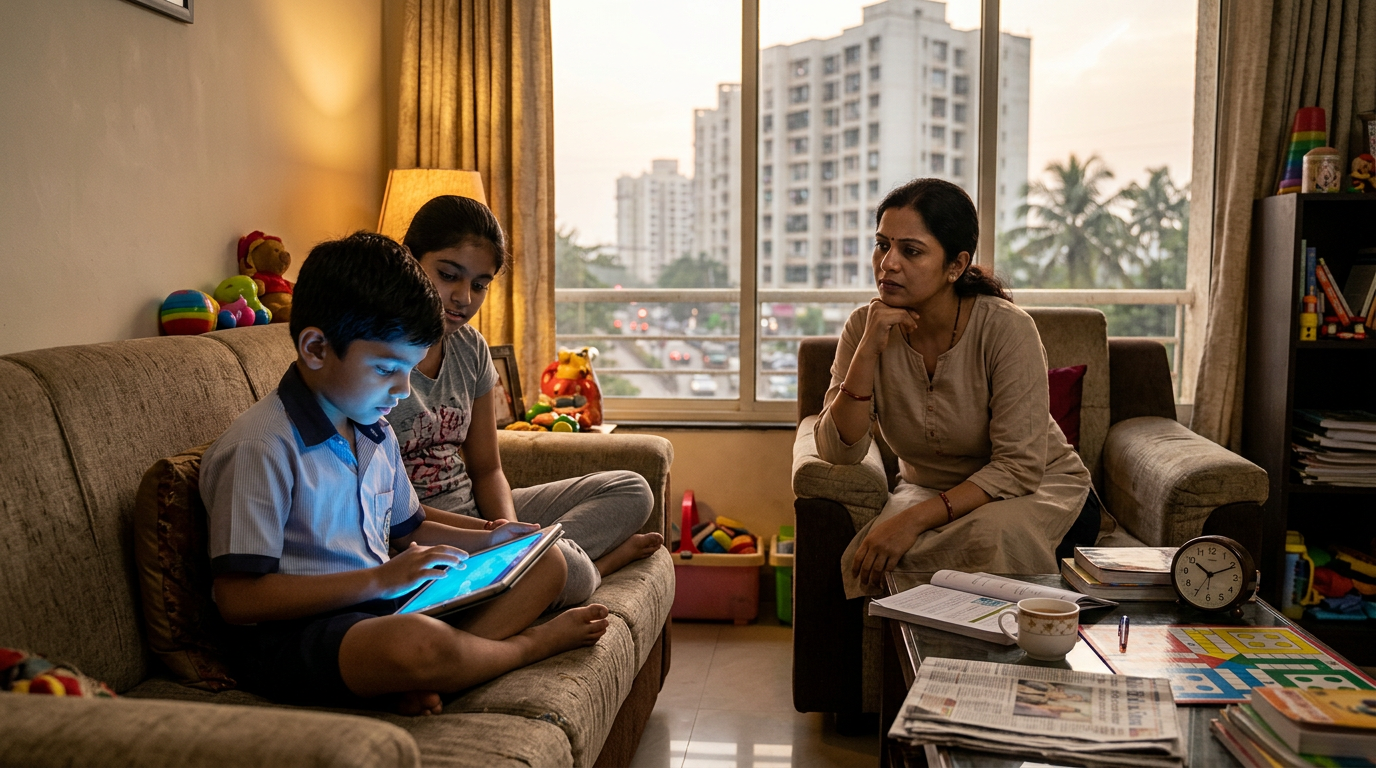
Screen Time Rules That Work for Mumbai & Navi Mumbai Kids
From Bandra to Belapur, Mumbai parents are asking how to manage tablets and phones. Here are screen time rules that actually work for our city's unique challenges.
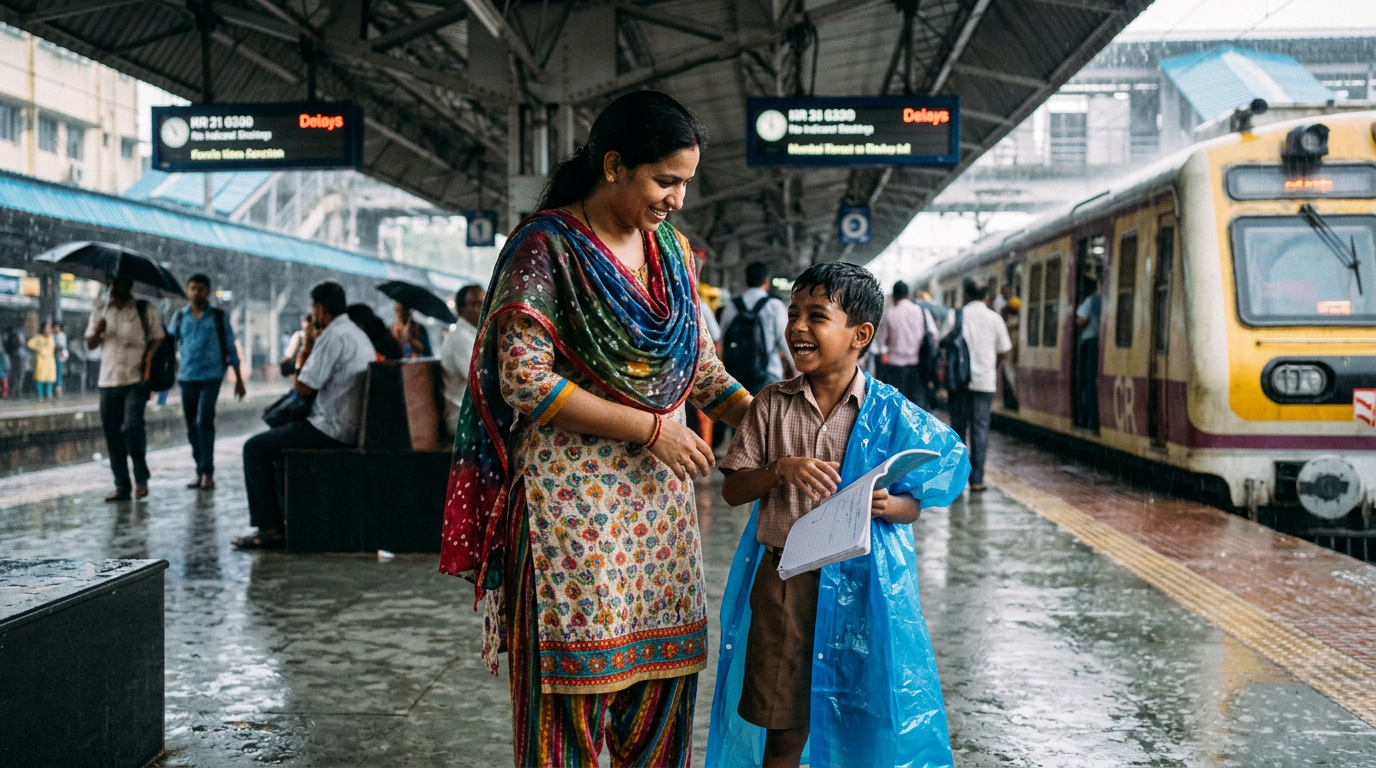
How to Raise Resilient Kids in the Heart of Mumbai
Stuck on the Harbour Line during a downpour? That's just a Tuesday. This guide explores how to raise resilient kids who can thrive amidst Mumbai's unique chaos and charm.
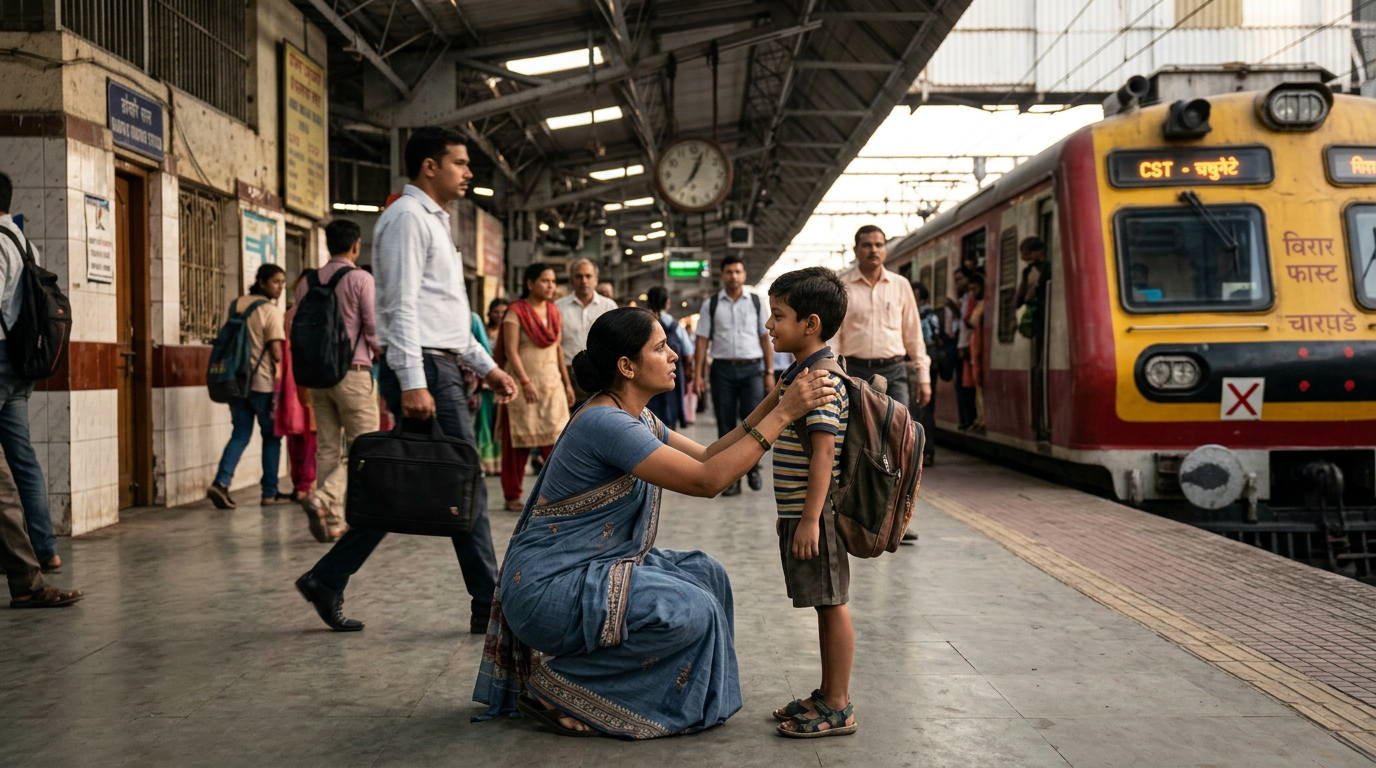
Raising Resilient Kids: A Mumbai Parent's Survival Guide
From packed local trains to intense school rivalries, Mumbai is a tough city. Here’s a practical, local’s guide on how to raise resilient kids who can thrive in the Maximum City.