
A Guide to Minimalist Living for Beginners in Mumbai
Tired of the clutter in your Mumbai apartment? Explore our practical guide to minimalist living for beginners, tailored for the unique challenges and opportunities of life in the MMR.
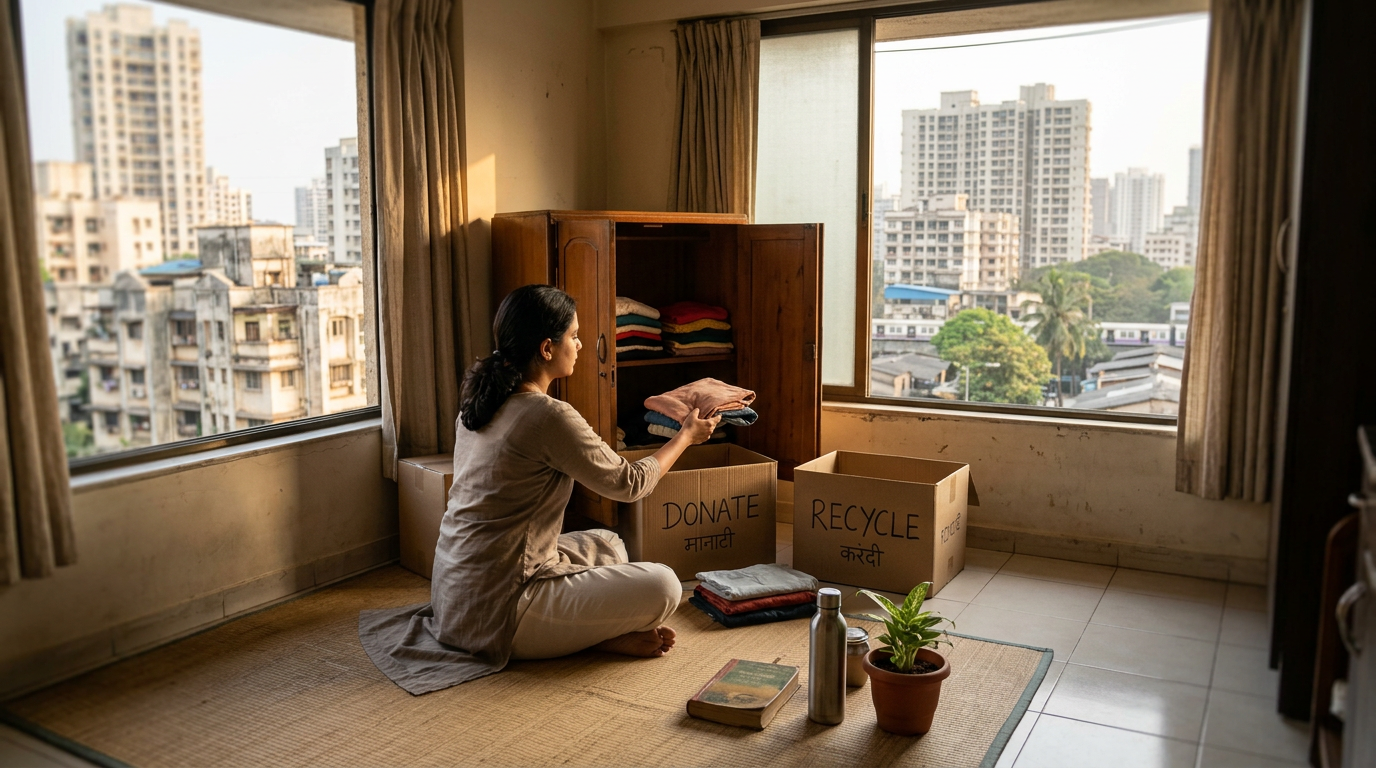
Living in Mumbai, space is the ultimate luxury. Whether you're in a sprawling sea-facing apartment in Bandra or a compact 1BHK in Thane, the feeling of being overwhelmed by 'stuff' is universal. The constant barrage of sales at Phoenix Palladium, the tempting street finds on Hill Road, and the sheer pace of the city can lead to a home and a mind filled with clutter. This is where embracing minimalist living for beginners isn't just a trendy aesthetic; it's a practical survival strategy for a more intentional and peaceful life in the Mumbai Metropolitan Region (MMR).
Forget the sterile, all-white rooms you see on Instagram. Minimalism in a city like ours is about making conscious choices. It’s about choosing a quiet walk along Carter Road over a crowded mall, quality over quantity, and experiences over possessions. It's about reclaiming your space, your time, and your sanity in a city that demands so much of all three.
What is Minimalism, Really? The Mumbai Edition
Let's clear the air. Minimalism isn't about deprivation. It's not a competition to see who can own the fewest things. At its core, minimalism is the intentional promotion of the things we most value and the removal of everything that distracts us from them. In the context of Mumbai, it's a powerful filter for the noise. It’s about asking yourself: does this item, this subscription, this commitment truly add value to my life, or is it just taking up precious square footage in my Powai flat and my already-overloaded mind?
Think of it as the ultimate form of personal editing. You curate your life the way a good editor curates a magazine – keeping only the most impactful, meaningful content. It’s a shift in mindset from passive consumption to active, intentional living. Instead of mindlessly acquiring things to fill a void, you actively choose what earns a place in your home and your life. This could mean finally letting go of the clothes you bought for a Goa trip five years ago or the kitchen gadgets from Crawford Market that you've used only once.
"My tiny 400 sq. ft. apartment in Andheri started feeling like a palace once I applied minimalist principles. It wasn't about getting rid of things; it was about making room for my life. Now, I have space for my yoga mat, a small reading nook, and friends to come over – things that actually make me happy." - A local Mumbai interior designer.
This philosophy extends beyond your physical possessions. It applies to your schedule, your digital life, and even your relationships. It's about saying 'no' to a draining social obligation so you can say 'yes' to reading a book at a quiet café in Kala Ghoda or taking a ferry to Elephanta Caves. It’s about creating breathing room in a city that rarely stops for breath.
The First Step: Decluttering Your Mumbai Home
The thought of decluttering an entire Mumbai home, with its lofts and hidden storage packed to the brim, can be paralysing. The key is to start small and be systematic. Don't attempt to overhaul your entire 2BHK in Kharghar in a single weekend. That’s a recipe for burnout. Instead, adopt a more manageable, long-term approach that fits into your busy life.
The One-In, One-Out Rule
This is a fantastic, simple rule for any Mumbaikar who loves shopping, whether it's at Inorbit Mall or the street stalls of Linking Road. The rule is simple: for every new item you bring into your home, one similar item must leave. Bought a new kurta from Fabindia? An old one has to be donated. A new book from Kitab Khana? An old one goes into the donation pile. This simple discipline stops accumulation in its tracks and forces you to consider each new purchase carefully. It transforms shopping from a mindless habit into a conscious act of curation.
Where to Let Go in Mumbai
Once you've decided to let go of items, the question is where they should go. Throwing things away should be the last resort.
- Donations: NGOs like Goonj have collection centers across Mumbai and are fantastic for clothes, household items, and more. For old shoes, look up Greensole. Many local temples and religious institutions also accept donations of usable goods for the needy.
- Selling: For items in good condition, Facebook Marketplace or groups like "Sell & Buy In Mumbai" can connect you with buyers. It’s a great way to make a little cash back.
- Recycling: Don't underestimate your local raddiwalas. They are the unsung heroes of Mumbai's recycling ecosystem. Separate your paper, plastic, and metal. They will often come to your doorstep and pay you for the materials, ensuring they don't end up in a landfill.
Redefining Your Wardrobe: From Crowded to Curated
Open a typical Mumbai wardrobe, and you'll find a chaotic mix: fast-fashion tops for Friday nights in Lower Parel, a dozen kurtas for various festivals, heavy traditional wear that sees the light of day once a year, and an entire section dedicated to monsoon-specific clothing that’s slightly mouldy. Minimalism offers a sane alternative: the capsule wardrobe.
The concept is to have a limited collection of high-quality, versatile pieces that can be mixed and matched to create numerous outfits. This requires a shift in perspective – thinking about longevity and versatility instead of trends. For Mumbai's unique climate and culture, a capsule wardrobe might include:
- High-Quality Basics: Well-fitting jeans that can be dressed up for a meeting in BKC or down for a coffee in Versova, comfortable cotton t-shirts in neutral colours, and a classic white shirt.
- Smart Layers: A light jacket or a smart blazer that works for over-air-conditioned offices and cinemas.
- Monsoon-Ready Gear: One pair of excellent, durable waterproof sandals or floaters, and a good quality, quick-drying trench coat or windcheater, replacing the five flimsy ones you buy each year.
- Versatile Ethnic Wear: Instead of ten cheap kurtas, invest in two or three from brands like Anokhi or a local Bandra boutique that are well-cut, made from breathable fabric, and can be styled in multiple ways.
The Minimalist Kitchen in the MMR
Kitchens in most Mumbai and Navi Mumbai apartments are notoriously compact. This is one area where minimalism isn't just a choice; it's a necessity. Yet, we fill them with single-purpose gadgets (apple corer, anyone?), duplicate utensils, and a graveyard of mismatched plastic containers. A minimalist kitchen is an efficient, joyful space to cook in, even if it's the size of a postage stamp.
Start by being ruthless with unitaskers. Do you really need a separate gadget for every conceivable task, or can a good chef's knife and a cutting board do the job? Invest in quality, multi-purpose tools: a heavy-bottomed kadai that can be used for curries, stir-fries, and deep-frying; a sturdy set of stainless steel mixing bowls; a reliable pressure cooker (a non-negotiable in any Indian kitchen). These items might cost more upfront than their flimsy counterparts from the local supermarket, but they will last a lifetime and perform better.
The Minimalist Pantry Makeover
Your pantry is another area ripe for simplification. Here’s a simple plan:
- Decant Everything: Invest in clear, airtight, stackable containers. Seeing exactly what you have and how much is left prevents you from buying duplicate packets of masalas or dal.
- Shop with a List: Plan your meals for the week. This not only reduces food waste but also prevents impulse buys at the grocery store. Buy your fresh vegetables from the local market in Matunga or the Vashi APMC with a clear plan.
- Go Local and Package-Free: Instead of buying branded, packaged grains and spices from a supermarket, take your containers to the local kirana store. You can buy exactly the amount you need, reducing both packaging waste and the clutter of half-empty bags in your cupboards.
Consuming Experiences, Not Things
This is the heart of the minimalist philosophy and where living in a city like Mumbai becomes a huge advantage. The true joy of minimalism isn’t in the empty spaces in your closet, but in what you fill your life with instead. By consciously spending less on material goods, you free up significant financial and mental resources to invest in experiences that create lasting memories.
Consider the ₹20,000 you might spend on a new phone or designer bag. In the minimalist framework, that same money could be transformed into a wealth of experiences:
- A weekend getaway to a quiet homestay in Karjat or a beach resort in Alibaug.
- A series of workshops – learn pottery in a studio in Dharavi, take a cooking class, or join a dance group in Juhu.
- An annual membership to the Chhatrapati Shivaji Maharaj Vastu Sangrahalaya (CSMVS) museum or the NCPA for a year of cultural immersion.
- Tickets to see a play at the iconic Prithvi Theatre followed by dinner. [INTERNAL_LINK: upcoming plays and events in mumbai]
- Exploring the city's rich history with a guided heritage walk through the Fort district or Khotachiwadi.
Digital Minimalism: Decluttering Your Digital Life
In Mumbai, our digital lives are as cluttered and noisy as a Dadar station platform during peak hours. The constant stream of notifications from WhatsApp groups, news apps, e-commerce sales, and social media creates a state of perpetual distraction and anxiety. This digital clutter is just as detrimental to our peace of mind as the physical clutter in our homes. Digital minimalism is about using technology as a tool to serve our goals, not letting it become a master that dictates our attention.
The first step is a digital audit. Look at your phone's screen time report. Where is your attention going? The goal isn't to abandon technology – it’s indispensable for navigating life in the MMR – but to use it with intention. Here are some actionable steps:
- The Great Unsubscribe: Spend 30 minutes unsubscribing from all the promotional emails you never read. Use a service like Unroll.Me to bundle the rest.
- Notification Neutrality: Go into your phone's settings and turn off notifications for all non-essential apps. Do you really need to know about a flash sale on Myntra instantly? A batch-checking approach (checking emails or social media at set times) is far more productive.
- Curate Your Feed: Social media can be a source of inspiration or a trigger for comparison and inadequacy. Unfollow accounts that make you feel bad about yourself or your life. Follow accounts that align with your interests and values – local artists, hiking groups, or community pages.
- Organize Your Cloud: Your digital desktop and cloud storage (Google Drive, Dropbox) can become a dumping ground. Create a simple folder structure and schedule 15 minutes a week to file new documents and delete duplicates.
Minimalism and Your Finances: The Ultimate Mumbai Hack
Let's talk about the elephant in the room: the cost of living in Mumbai. From exorbitant rents to the high price of a simple coffee, this city can drain your bank account. This is where minimalism transcends lifestyle philosophy and becomes a powerful financial strategy. By consciously choosing to buy less, you are making an active choice to save more, invest smarter, and build financial resilience. [INTERNAL_LINK: financial planning for young professionals in mumbai]
When you stop and think before every purchase, you cut out a huge amount of discretionary spending. The impulse buys, the 'retail therapy' sessions, the constant upgrades – they add up. A minimalist approach might mean saving ₹15,000-₹25,000 a month simply by avoiding mindless consumption. This isn't money saved through deprivation; it's money reclaimed from purchases that wouldn't have brought lasting value anyway.
What can you do with this reclaimed capital? The possibilities are life-changing in a city like Mumbai:
- Build a Real Emergency Fund: Having 6-12 months of living expenses saved provides a level of security and peace of mind that no new gadget can offer.
- Attack Your Debt: Use the extra cash to aggressively pay down credit card debt or personal loans, freeing yourself from the stress of high-interest EMIs.
- Invest for the Future: Start or increase your SIPs. That money, invested wisely, can go towards a down payment on a home, your retirement, or other long-term goals.
- Experience Freedom: The financial cushion gives you options. It allows you to quit a job you hate, take a sabbatical to travel, or start your own venture. It is the ultimate freedom in a city that can often feel like a golden cage.
Adopting minimalism is a journey, not a destination. It’s a continuous process of evaluation and alignment. It's about designing a life that reflects your own values, not the ones dictated by billboards and advertisements. For a beginner in Mumbai or Navi Mumbai, it starts with a single, simple question asked in front of a closet, a shopping cart, or a calendar invite: "Does this truly add value to my life?" The answer to that question, repeated over time, will build a richer, freer, and more spacious existence, even in the heart of our bustling, beautiful city.
What is the first area of your life you plan to simplify? Share your thoughts and your own minimalist journey in the comments below!
Keep reading
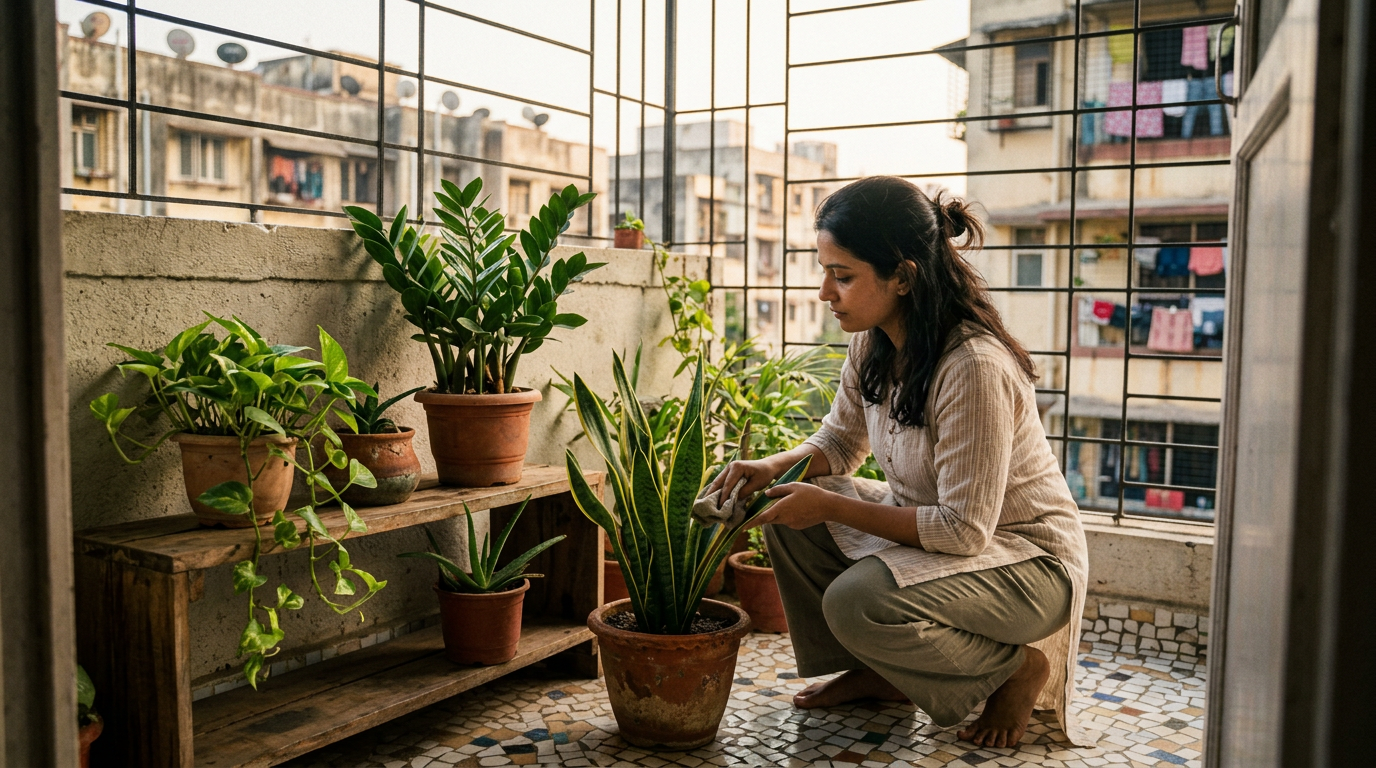
The Ultimate Guide to Low Maintenance Indoor Plants for Mumbai Homes
Transform your Mumbai apartment into a green oasis. Discover the toughest, most forgiving low maintenance indoor plants that can handle a Mumbaikar's busy life and our city's unique climate.
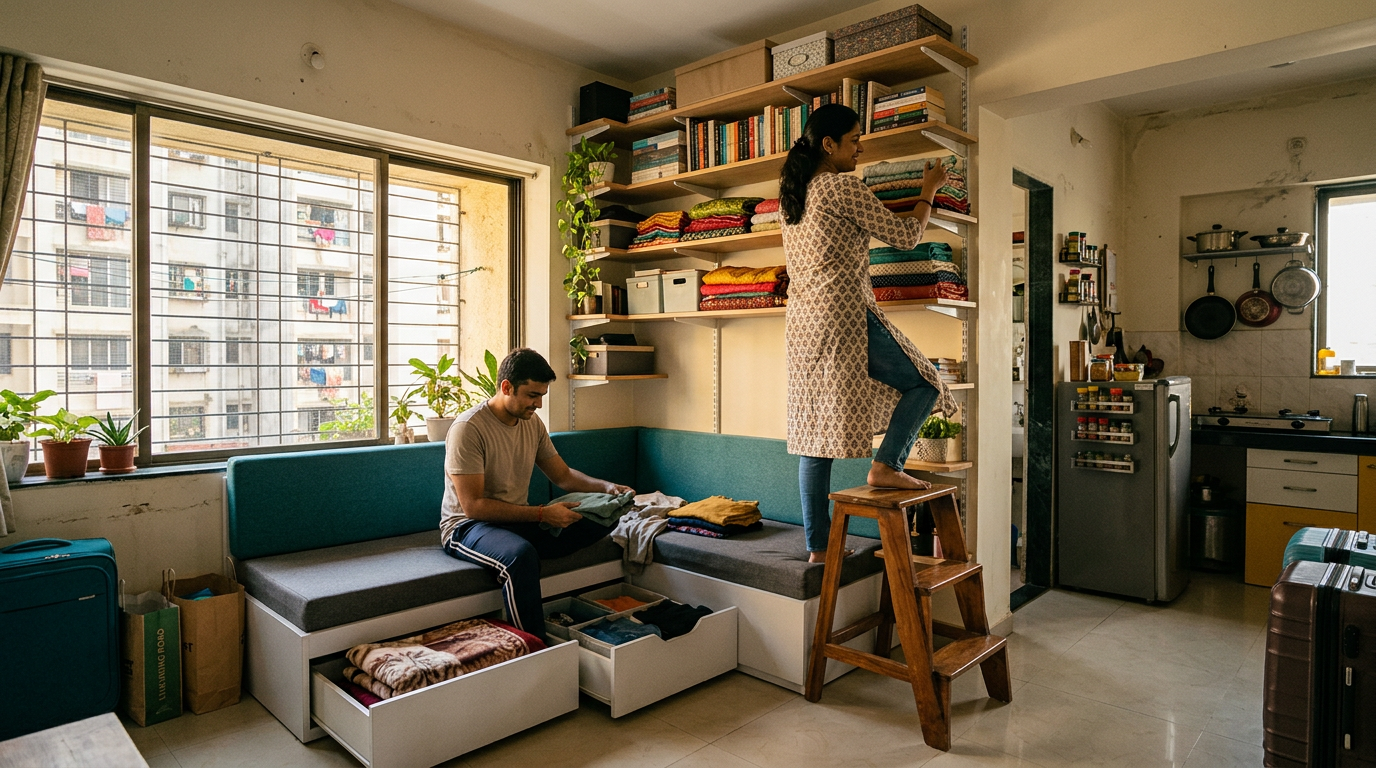
Smart Small Apartment Storage Ideas for Mumbai Homes
Struggling with space in your Mumbai apartment? Our guide offers practical and stylish small apartment storage ideas, from vertical solutions to multipurpose furniture, perfect for any 1BHK.
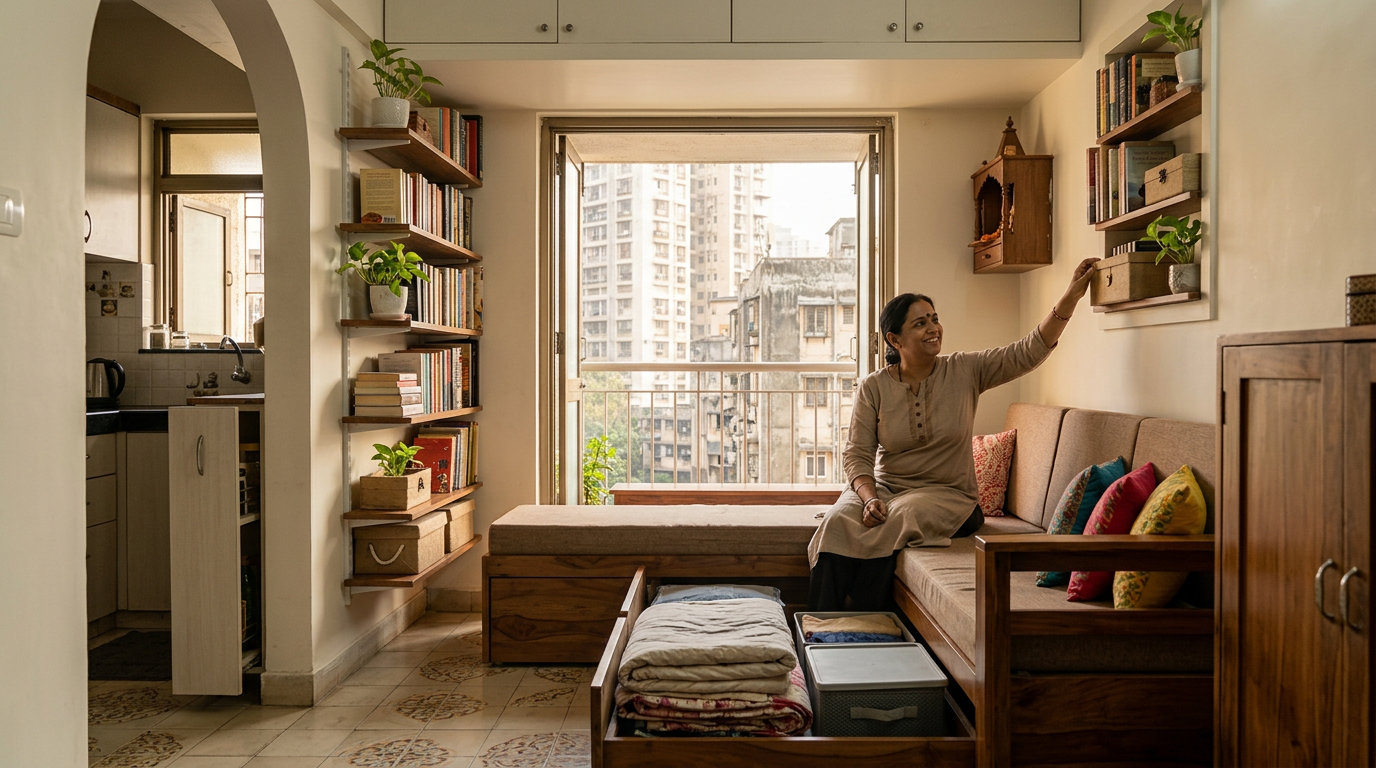
Smart Storage Ideas for Small Mumbai Apartments
Living in the Mumbai Metropolitan Region means getting creative with space. Our guide offers ingenious small apartment storage ideas to help you declutter and maximize every square foot of your home.