
Minimalist Living for Beginners: A Practical Guide for Mumbai
Embracing minimalist living for beginners in Mumbai's compact apartments helps you reclaim valuable square footage, cut daily stress, and save money.
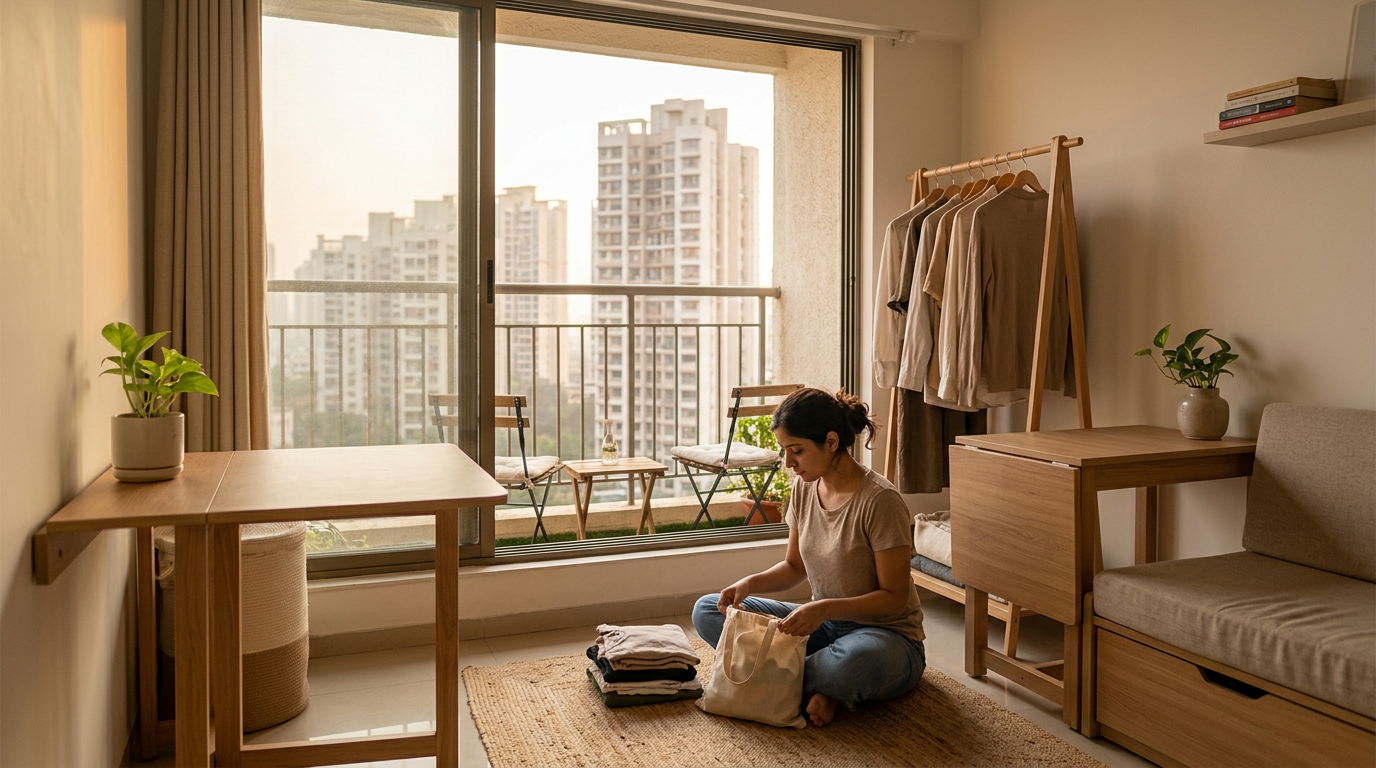
Stepping out onto your balcony in Kandivali or looking across the skyline from a 14th-floor high-rise in Seawoods, one reality hits immediately: space in the Mumbai Metropolitan Region is our most precious commodity. When your 1BHK or compact 2BHK costs upwards of ₹1.5 crore, filling it with unread books, duplicate cookware, and fast-fashion hauls from Hill Road makes your expensive home feel suffocating. Embracing minimalist living for beginners is not about turning your flat into a sterile art gallery; it is about reclaiming breathing room, preserving mental clarity, and making peace with urban living across MMR.
The Mumbai Reality Check: Why Minimalism Works in 500 Square Feet
In suburban Mumbai, a typical 1BHK offers between 380 and 450 square feet of carpet area. Even if you upgrade to a 2BHK in Kharghar, Thane West, or Powai, you rarely cross 750 square feet. At real estate rates ranging from ₹18,000 per square foot in Navi Mumbai to well over ₹55,000 in Bandra or Lower Parel, every square foot comes at an immense financial cost. When you keep a treadmill you never run on, an old CRT monitor, or three broken suitcases, you are effectively paying thousands of rupees a month simply to store dead weight.
Beyond the direct financial angle, compact apartments in coastal Maharashtra face aggressive environmental pressures. Dust from ongoing metro construction, high humidity, and four months of torrential monsoon downpours turn cluttered rooms into damp breeding grounds for silverfish and mould. A minimalist approach allows airflow, simplifies deep cleaning before Ganpati or Diwali, and lets natural light move uninterrupted through small living spaces.
Living minimally in our city does not mean depriving yourself of comfort. It is about understanding the boundary between utility and emotional inertia. By shedding non-essential belongings, you reduce the physical friction of getting ready during the morning rush hour, lower your reliance on expensive deep-cleaning services, and transform cramped quarters into an airy sanctuary.
Step One: The MMR Wardrobe Audit
Few places in a Mumbai home generate more clutter than the wardrobe. The ease of shopping at Colaba Causeway, Linking Road, or weekly pop-ups in Kurla malls makes cheap clothing accumulation effortless. Yet, our climate demands a remarkably straightforward wardrobe: breathable, light-coloured cotton, linen, and moisture-wicking fabrics that survive 85% relative humidity and the sweltering heat of October.
The Practical Wardrobe Sort
Clear out your cupboard entirely on a Saturday morning. Divide your clothes into three distinct groups:
- The Daily Active Rotation: Workwear, gym clothes, and daily cotton kurtas or tees you actually wore during the last three weeks.
- Monsoon and Transit Friendly: Fast-drying synthetic blends and lightweight trousers that survive local train commutes without soaking up puddle water.
- The Festive & Occasional: A single, well-protected storage bag containing two to three high-quality wedding or festive outfits, kept with silica gel packs to prevent moisture damage.
If you have not worn a garment in nine months—barring formal wedding attire—it does not belong in your wardrobe. The heavy acrylic sweaters bought for a vacation to Himachal or winter jackets that only come out during a two-week trip to Delhi should be compressed into vacuum-sealed bags and stored on top shelves, not taking up prime daily rack space.
Practical Decluttering: Where to Donate and Recycle in MMR
The biggest roadblock to minimalist living for beginners is the paralysis of letting go. We hold onto obsolete electronics and half-torn bedsheets because tossing them in the municipal bin feels wasteful. Fortunately, Mumbai has an established network of sustainable circular economy channels.
"Minimalism is not about having less than you need to survive. It is about clearing out the noise so you can cherish what actually supports your daily life."
Follow this systematic process for clearing unwanted items across Mumbai and Navi Mumbai:
- Paper, Cardboard, and Metal: Work with your neighbourhood raddiwala. Whether you live in Dadar or Vashi Sector 17, local scrap dealers pay honest rates per kilogram and ensure paper moves into regional recycling streams.
- Wearable Clothing: Hand usable garments to organisations like Goonj (with drop-off centres in Lower Parel, Kanjurmarg, and Kandivali) or local chapters of the Robin Hood Army. Avoid dumping old clothes at temple gates or train station footbridges where they get damaged by rain and traffic.
- E-Waste Disposal: Obsolete charging cables, dead laptops, and broken appliances should never enter the Deonar or Kanjurmarg dumping grounds. Drop them off at municipal collection bins or dedicated e-waste recyclers such as Eco Recycling Ltd (Ecoreco).
- Books and Media: Donate paperbacks and academic texts to local public reading rooms, college libraries in Matunga or Belapur, or community book exchanges in Bandra and Versova. Check our guide on [INTERNAL_LINK: home organisation ideas for small flats] for maintaining an efficient mini-library.
Multi-Functional Furniture: Maximising Usable Floor Space
Standard retail furniture displayed in massive suburban showrooms often looks ridiculous once brought inside a tight Mumbai hall. Heavy six-seater sheesham wood dining tables or bulky armchairs completely swallow floor space and block foot traffic from the kitchen to the balcony.
When starting your minimalist transition, reassess your primary furnishings. Multi-functional pieces provide the utility of two items while claiming the floor footprint of one. Look for beds with hydraulic lift mechanisms to store seasonal bedding, folding dining tables that mount flat against a wall when not in use, and nesting stools that pull apart only when guests drop by for chai.
If you rent an apartment in areas like Marol, Malad, or Ghodbunder Road, avoid purchasing heavy wooden furniture altogether. Utilise subscription services like Furlenco or Rentomojo, or source second-hand solid-wood pieces from Oshiwara Furniture Market that you can resell cleanly when your lease ends. Keeping your furniture modular and elevated on slender legs creates visual continuous floor lines, making small living rooms appear significantly larger.
Taming the 10-Minute Delivery and Impulse Shopping Trap
In dense urban pockets, hyper-convenience has quietly become the primary driver of physical clutter. With Zepto, Blinkit, and Instamart promising door delivery in under fifteen minutes, the barrier to acquiring unnecessary household goods has collapsed completely. Kitchen counters in Chembur and Mulund quickly fill up with novelty spice mixes, duplicate kitchen gadgets, and bulk-discounted cleaning agents that will take years to consume.
To curb consumption spikes, apply strict behavioral gates to your digital orders:
- The 72-Hour Waiting Rule: For non-emergency items (like a new coffee maker, storage baskets, or decorative cushions), keep them in your online cart for three full days. In four out of five instances, the urgency vanishes.
- One In, One Out Policy: If a new pair of work shoes or a ceramic mug enters your home, one older item must be retired, donated, or recycled immediately.
- Audit Your Refrigerator Weekly: Before placing your grocery delivery on Sunday morning, empty the crisper drawer and run down existing provisions. In Mumbai's humid climate, neglected vegetables and bulk condiments spoil rapidly, turning pantries into sources of food waste.
By enforcing intentionality on digital carts, you prevent clutter from crossing your doorstep in the first place, saving thousands of rupees each month that can be redirected into your emergency fund or travel experiences.
Digital Minimalism in the Commuter Capital
Physical objects are only half the battle. If you spend ninety minutes every day on the Western Line between Borivali and Churchgate, or navigate the Eastern Express Highway bumper-to-bumper, mental clutter accumulates just as quickly. Staring at an unorganised smartphone home screen filled with flashing discount notifications and noisy WhatsApp society groups only amplifies travel fatigue.
Streamlining Your Transit Screen Time
Clean your primary mobile devices using these three steps:
- Mute Building and Society Groups: Switch building society, alumni, and broadcast WhatsApp groups to indefinite mute. Set aside a fixed ten-minute window once an evening to scan for genuine administrative notices.
- Strip the Home Screen: Keep only primary daily essentials on your main screen—your digital railway pass, UPI payment app, cab aggregator, and music or audiobook player. Move everything else into categorised app drawers.
- Swap Infinite Feeds for Long-Form Content: Use your commute to read downloaded articles, offline books on a Kindle, or informative podcasts. When you remove endless short-form video scrolls from your daily transit, you arrive home feeling centered rather than cognitively depleted.
Digital hygiene is just as foundational to minimal living as a clean living room. For deeper strategies on organising personal spaces, explore our walkthrough on [INTERNAL_LINK: decluttering your home office].
Managing Family Dynamics and Sentimental Objects
Western minimalism often promotes an extreme, almost detached lifestyle that ignores the warm reality of Indian family traditions. You cannot simply discard the silver coins gifted by your grandmother during Dhanteras, the copper pooja thali, or the stainless-steel dabba set handed down by your mother. Attempting an aggressive clear-out without family buy-in usually leads to domestic friction.
Start with your personal boundary zones before attempting to reform shared spaces. Your bedside table, your half of the wardrobe, and your direct workspace are safe zones where you can practice restraint without offending anyone. Demonstrate the benefits through your own calm environment; family members often begin asking for assistance with their own cupboards once they see how effortless your routine has become.
For genuine sentimental keepsakes, designate a single, decorative "memory box." Whether it is an old school autograph book, boarding passes from your honeymoon in Kerala, or childhood photographs, confine sentimental items to this specified volume. If the box is full and you wish to add a new memory, evaluate what inside has lost its emotional resonance and make a trade.
Designing Calm Living Corners
Once you strip away surplus belongings, small Mumbai apartments reveal their true charm. Even a modest balcony in Ulwe or a box-window in Vile Parle can be turned into a quiet refuge from the chaotic city outside. A successful minimalist interior relies on tactile warmth rather than visual excess.
Elements of a Balanced Minimalist Space
- Natural Textures Over Plastic: Replace cheap plastic buckets and synthetic mats with cane baskets, terracotta planters, and woven dhurries sourced from local craft bazaars.
- Restrained Colour Palettes: Stick to neutral shades of off-white, light grey, or muted beige on primary walls to bounce limited exterior light. Introduce depth with warm wood finishes and indoor plants like money plants or snake plants that thrive indoors.
- Clear Sightlines: Keep surfaces—especially your kitchen platform, centre table, and windowsill—clear of loose items. Leaving empty surfaces creates the illusion of architectural expanse in smaller rooms.
Remember that minimalist design is not about cold starkness; it is about creating an environment where your mind can rest. When the horn honking, construction drills, and train sirens fade behind closed double-glazed windows, your living room should feel quiet, orderly, and deeply restorative.
Begin Your Minimalist Journey This Weekend
Adopting minimalist living for beginners in the Mumbai Metropolitan Region is not an all-or-nothing overnight transformation. You do not need to pack your entire flat into cardboard boxes tomorrow or toss out cherished possessions. True lifestyle sustainability comes from small, deliberate shifts in how you view space, time, and possessions in one of the most crowded, dynamic cities on earth.
Pick one contained spot this coming Saturday—your bathroom cabinet, your entryway shoe rack, or the bedside drawer that catches loose receipts and broken keys. Empty it completely, clean the shelf, retain only the items that serve your current daily life, and responsibly dispose of the rest. Once you experience the quiet relief of a single uncluttered corner, the motivation to simplify the rest of your home will follow naturally.
Keep reading
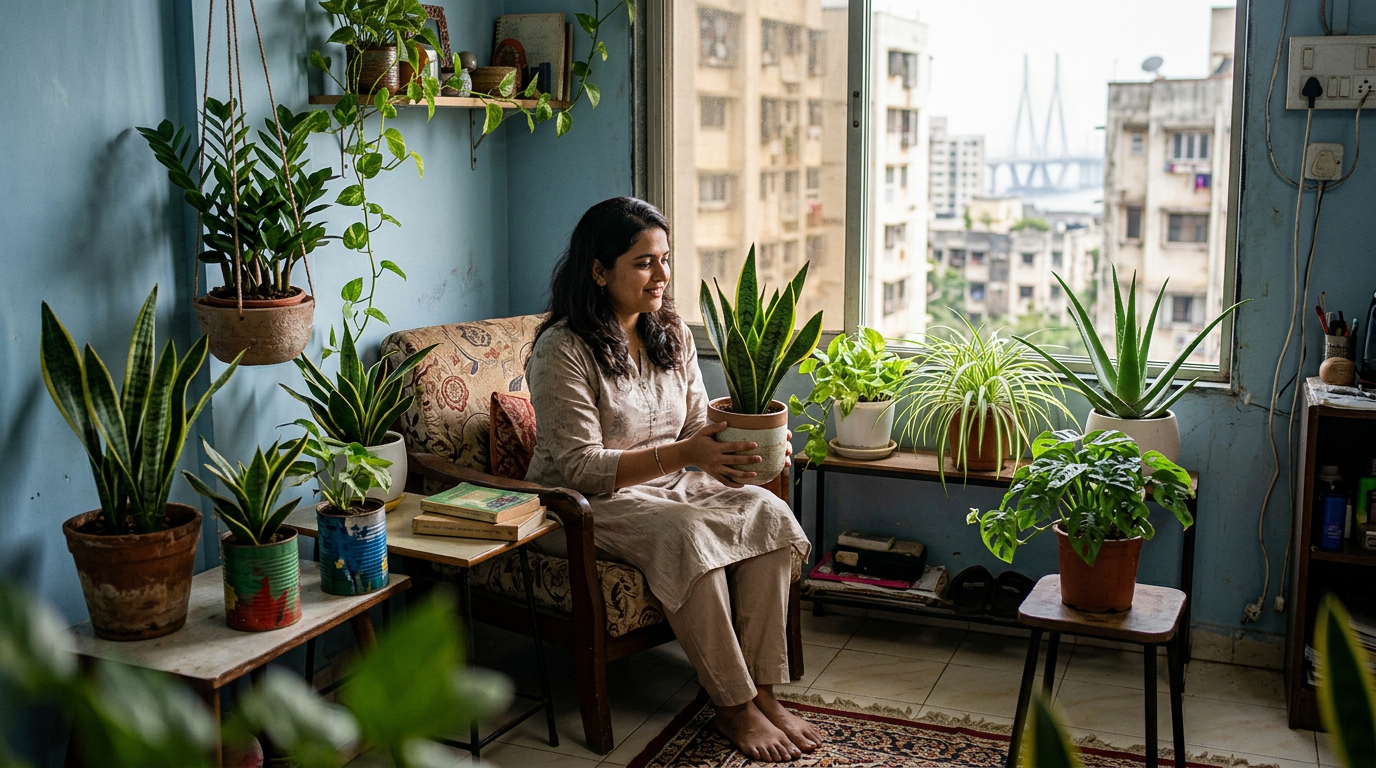
Mumbai's Guide to Low Maintenance Indoor Plants
Struggling to keep plants alive in your Mumbai flat? Our definitive guide covers the best low maintenance indoor plants that flourish in our city's unique climate.
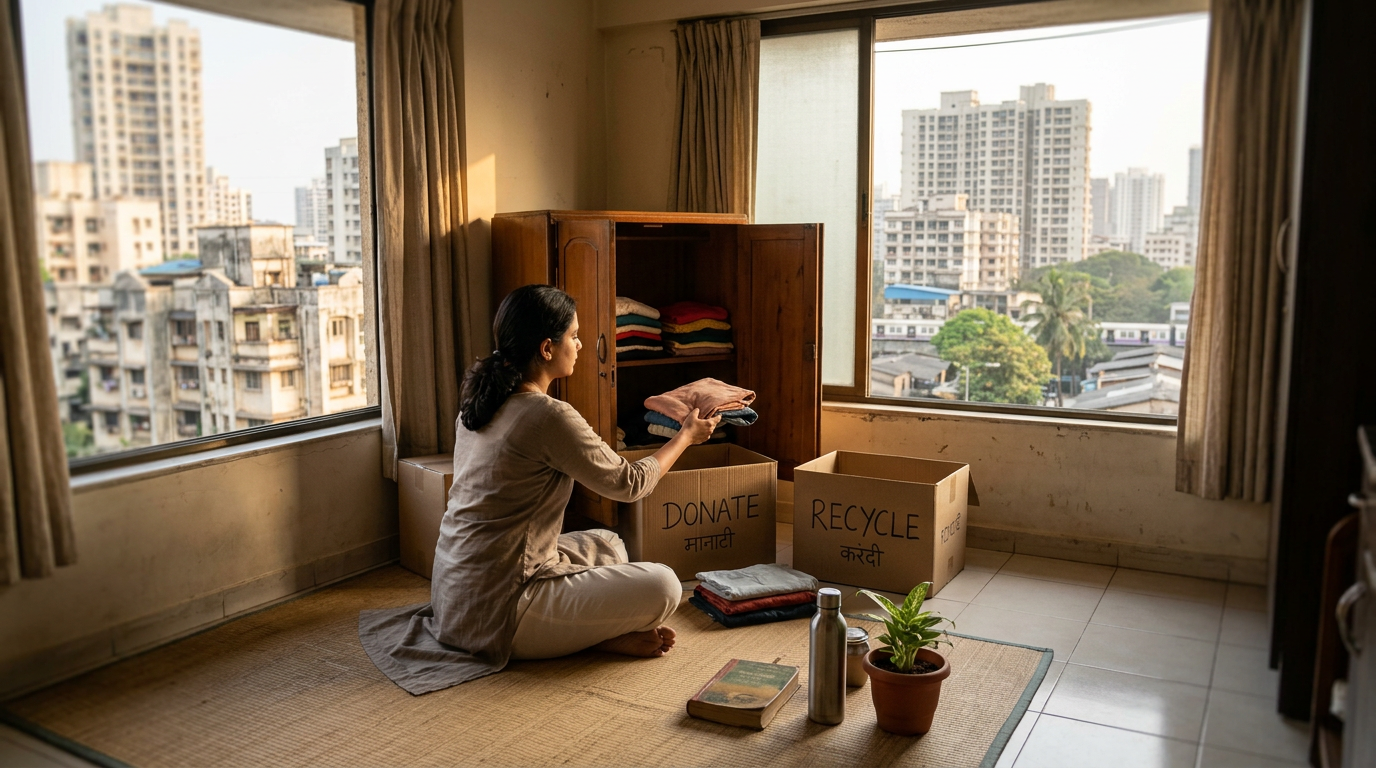
A Guide to Minimalist Living for Beginners in Mumbai
Tired of the clutter in your Mumbai apartment? Explore our practical guide to minimalist living for beginners, tailored for the unique challenges and opportunities of life in the MMR.
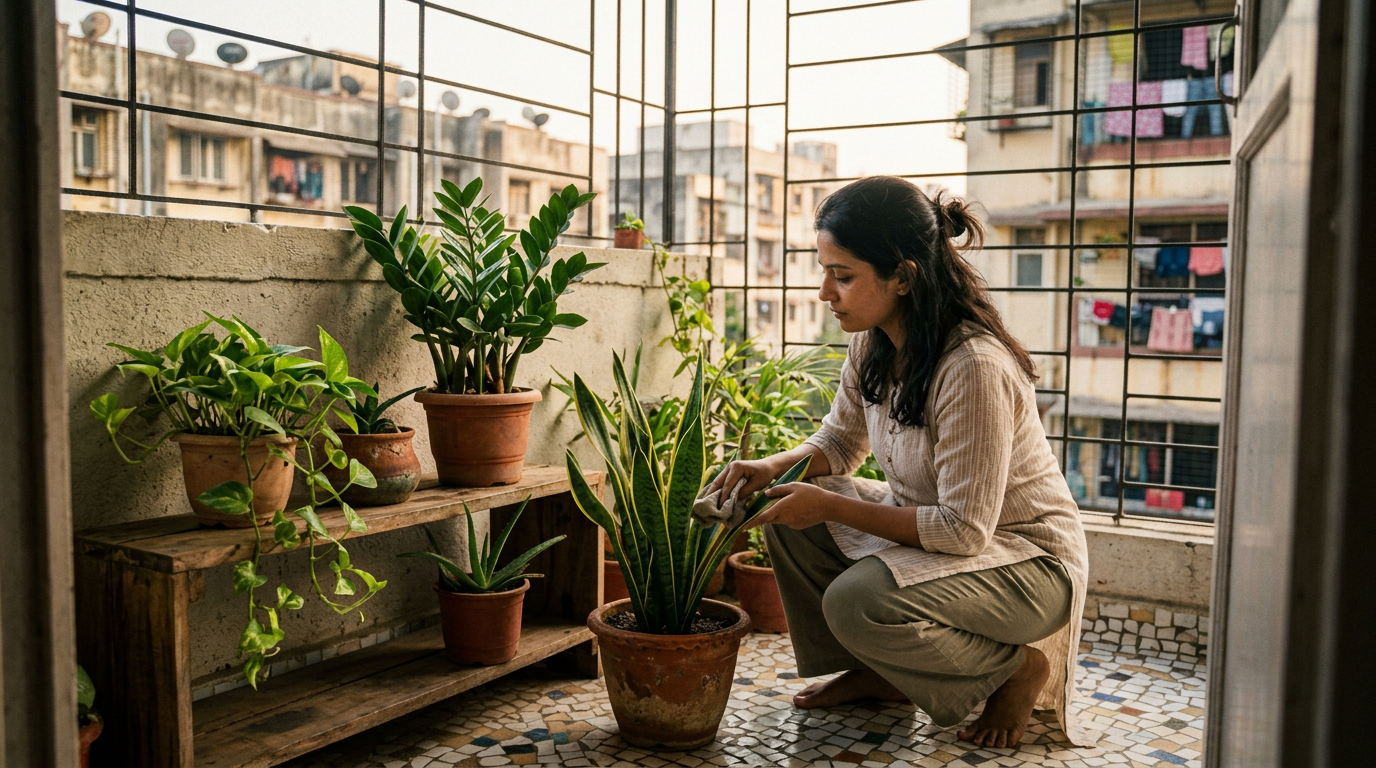
The Ultimate Guide to Low Maintenance Indoor Plants for Mumbai Homes
Transform your Mumbai apartment into a green oasis. Discover the toughest, most forgiving low maintenance indoor plants that can handle a Mumbaikar's busy life and our city's unique climate.