How to Spot AI-Generated Images: A Mumbai Local's Guide
A viral image shows elephants strolling through Powai. Is it real? As AI image generators become more powerful, it's getting harder to tell. Here's your essential guide for spotting fakes in Mumbai.
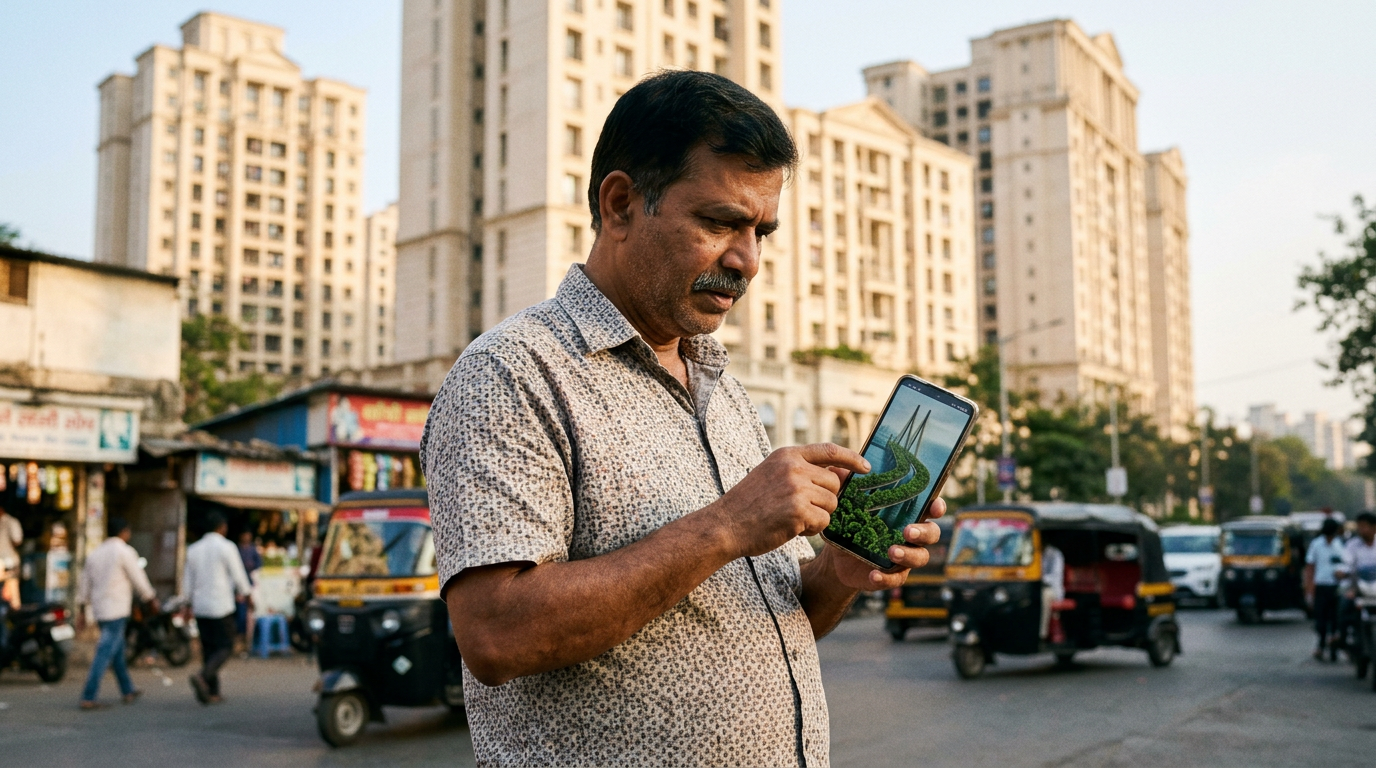
A few months ago, a stunning image circulated on WhatsApp groups across Mumbai. It showed the Bandra-Worli Sea Link, but with a twist: half of it was covered in a lush, green forest, as if nature had reclaimed it. It looked incredible, almost magical. Many shared it with captions like “Imagine Mumbai like this!” But the image wasn't real. It was a clever piece of AI art. As these tools become more accessible, knowing how to spot AI-generated images is no longer just a skill for tech experts; it's a necessary part of modern digital literacy for every Mumbaikar navigating their daily feed.
The Flaw in Perfection: The Uncanny Valley of Hiranandani
One of the first giveaways of an AI-generated image is a sense of sterile, flawless perfection. AI models are trained on billions of images, and they often average out imperfections, creating scenes that are a little too clean, a little too symmetrical, a little too... perfect. Think of the iconic neoclassical architecture in Hiranandani, Powai. A real photograph will capture the subtle weathering on the stone, the slight variations in paint, the odd pigeon perched on a ledge, or a dangling cable. An AI attempting to replicate this might produce buildings with unnervingly perfect symmetry, windows that are all mathematically identical, and textures that look flat and computer-generated. If you see a picture of a well-known Mumbai landmark, like the Chhatrapati Shivaji Maharaj Terminus (CSMT), and it looks pristine, with no grime, no crowds, and perfectly even lighting that defies the time of day, your suspicion should be raised. The real world, especially a bustling metropolis like ours, is full of beautiful chaos and imperfection. AI often struggles to replicate this authentic messiness, opting for an eerie cleanliness instead. So, when you see an image that looks too good to be true, it very well might be.
The Six-Fingered Mumbaikar: Always Check the Hands and Feet
This is perhaps the most famous and reliable tell for AI-generated images, although technology is improving fast. For complex reasons related to training data and anatomical complexity, AI consistently struggles with rendering human hands and feet. The next time you see a seemingly real photo of a celebrity waving to crowds outside their Bandra residence or a family enjoying a picnic at Hanging Gardens, zoom in on the hands. You might find some bizarre anomalies.
Common Hand and Feet Errors:
- Extra or Missing Fingers: The classic six-fingered hand is a dead giveaway. You might also see hands with only four fingers, or fingers that seem to merge into one another.
- Unnatural Poses: Fingers might bend at impossible angles, or a hand might be holding an object like a cutting chai glass in a way that defies physics.
- Waxy, Blurry Textures: Hands and feet can often look waxy, poorly defined, or like they're melting into the background, especially in crowd scenes like those at a packed Dadar station platform.
- Proportional Nightmares: A hand might be disproportionately large or small for the person's body.
While newer AI models like Midjourney v6 are getting much better at hands, it's still a weak point. Always take a moment to count the fingers and check for anatomical correctness. It remains one of the quickest ways to verify if the person you're looking at is a real Mumbaikar or a digital ghost.
Context is Everything: Snow in Thane or Rickshaws on the Sea Link?
AI image generators are masters of syntax but not semantics. They can create a visually coherent image based on a prompt, but they lack real-world understanding and common sense. This leads to contextual errors that a local resident would spot in a second. An AI can easily generate an image of “snow falling in Thane” that looks photorealistic. But anyone who has lived through a Thane summer knows this is a physical impossibility. The AI doesn't understand climate, geography, or local rules. It just combines “snow” and “Thane” into a plausible-looking image.
Keep an eye out for these logical disconnects. Would you ever see an auto-rickshaw on the Eastern Freeway or the Bandra-Worli Sea Link? No, they aren't allowed. But an AI might happily place one there. Could a flamingo from the Sewri mudflats be realistically pictured perched on a Vashi high-rise? Unlikely. These contextual clues are powerful because they require local knowledge, something AI currently lacks. When you see an image that makes you do a double-take, ask yourself: “Does this actually make sense in the Mumbai I know?” The answer will often reveal the image's artificial origins. These errors go beyond just the impossible; they can be subtle, like the wrong type of street sign in a specific neighbourhood or a brand of BEST bus that doesn't run on that particular route.
Unnatural Physics: The Floating Vada Pav and Warped Reflections
The real world is governed by the laws of physics, particularly the complex behaviour of light, shadows, and reflections. AI is still learning these rules, and its mistakes can be a dead giveaway. Imagine a hyper-realistic image of someone eating a vada pav at a stall in Andheri. Look closely. Does the shadow cast by the vada pav on the paper plate align with the main light source in the image? If the sun is overhead, the shadow should be short and directly underneath. If it's a streetlamp at night, the shadow will be long and angled away from it. AI frequently gets this wrong, creating multiple inconsistent shadows or no shadows at all.
“Reflections are another battleground for AI. A real reflection in a puddle on a rain-soaked street in Colaba, or in the window of a storefront in Kharghar, will be a distorted but accurate representation of the surrounding environment. AI-generated reflections are often nonsensical, showing objects that aren't in the scene, failing to distort correctly, or appearing strangely sharp and clear.”
Look at reflective surfaces like sunglasses, car windows, steel utensils at a lunch home, or the water at Marine Drive. Do the reflections make sense? Does light bend and scatter realistically through a glass of water or a pair of spectacles? If the physics seems off, you're likely looking at a digital fabrication rather than a moment captured by a camera.
Digital Fingerprints: Glitches, Smudges, and Repeating Patterns
Even the most advanced AI images contain subtle digital fingerprints and artefacts if you know where to look. These are the small glitches that occur during the image generation process, a bit like static on an old TV screen. They often hide in the details, especially in complex textures and backgrounds.
- Unnatural Textures: Zoom in on surfaces like skin, fabric, or wood. AI-generated skin can look unnaturally smooth and poreless, like a heavily airbrushed magazine cover. Fabric, like a pattern on a saree or a kurta, might have a bizarrely repeating motif that looks copied and pasted.
- Weird Blending and Morphing: In busy scenes, like a festival at Siddhivinayak Temple or a bustling market in Vashi, look at where different objects or people meet. AI can struggle to separate elements, causing them to blur or morph into each other. An arm might merge with a wall, or two faces in a crowd might blend together.
- Garbled Text and Nonsensical Signs: While AI is getting better at text, it often produces gibberish. Look at shop signs, newspaper headlines, or text on clothing in the image. You might see warped letters, misspelled words (in English, Marathi, or Hindi), or completely nonsensical characters that look like a language from another planet. A sign for a shop in Belapur should have coherent text; if it looks like a jumble, it's a red flag.
- Background Noise: The background of AI images can sometimes devolve into a chaotic, swirly mess of undefined shapes and textures. What should be a detailed backdrop of buildings or trees might just be a suggestive smudge.
Local Fakes: AI in Mumbai's Real Estate and Marketing
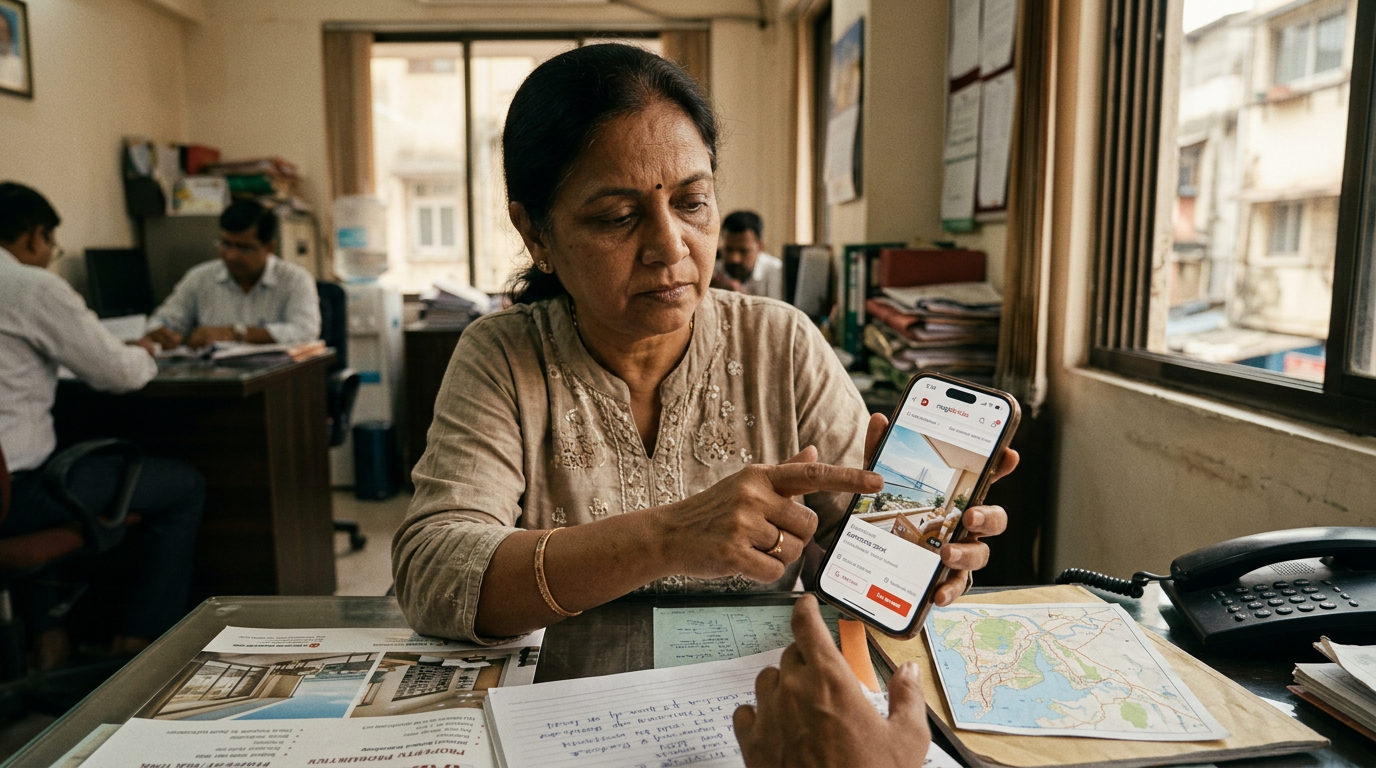
The application of AI-generated imagery isn't just about viral fakes; it's also becoming a tool in local commerce. Be particularly critical when viewing marketing materials. For instance, a real estate developer in the growing Navi Mumbai Airport Influence Notified Area (NAINA) might use AI to generate stunning, photorealistic “artist impressions” of their upcoming projects. These images can show lush green parks, sparkling swimming pools, and happy residents in a complex that hasn't even broken ground. While this is disclosed as a concept, the line between an artist's rendering and an AI-generated fantasy can blur. Similarly, a new cloud kitchen based in Malad might use AI to generate mouth-watering pictures of its food for its Swiggy or Zomato listing. The actual dish that arrives in your delivery box might look nothing like the flawless, perfectly lit image you saw on the app. This isn't necessarily malicious, but it's a form of digital enhancement that sets unrealistic expectations. Being aware of this allows you to view commercial imagery, from property ads in Panvel to restaurant menus in Bandra, with a healthy dose of skepticism. Always look for the “image for representation purposes only” disclaimer, and even then, apply the same critical eye. For more on this, you can read our guide on [INTERNAL_LINK: navigating the mumbai real estate market].
The New Frontier: When AI Gets It Right
It's important to acknowledge that this is a rapidly evolving field. The tips that work today might not work tomorrow. The latest AI models are already producing images with perfect hands and realistic text. So, what happens when the visual tells disappear? The next step in your verification toolkit involves using technology to fight technology. If you encounter a suspicious image, especially one related to news or important events, a reverse image search is your best friend. Tools like Google Images, TinEye, and Bing's image search can help you find the origin of a picture. It might reveal that the image was first posted on an AI art forum or that it's an old, unrelated photo being used in a new, false context.
Furthermore, several AI detection tools are emerging, though their reliability is still a mixed bag. These platforms analyze an image for the subtle mathematical patterns left behind by the generation process. For a journalist working in the financial district of BKC, or anyone who needs to verify information professionally, these tools can provide an additional layer of confidence. As the line between real and artificial blurs, our methods for telling them apart must also evolve from simple observation to more robust digital investigation. To learn more about the underlying technology, check out our explainer on [INTERNAL_LINK: what is generative ai].
Ultimately, spotting AI-generated images is less about a single checklist and more about fostering a mindset of critical thinking. It's about pausing before you share, questioning what you see, and looking at every image with a curious and analytical eye. By combining visual inspection with contextual awareness and a basic understanding of digital tools, you can navigate the modern media landscape of Mumbai and beyond with confidence. Now, go ahead and examine your camera roll – what you find might surprise you.
Keep reading
How to Spot AI Generated Images: A Mumbai Guide
From fake Powai apartment listings to too-perfect food photos from a Bandra cafe, AI fakes are everywhere. Here’s your guide on how to spot AI generated images in Mumbai.
Mumbai's Guide to the Best AI Productivity Tools for Professionals
In Mumbai's relentless hustle, staying ahead is key. This guide reveals the best AI productivity tools to automate tasks, manage projects, and reclaim your time, whether you're in BKC or Vashi.
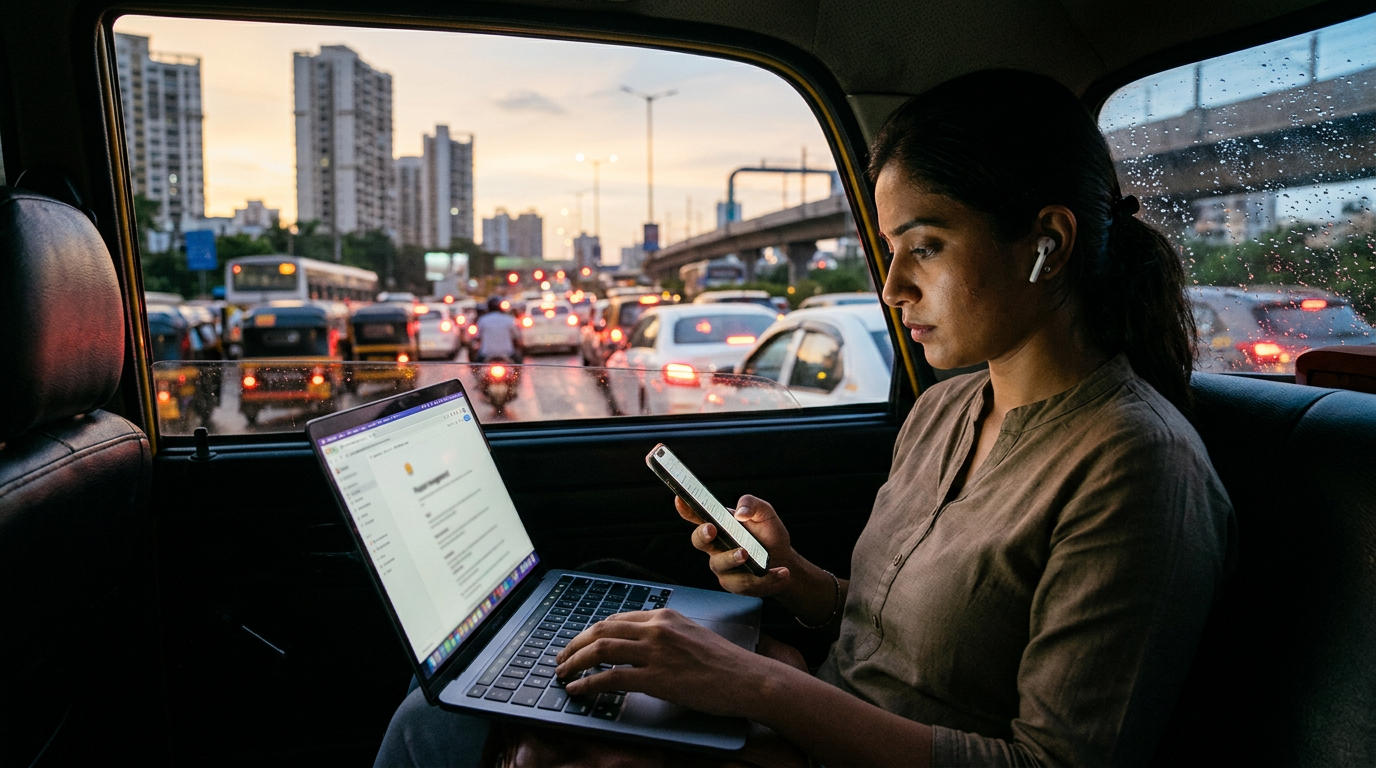
Best AI Productivity Tools for Mumbai & Navi Mumbai Professionals
Tired of the Mumbai grind? We review the best AI productivity tools that can help professionals from Bandra to Belapur save time, streamline tasks, and conquer their to-do lists.