
Morning Routines for Energy: A Mumbai Commuter's Blueprint
Beat commuter fatigue and heavy coastal humidity with practical morning routines for energy, designed specifically for residents across Mumbai and Navi Mumbai.
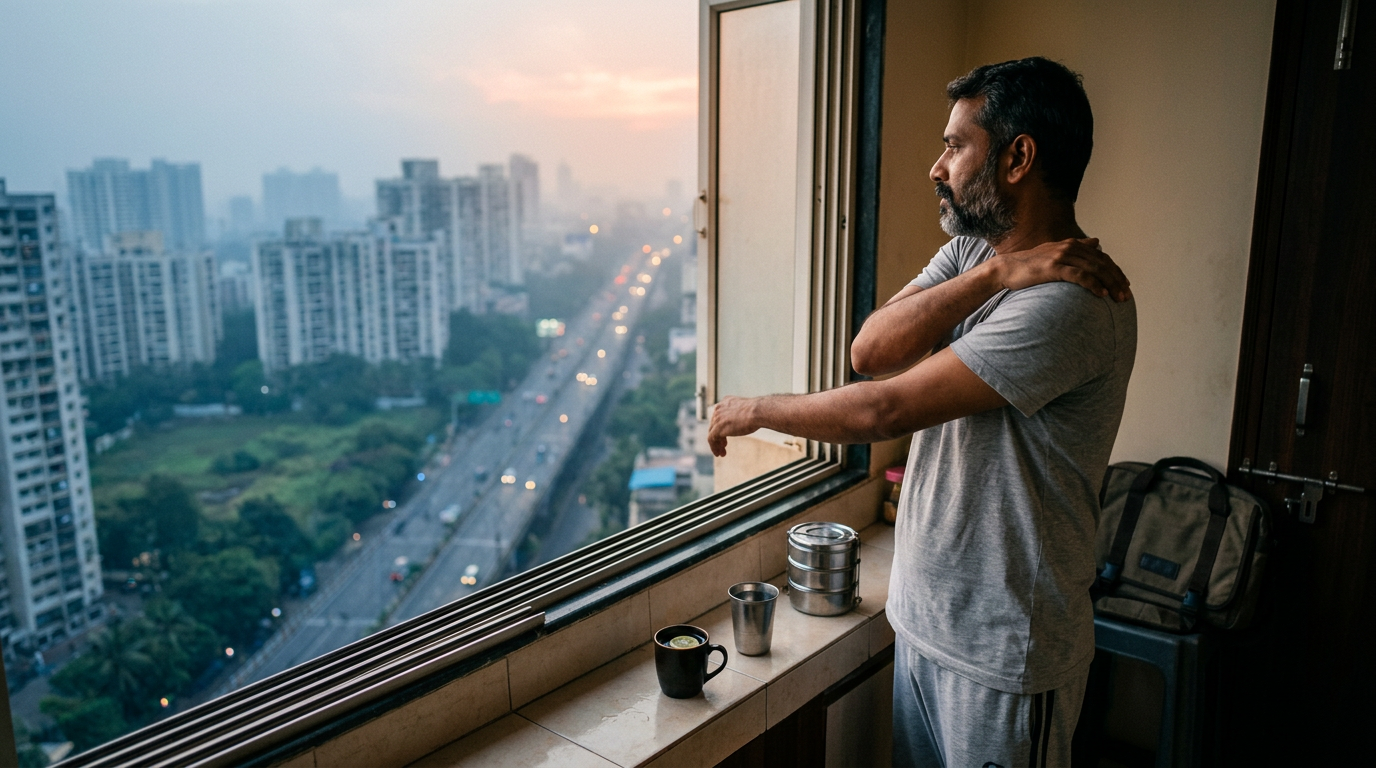
The alarm rings at 5:45 AM in an apartment overlooking the Eastern Express Highway in Mulund, or perhaps inside a quiet high-rise off Palm Beach Road in Vashi. Outside, the city is already stirring—the distant whistle of a local train cutting through the pre-dawn air, the clink of stainless steel milk cans, and the ambient hum of a metropolis gearing up for another relentless day. Facing the crush of an 8:15 AM fast local from Dombivli or navigating bumper-to-bumper gridlock on the Western Express Highway demands exceptional biological stamina. Building effective morning routines for energy is not an aesthetic self-care trend; for those living across the Mumbai Metropolitan Region (MMR), it is a vital daily survival strategy.
Most working professionals across Mumbai wake up already depleted. They reach immediately for a smartphone, check Slack or WhatsApp notifications under harsh blue light, down a scalding cup of sugary cutting chai on an empty stomach, and sprint out the door. By the time they reach their desks in Lower Parel, Bandra-Kurla Complex (BKC), or Mindspace Airoli, their cortisol levels have spiked, their blood sugar has plunged, and their mental reserves are drained. You can reclaim your mornings without moving to a mountain retreat or waking up at 4:00 AM. It simply requires synchronizing your physiology with the unique rhythms, climate, and geography of our coastal city.
The Circadian Reset: Waking with Coastal Light and Humidity
Your circadian rhythm dictates your biological clock, governing everything from cortisol release to core body temperature. In coastal Maharashtra, natural light carries distinct seasonal shifts, yet many residents spend their first waking hours enclosed under tube lights with heavy blackout curtains drawn against street lamps. To initiate clean, sustained morning alertness, you must flood your retinas with natural photons within thirty minutes of opening your eyes.
Stepping onto your balcony in Powai or walking down to the promenade at Bandra Bandstand or Carter Road exposes you to low-solar-angle daylight. This morning sun triggers your brain’s suprachiasmatic nucleus to suppress melatonin and begin a natural 16-hour countdown toward restful evening sleep. Even on overcast monsoon mornings between June and September, outdoor ambient light levels are exponentially higher than indoor LED lighting.
Mumbai's relentless coastal humidity also affects your awakening state. High relative humidity impairs overnight evaporative cooling, which means many residents wake up mildly overheated and sluggish. Stepping into fresh air, practicing deep nasal breathing, and letting natural morning light hit your eyes recalibrates your nervous system faster than any dose of instant caffeine ever could.
Hydration Architecture: Beyond the Traditional Morning Chai
The cultural reflex across Maharashtra is to brew a pot of ginger-cardamom chai first thing in the morning. While tea is a cherished cultural ritual, drinking concentrated caffeine and refined sugar on an empty stomach destabilizes your gastric lining and accelerates dehydration. After seven hours of breathing air-conditioned or humid bedroom air, your blood plasma volume is low.
Before any tea or coffee touches your lips, focus on aggressive cellular rehydration. Drink 500 to 700 ml of room-temperature or copper-vessel water mixed with a small pinch of Himalayan pink salt (sendha namak) and a squeeze of fresh lemon juice. The trace minerals act as vital electrolytes that replenish cellular balance lost through overnight perspiration.
- Jeera and Methi Water: Soaking a teaspoon of cumin or fenugreek seeds overnight and drinking the strained water at room temperature supports digestion and cools internal body heat during sultry April and May mornings.
- Warm Water with Amla Juice: A shot of fresh Indian gooseberry juice (roughly ₹40 a bottle at local cooperative stores like Sahakari Bhandar) delivers natural Vitamin C to support adrenal health.
- The 90-Minute Caffeine Delay: Wait at least 90 minutes after waking before enjoying your morning beverage. This allows your liver to clear accumulated adenosine naturally, protecting you from the dreaded 2:00 PM energy slump.
If you enjoy exploring functional beverages, read our guide on [INTERNAL_LINK: healthy breakfast ideas] to understand how liquid nutrition sets your metabolic tone for the workday.
Micro-Movement Grounded in Neighbourhood Geography
You do not need an expensive gym membership in Juhu or an elaborate two-hour workout to prime your body for energy. The goal of morning movement is simply lymphatic drainage, joint lubrication, and oxygenating your blood before you sit through a prolonged commute.
Every corner of Mumbai and Navi Mumbai offers distinct micro-environments for outdoor activity. If you live in Navi Mumbai, taking a brisk 20-minute walk through Central Park in Kharghar or along the wide, tree-lined avenues of Sector 14 in Vashi sets an invigorating baseline. In the western suburbs, a light jog through the lush trails of Sanjay Gandhi National Park (SGNP) in Borivali provides clean forest air that feels a world away from the surrounding concrete.
When monsoon downpours flood the roads or summer humidity climbs past 85%, focus on a simple 12-minute indoor mobility routine on your living room floor:
- Cat-Cow Spinal Waves (2 minutes): Mobilize the thoracic spine, which bears the brunt of slouching during train journeys and desk work.
- Deep Squat Holds with Rotations (2 minutes): Open up tight hips and calves, preparing your lower body for walking platform staircases.
- Surya Namaskar (5 minutes): Perform five to seven deliberate, breath-synchronized cycles. This ancient sequence remains one of the most efficient full-body cardiovascular and endocrine primers available.
- Dead Bugs or Bird-Dogs (3 minutes): Fire up your deep core stabilizers to support posture while carrying heavy laptop backpacks through crowded stations.
This light physical priming releases dopamine and increases circulation, without draining the physical reserves you need to tackle a demanding corporate schedule.
Metabolic Fuel: Upgrading MMR Breakfast Staples
Roadside breakfast culture in Mumbai is built for convenience, not sustained energy. Grabbing a piping hot medu vada, a refined-flour batata vada, or sweet white-bread toast from a railway station stall triggers a rapid spike in blood glucose, followed closely by a harsh insulin crash right around your 10:30 AM team meeting.
Your morning meal should prioritize steady, slow-burning fuel rich in protein, complex carbohydrates, and gut-friendly fiber. Fortunately, traditional western Indian and regional cuisines provide fantastic foundations when prepared with balanced nutritional intent.
"Most professionals in Mumbai are fighting a metabolic roller coaster before their workday even begins. When you swap carb-heavy breakfasts for adequate protein and complex staples, you stop relying on stress hormones like adrenaline just to get through your morning commute."
Consider these simple, energy-sustaining upgrades to everyday staples:
- Upgraded Kanda Poha: Poha (flattened rice) digest quickly on its own. Boost its nutritional density by cutting the rice portion by a third and folding in boiled sprouts (matki or moong), abundant roasted peanuts, green peas, and freshly grated coconut.
- Sprouted Moong Chilla: Ground whole green moong batter seasoned with ginger, green chilies, and cumin, stuffed with 50 grams of fresh low-fat paneer, delivers over 20 grams of clean protein without burdening digestion.
- South Indian Pairing Strategy: If dining at an Udipi landmark in Matunga or a neighborhood canteen in Chembur, skip the deep-fried vadas. Opt for two steamed idlis or a plain ragi dosa, but double your portion of vegetable-rich sambar and temper your coconut chutney intake to maintain balanced caloric density.
- Eggs with Local Sourdough: Bhurji made with three eggs, diced onions, tomatoes, and fresh coriander, eaten alongside a single slice of rustic sourdough from an artisanal Bandra bakery, keeps blood sugar stable for over four hours.
To learn how your food choices impact cognitive stamina, explore our deep dive into [INTERNAL_LINK: managing stress through nutrition] for city professionals.
Breathwork for Commuter Resiliency: Taming Cortisol Early
Stepping onto the platform at Dadar, Kurla, or Thane during peak hours is a sensory barrage. The sheer density of people, the noise of overhead announcements, and the physical pressure of boarding a train inevitably activate your sympathetic nervous system—the fight-or-flight response. Entering this chaotic environment with an already elevated heart rate leaves you feeling exhausted before your work even starts.
Integrating targeted breathwork (pranayama) into your morning routine acts as a biological shield against commuter-induced stress. By voluntarily controlling your respiratory rate, you stimulate the vagus nerve and downregulate systemic inflammation.
Practical Breath Techniques to Practice Before Leaving Home
Sit comfortably on your sofa or floor mat for eight minutes before you pack your bag. Spend four minutes practicing Anulom Vilom (alternate nostril breathing). Use slow, measured four-second inhalations and six-second exhalations. This simple pacing balances autonomic nervous activity and sharpens mental clarity.
Follow this with three minutes of Bhramari (humming bee breath), which stimulates local nitric oxide production in your nasal passages. Nitric oxide expands blood vessels, improves blood pressure, and helps you stay calm when unexpected signal delays occur between Kurla and Sion.
The Pre-Commute Transit Protocol
How you assemble yourself to leave your home determines whether your morning energy endures or evaporates within minutes. The transition from your private living space to public transit or traffic represents the most volatile phase of your morning routine.
City commuters must navigate distinct microclimates: walking through muggy, 32°C air with high humidity, followed by freezing, over-chilled air conditioning inside an AC local train, Metro Line 2A/7, or a corporate bus, and finally emerging back into heavy traffic exhaust. This thermal whiplash taxes your thermoregulatory system and saps vitality.
- Fabric Engineering: Ditch heavy synthetic formal shirts that trap sweat against your skin. Invest in breathable, high-count Indian cotton or linen blends that allow air circulation on crowded platforms.
- The Audio Quarantine: Avoid doom-scrolling through news apps or social media feeds while waiting on platforms or sitting in traffic along the Sion-Panvel Highway. Instead, protect your mental space by listening to focused audiobooks, ambient instrumental soundscapes, or simply observing your surroundings without reactive judgment.
- Hydration on the Move: Carry a stainless-steel flask filled with cool water infused with fresh mint leaves or vetiver roots (khus). Taking small sips buffers throat irritation from urban particulate matter.
The Night Before: Laying the Groundwork for Morning Vigor
No morning routine can overcome chronic sleep deprivation. In an energetic city where dinner tables frequently fill up past 10:00 PM and retail districts stay vibrant past midnight, protecting your sleep schedule requires deliberate boundaries. A vibrant morning always begins the night before.
Eating heavy dinners laden with rich gravies past 9:30 PM forces your digestive organs to work hard all night, elevating your resting heart rate and compromising deep restorative sleep. Strive to finish dinner by 8:30 PM, prioritizing lighter items like dal khichdi, roasted vegetables, or thin vegetable soups.
Turn down your bedroom air conditioning to a steady 23°C to 24°C roughly thirty minutes before sleep. A cooler room temperature signals your pineal gland to release melatonin naturally. Dim overhead tube lights by 9:00 PM and switch to soft floor lamps; avoiding stark white glare helps prepare your mind for genuine rest.
If winding down after long office hours feels challenging, review our practical advice on [INTERNAL_LINK: sleep hygiene for urban professionals] to build a restorative evening protocol.
Designing Your Personal 45-Minute Routine
Tailor your routine to your real-world circumstances rather than an idealized fantasy. A resident who works remotely from an apartment in Belapur has different time pockets than an investment banker commuting from Prabhadevi to Nariman Point. Below is a realistic, sustainable 45-minute template designed to thrive within the realities of Mumbai living.
- 6:00 AM – 6:10 AM (Hydrate & Illuminate): Rise without hitting snooze. Drink 500 ml of mineral-spiked water and step onto the balcony or open a large window to absorb natural coastal sunlight.
- 6:10 AM – 6:25 AM (Functional Movement): Complete 15 minutes of joint mobility drills and flowing Surya Namaskars to stimulate blood flow and release muscular tension.
- 6:25 AM – 6:35 AM (Breath & Mental Shielding): Practice alternate nostril breathing and quiet mindfulness. Mentally outline your three primary professional priorities for the day.
- 6:35 AM – 6:45 AM (Protein-Rich Nourishment): Savor a nutrient-dense breakfast—such as sprouted moong chilla or upgraded vegetable poha—giving your body clean, slow-burning fuel.
Living in Mumbai or Navi Mumbai does not mean feeling constantly exhausted by the city's scale and pace. When you adapt your early hours to protect your biological needs, you build enduring mental clarity and physical stamina. Start small tomorrow morning: drink your water before your tea, catch ten minutes of early daylight, take ten mindful breaths, and discover how calm and focused your day can truly become.
Keep reading

Simple Anti-Inflammatory Diet Guide for Mumbai Living
Tackle urban fatigue and gut stress with our simple anti-inflammatory diet guide, customized for Mumbai residents shopping at local markets.
Mumbai Morning Routines for Energy: Your Local Guide to a Better Day
Feeling drained before your day even starts? We get it. Here are powerful, realistic morning routines for energy, tailored specifically for the hustle of Mumbai and Navi Mumbai life.
Mumbai Morning Routines for Energy to Beat the 8:17 Virar Fast
Feeling drained before you even board the local train? These Mumbai-specific morning routines for energy will help you reclaim your mornings and power through your day.