
How to Cook Restaurant Style Pasta at Home: A Global Guide
Tired of lackluster pasta? Unlock the secrets to making restaurant-quality dishes in your own kitchen. We'll show you how to cook restaurant style pasta at home with global tips and pro techniques.
There’s a specific magic to a perfect plate of pasta served in a great restaurant. It’s more than just noodles and sauce; it’s a cohesive, flavorful, and texturally satisfying dish that often feels impossible to replicate. Whether you're dreaming of a classic carbonara from a Roman trattoria or a creative Wafu-style dish from a Tokyo bistro, the secret isn't a kitchen full of expensive gear. It’s about technique. This guide will teach you how to cook restaurant style pasta at home, transforming your simple ingredients into something truly special, no matter where you are in the world.
The Foundation: It All Starts with the Pasta
Before a single drop of sauce is made, the most fundamental choice is the pasta itself. The wall of pasta shapes in your local market isn't just for show; each one is designed to hold sauce in a different way. But the choice goes deeper than shape. High-quality dried pasta, particularly those extruded through bronze dies, possesses a rough, porous surface. This texture is your best friend, as it creates microscopic ridges for the sauce to cling to, rather than sliding off into a pool at the bottom of your bowl. Brands from Gragnano, Italy, are famous for this, but many artisanal producers worldwide now use this traditional method.
Fresh pasta, on the other hand, offers a tender, more delicate bite. It's the star in dishes with simple, rich sauces like butter and sage, or as the base for filled pastas like ravioli or tortellini. While classic Italian egg dough is a benchmark, don't overlook other global interpretations. Germany’s Spätzle, a fresh egg noodle often pan-fried in butter, behaves much like its Italian cousin. Modern chefs are also experimenting with fresh udon noodles in Japanese-Italian fusion dishes, proving that the principles of fresh pasta are universal. And with today’s focus on dietary diversity, excellent gluten-free options made from lentils, chickpeas, or brown rice are more available than ever, offering their own unique textures and flavors.
Dried vs. Fresh: When to Use Which
A simple rule of thumb is to pair textures. Use sturdy, high-quality dried pasta for robust, chunky, or oil-based sauces. Think Penne all'Arrabbiata or Spaghetti Aglio e Olio. Use tender fresh pasta for delicate cream or butter sauces and for filled pasta where the filling is the star. This simple choice sets the stage for the entire dish and is the first step toward a professional result. For a deeper dive, check out our [INTERNAL_LINK: complete guide to pasta shapes].
The Soul of the Dish: Mastering the Sauce
A great pasta sauce is a symphony of balanced flavors, not just a one-note topping. Chefs build this complexity through layers. This process, known in Italian as a soffritto (and in French as mirepoix), is the aromatic base of countless dishes. It typically involves gently cooking finely chopped onions, carrots, and celery in olive oil until soft and sweet. This slow, gentle cooking coaxes out sugars and creates a deep, savory foundation that you can’t get from just dumping ingredients in a pot. From here, the world of sauce is your oyster.
While the Italian canon of tomato (sugo), cream (panna), oil (olio), and pesto are pillars, global cuisine offers exciting variations. In Korea, Rosé pasta, a creamy, spicy-sweet sauce made with gochujang and cream, has become a massive trend. Argentina has its own unique take on gnocchi, often serving it with salsa golf, a creamy blend of mayonnaise and ketchup. The sweet, meaty spaghetti popular in the Philippines, with its distinct profile from banana ketchup and hot dogs, shows how adaptable pasta can be to local palates. The key takeaway is that a sauce should be more than a single ingredient; it should be a thoughtful combination of acid, fat, and aromatics.
The Golden Rule: Cooking Pasta to Perfection
This is where many home cooks falter. Two non-negotiable rules will change your pasta game forever: generously salting your water and cooking the pasta to al dente.
First, the water. It must be, as the Italians say, "salty as the sea." This doesn't mean you should be able to taste the salt in the final dish. Instead, seasoning the water allows the pasta itself to absorb salt as it hydrates and cooks, seasoning it from the inside out. It's a foundational layer of flavor that you can't add at the end. Use at least 1 to 1.5 tablespoons of coarse salt for every 4-5 liters (or a gallon) of water. This seems like a lot, but most of it goes down the drain; what remains is a perfectly seasoned noodle.
"The water is more important than the sauce. If you get the water right, the pasta is already halfway to perfection. It must taste of the sea, and there must be enough of it for the pasta to swim freely." - A sentiment shared by Italian Nonnas everywhere.
Second, cook the pasta until it is al dente, which translates to "to the tooth." This means it should be cooked through but still have a firm, distinct bite in the center. It should not be soft or mushy. The package instructions are a guideline, not a law. Start testing your pasta about 2 minutes before the recommended time. The reason for this is crucial and leads us to the most important restaurant secret of all: the pasta will finish cooking in the sauce.
The Emulsion Revelation: Marrying Pasta and Sauce
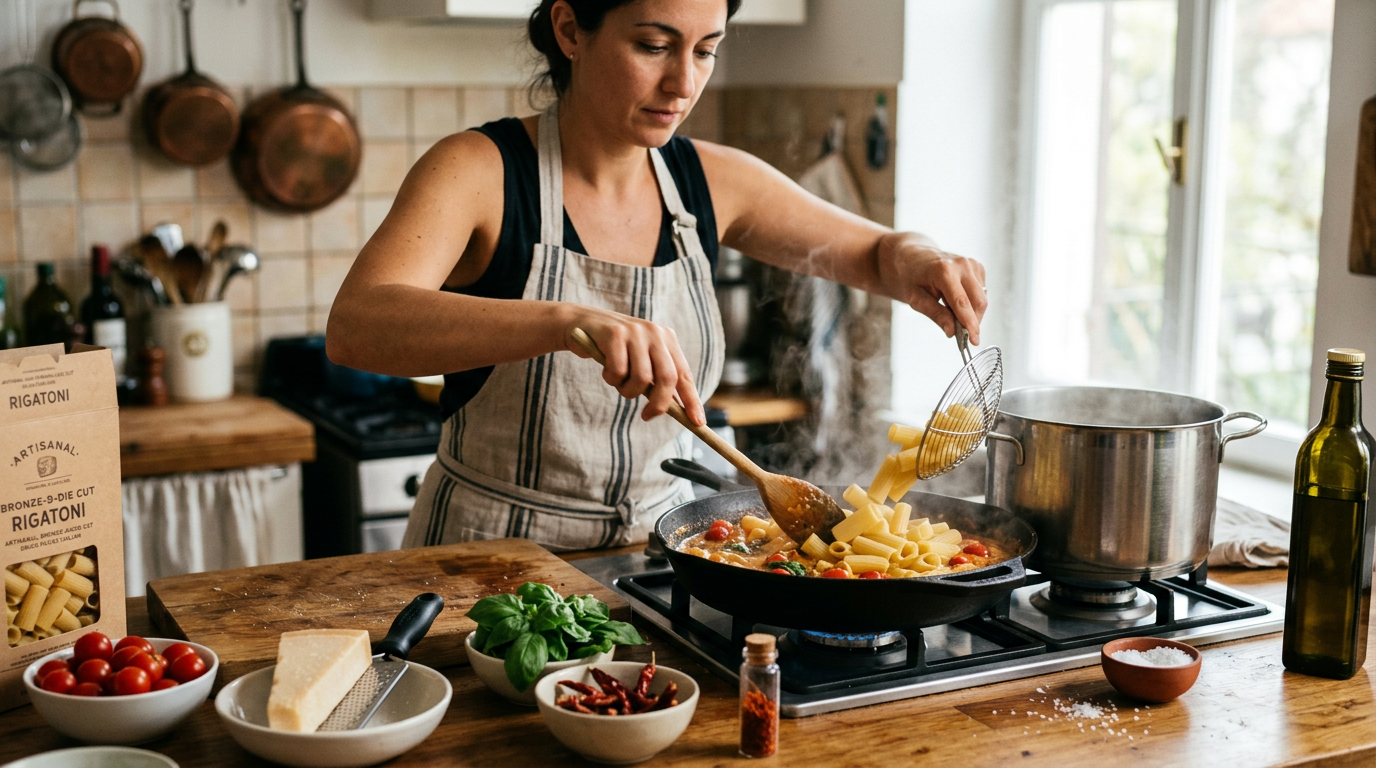
Have you ever wondered why restaurant pasta seems so silky and unified, where the sauce perfectly coats every single piece? The secret is a process called mantecatura in Italian, and it involves finishing the pasta in the pan with the sauce. This is the single most impactful technique to learn. You are not making noodles *with* a sauce; you are creating a single, emulsified dish.
Here’s the step-by-step process:
- Cook your pasta in generously salted water, but pull it out 1-2 minutes before it reaches al dente. It should be unpleasantly chewy at this stage.
- While the pasta cooks, have your sauce gently simmering in a large skillet or sauté pan.
- Using a spider strainer or tongs—never a colander—transfer the undercooked pasta directly from the pot into the simmering sauce. Do not drain all the water!
- Add a small ladleful (about 1/4 cup) of the starchy pasta water to the skillet with the pasta and sauce.
- Turn up the heat and stir, toss, or shake the pan vigorously. You will see the starchy water, the fat from the sauce (oil or butter), and the pasta come together. The sauce will thicken, become creamy, and cling beautifully to every noodle. This is the emulsion. If it looks dry, add another splash of pasta water.
The Magic of Starchy Pasta Water
That cloudy, salty, starchy water you usually pour down the drain is liquid gold. The starches leached from the pasta act as a powerful emulsifier and thickener. It helps the oil and water in your sauce bind together, creating a creamy consistency without adding extra cream or fat. It's the key that unlocks a truly professional texture. Always reserve at least a cup of it before you even think about draining your pasta.
Global Garnishes and Finishing Touches
The final flourish is what makes a dish memorable. A great chef knows that the last 10 seconds of preparation are as important as the first 10 minutes. While a dusting of Parmigiano Reggiano is classic, the world of garnishes is vast and exciting. Think about adding a contrasting texture or a final burst of fresh flavor.
In Southern Italy, especially in pasta dishes without cheese like those with seafood, toasted breadcrumbs seasoned with garlic and herbs (pangrattato) are used to add a delightful crunch. In Japan, Wafu-style pasta is often finished with a sprinkle of furikake, a savory seasoning blend of seaweed, sesame seeds, and dried fish. A drizzle of high-quality, peppery extra virgin olive oil right before serving can transform a simple dish.
Consider these global finishing touches:
- Herbs: Beyond basil, think fresh mint with lamb ragu, chopped cilantro on a spicy chorizo pasta, or dill with a creamy salmon sauce.
- Crunch: Toasted walnuts or pistachios, crispy fried shallots, or toasted sesame seeds.
- Spice: A spoonful of Chinese chili crisp, a sprinkle of smoky Spanish paprika, or fresh red chili slices.
- Creaminess: A dollop of Greek yogurt or labneh on a spicy tomato pasta, or crumbled feta for a briny kick.
- Acidity: A fresh squeeze of lemon or lime juice, or the zest of either, can brighten up heavy or rich sauces instantly.
Explore our [INTERNAL_LINK: guide to essential herbs and spices] to find new combinations.
Tools of the Trade: Equipping Your Kitchen
You don't need a professional restaurant kitchen, but a few key pieces of equipment make achieving restaurant-quality results significantly easier. Investing in the right tools is investing in consistency and better-tasting food.
The most important item is a large stockpot, at least 8 quarts (or 8 liters). Pasta needs room to move around as it cooks. If the pot is too small, the pasta will stick together, and the water temperature will drop too dramatically when you add it, resulting in gummy noodles. Next, you need a wide, large sauté pan or skillet. This is where you will finish the pasta in the sauce. A wide surface area is crucial for creating the emulsion and allowing the sauce to reduce and coat the pasta properly. A small saucepan simply won't work for this technique.
Finally, trade your colander for a spider strainer or a pair of tongs. A spider is a web-like metal scoop that allows you to lift the pasta directly from the water into the sauce, bringing some of that valuable pasta water with it. Tongs work well for long strands like spaghetti or fettuccine. This method is faster, less messy, and ensures you never accidentally pour all your liquid gold down the sink again. A microplane grater is also a worthy investment for finely grating hard cheeses like Parmesan, which will melt beautifully into your sauce, and for zesting citrus for a bright finish.
Your Passport to Perfect Pasta
Cooking pasta is easy, but cooking pasta well is an art form built on technique. By embracing these core principles—using quality ingredients, seasoning your water aggressively, cooking to a true al dente, and finishing the pasta in the pan with its starchy water—you bridge the gap between amateur and professional. It’s not about a single recipe, but an approach that you can apply to any pasta dish you create, from a classic Italian carbonara to a modern fusion creation.
These methods are universal, practiced by chefs from Milan to Melbourne. Now they are yours. Forget bland, watery sauces and mushy noodles. It’s time to bring the craft, flavor, and texture of a restaurant-quality pasta dish into your own home. Start with a simple Cacio e Pepe or Aglio e Olio to master the emulsion technique. You will be amazed at the difference it makes.
What's your favorite restaurant-style pasta to make at home? Share your creations and tips in the comments below!
Keep reading
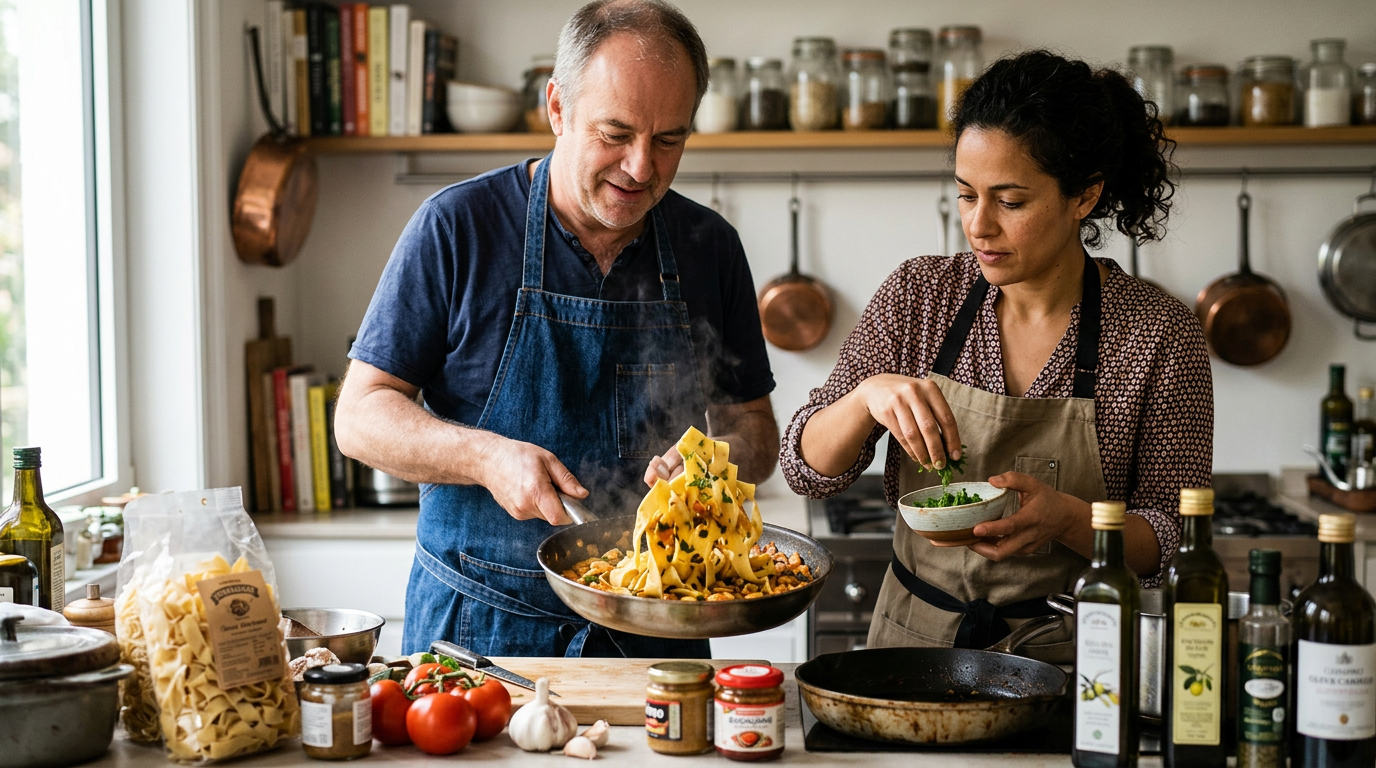
How to Cook Restaurant-Style Pasta at Home: A Global Guide
Ever wondered how to cook restaurant-style pasta at home? It's about much more than just boiling noodles. We'll show you the global secrets to pasta perfection.

How to Start Investing With Little Money: A Global Guide
Think you need a fortune to start building wealth? It’s a common myth. We'll show you how to start investing with little money, no matter where you are in the world.
How to Create a Morning Routine That Sticks: A Global Guide
Struggling to build a morning routine you can actually maintain? This guide offers practical, globally-inspired advice on how to create a morning routine that sticks.