
How to Cook Restaurant Style Pasta at Home: The Definitive Guide
Transform humble dry noodles into luxurious, velvety dishes. Master the science of emulsion, pasta water salinity, and pan-finishing with our global culinary guide.
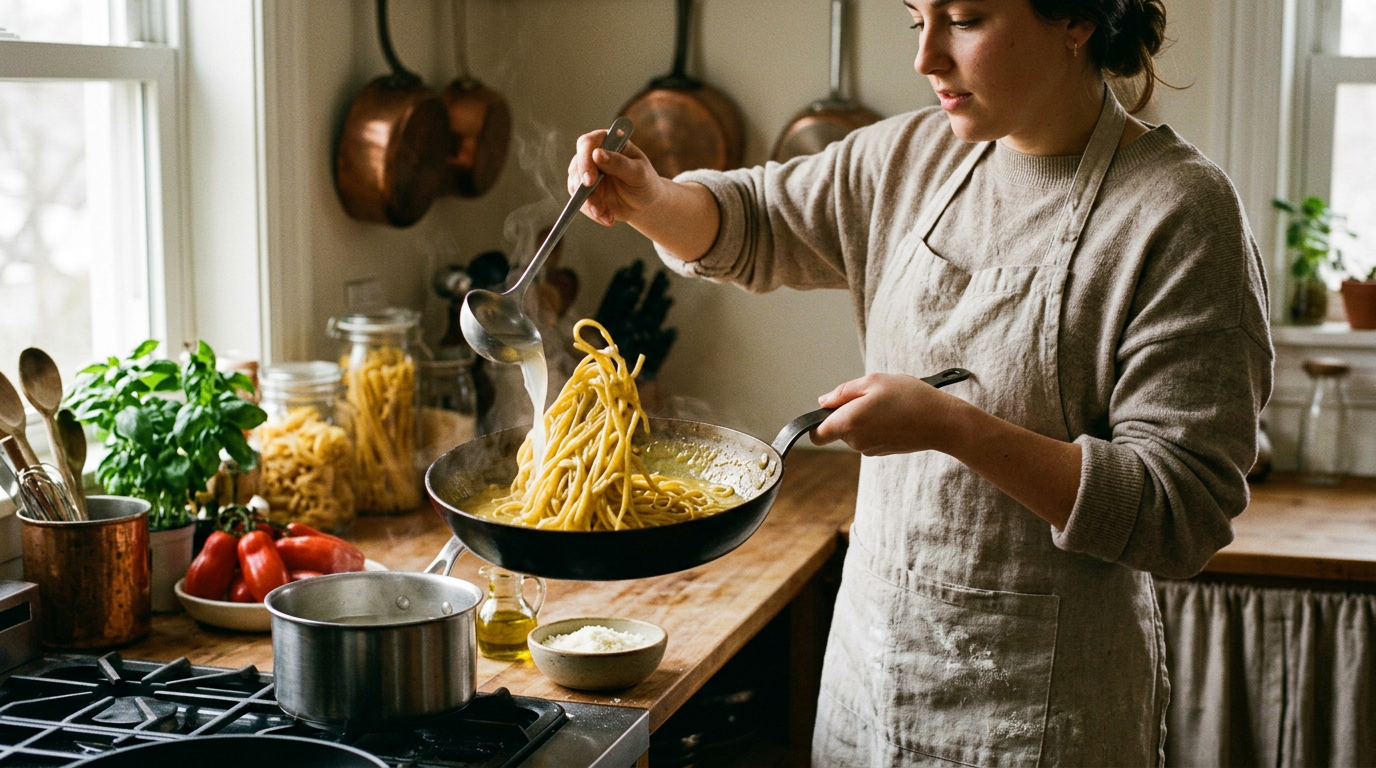
Few culinary disappointments cut deeper than twirling a fork into homemade pasta only to find a watery red puddle at the bottom of the plate and dry, naked noodles pushed to the rim. Professional trattorias and Michelin-starred dining rooms across the world never serve disconnected pasta. Instead, their noodles arrive coated in an iridescent, velvety glaze that clings tightly to every ridge. If you want to master how to cook restaurant style pasta at home, you must abandon the obsolete home-kitchen habit of boiling pasta, draining it into a colander, and ladling sauce over the top. The transformation from amateur supper to restaurant-grade dish comes down to physics, chemistry, and disciplined pan mechanics.
The Chemistry of the Emulsion: Why Sauces Break and How to Bind Them
At its core, a magnificent pasta sauce is not a stew or a purée; it is a temporary or semi-permanent emulsion. An emulsion occurs when two immiscible liquids—in this case, cooking fat and water—are forced into a homogenous suspension. When home cooks dump drained pasta into cold or barely warmed sauce, the oil separates from the aqueous liquids. The fat floats to the surface or pools around the plate, leaving the noodles slick yet strangely devoid of flavor.
In high-end kitchens from Rome to Melbourne, line cooks achieve unity through a process the Italians call la mantecatura. During this step, starch acts as the primary emulsifier. When semolina pasta cooks in water, surface starches (primarily amylose and amylopectin) hydrate, swell, and leach out into the liquid. As you rapidly agitate this hot, concentrated starch water with a lipid—such as extra virgin olive oil, cultured butter, rendered guanciale fat, or melted cheese—the starch granules suspend microscopic droplets of fat inside the liquid phase.
"The water in your pasta pot is not waste liquid; it is the liquid gold that builds the architecture of your sauce." — Professional kitchen maxim
To maximize this reaction, you need high friction and brisk movement. Swirling the pan vigorously while tossing the pasta creates mechanical shear force. This force shatters fat into minuscule droplets while the gelatinized starch wraps around them, preventing coalescence. The final result is not heavy creaminess born of dairy fillers, but a light, glossy sheen that anchors sauce directly to carbohydrate. To explore the broader science of culinary emulsification, read our companion guide on [INTERNAL_LINK: culinary emulsion techniques].
Selecting the Right Grain: Bronze Dies, Extrusion, and Egg Doughs
You cannot produce a top-tier plate using smooth, yellow commercial pasta dried at hyper-fast industrial temperatures. The journey to restaurant-quality results begins in the grocery aisle with two words: trafilata al bronzo (bronze-die extruded).
Mass-market brands push pasta dough through Teflon-coated dies because Teflon speeds production and prevents machinery wear. This yields a slippery, glassy noodle with zero microscopic grip. Sauces slide right off Teflon-extruded pasta. By contrast, traditional producers in regions like Gragnano, Italy, force dense durum wheat dough through heavy bronze plates. Bronze creates micro-abrasions along the pasta exterior, leaving a matte, chalky, pale surface resembling fine sandpaper. These rough crevices give starch water its concentration and provide literal handholds for your sauce.
Understanding Flour and Hydration Profiles
Different dishes demand specific structural substrates. Consider these three foundational formats:
- Durum Wheat Semolina (Dry Pasta / Pasta Secca): Crafted solely from hard durum flour and water. The benchmark choice for southern Italian staples like Spaghetti alle Vongole, All'Amatriciana, and spicy Arrabbiata. High protein content (13% or higher) preserves an uncompromising bite.
- Egg-Enriched Northern Dough (Pasta Fresca): Common to Emilia-Romagna and high-end pasta bars globally. Built from soft wheat flour ("Tipo 00") and rich egg yolks. Rolled paper-thin and cut into tagliatelle, pappardelle, or folded into tortellini. Egg pasta absorbs butter, cream, and meat ragù like velvet.
- Modern Extruded Heritage Grains: Flour milled from ancient wheats such as Farro, Khorasan (Kamut), or Senatore Cappelli. These flours impart deep, nutty aromas that shine in stripped-down presentations paired with bitter greens and aged sheep milk cheeses.
The Golden Water Ratio and the Myth of the Olive Oil Slick
Decades of recipe booklets advised cooks to boil pasta in oceans of heavily oiled water. Both suggestions actively undermine your finished plate.
First, pour no oil into your boiling water. Oil is less dense than water, meaning it simply floats on the surface. When you dump your pasta through that oily sheen, the strands get coated in a hydrophobic barrier that repels water-based sauces. Keep oil out of the pot entirely.
Second, reconsider water volume. Culinary lore once dictated 4 to 6 liters of water per pound of pasta to avoid dropping the water temperature. However, excessive water severely dilutes your starch. Contemporary restaurant technique relies on cooking pasta in just enough water to keep the noodles submerged—roughly 2 to 3 liters per 500 grams. A smaller volume yields dense, murky, concentrated starch water that acts as an immediate thickening agent rather than cloudy wastewater.
The Salinity Equation
Do not season water until it tastes like the dead sea; aim instead for a pleasant maritime broth. An exact ratio is 10 to 12 grams of coarse sea salt per liter of water (approximately a 1% to 1.2% salinity solution). Pasta dough contains negligible salt; boiling water provides the single opportunity to season the interior of the noodle itself. If you under-salt the water, the noodle core remains bland, creating a discordant contrast with a well-salted sauce.
Global Variations: Rome, Tokyo, and Buenos Aires
Restaurant-style execution is not exclusive to classical Italy. Across international culinary hubs, chefs adapt identical core tenets—starch extraction, heat control, and emulsion—to invent distinctive, regional interpretations.
The Italian Purist Canon
In Rome, the holy trinity of Roman pastas (Cacio e Pepe, Carbonara, Amatriciana) tests line cooks on temperature threshold control. Consider Cacio e Pepe: Pecorino Romano contains proteins that denature and turn into rubbery clumps when exposed to temperatures exceeding 65°C (150°F). Chefs avoid this pitfall by whisking finely grated cheese with warm pasta cooking water in an off-heat bowl to create a smooth paste before folding in pasta pulled fresh from the fire. For deeper insights into historical Italian preparations, check out [INTERNAL_LINK: traditional regional italian sauces].
Tokyo's Wafu Innovation
In Tokyo, *Wafu pasta* represents a brilliant cross-pollination of Italian pasta dynamics and Japanese umami foundations. At celebrated establishments like Kabenoana or modern bistros throughout Shibuya, bronze-die spaghetti is cooked rigorously al dente, then emulsified in sauté pans using concentrated kombu-dashi, cold Hokkaido butter, light soy sauce (usukuchi), and salted pollack roe (*mentaiko*). The identical physics apply: the marine glutamates from dashi and soy bind with butter fat and wheat starch to wrap the noodle in savory sheen.
The Argentine Tallarines Tradition
In Buenos Aires, the legacy of Italian migration lives on through Sunday *tallarines* served in neighborhood cantinas. Here, thick, hand-cut egg ribbons are tossed furiously with rich *tuco* (a slow-cooked beef shank and tomato braise) alongside sweetbreads. Argentine cooks deliberately flash-fry fresh pasta in rendered beef tallow before adding braising jus, proving that the underlying lipid-to-starch equation transcends regional boundaries.
The "Padellata": Marrying Pasta and Condimento in the Pan
The single most decisive phase in cooking restaurant style pasta is the *padellata*—finishing the noodle directly inside the pan with the sauce. A restaurant cook rarely boils pasta to completion in water. Instead, they extract it 2 to 3 minutes shy of the package's suggested *al dente* timestamp.
- The Early Extraction: Using tongs, a spider strainer, or a pasta basket, transfer the undercooked pasta straight into your wide skillet containing simmering sauce. Never dump the cooking water down the sink drain.
- The Risottatura: Cook the pasta inside the sauce over medium-high heat, adding small ladles of reserved starch water as the liquid reduces. The dry core of the undercooked noodle drinks in the seasoned sauce liquid rather than plain boiling water, infusing deep flavor directly into the pasta's grain.
- The Vigorous Pan-Toss: Keep the pan shaking forward and backward while making a fluid flick of the wrist. This motion continuously rolls the pasta over itself, aerating the sauce and forcing hot fat and starchy water into a tight suspension.
- The Rest and Mantecatura: Kill the heat entirely. Allow the pan temperature to drop slightly below the boil (roughly 30 seconds) before adding your cold finishing fat and delicate grated cheeses. Stir vigorously to finalize the silk-like coat.
Fat Profiling: Butter, Extra Virgin Olive Oil, and Animal Lard
The choice of lipid dictates both the physical structure and aromatic weight of your pasta emulsion. High-end kitchens select specific fats based on molecular weight, smoking thresholds, and moisture levels.
Cultured Butter: Whole butter is roughly 16% to 18% water and 80% to 82% milkfat, containing natural milk solids that act as secondary emulsifiers. European-style cultured butter, with its higher fat percentage and lactic acidity, builds velvety foundations for light sauces like sage-infused butter, truffle purées, or seafood broths. Crucially, the butter should be refrigerator-cold when added at the finish (*burro freddo*). The temperature drop stabilizes the suspension without breaking the fat matrix.
Finishing Extra Virgin Olive Oil: Never subject your best cold-pressed extra virgin olive oil to prolonged, aggressive boiling. High temperatures vaporize delicate polyphenols and grassy terpenes. Instead, keep a robust, peppery monovarietal oil (such as a Tuscan Frantoio or Spanish Picual) strictly for finishing off the heat. Swirled into pasta alongside hot starch water, raw olive oil yields a glossy, fragrant lacquer.
Rendered Cured Fats: Dishes like Gricia or Carbonara rely on cured pork jowl (guanciale). Guanciale fat melts at a lower temperature than beef tallow or pork back-fat, yielding a clean, savory liquid lipid that bonds seamlessly with starchy pasta water. The trick is rendering the cured meat slowly over low heat until crispy, pulling the crunchy bits out, and using the warm translucent fat as the baseline for your pan emulsion.
Seasoning Beyond Salt: Acid, Umami, and Fermentation
A frequent error among enthusiastic home cooks is leaning solely on heavy salt and dairy to build flavor. Top-tier chefs build multidimensional profiles using strategic hits of acid, deep savory bases, and natural fermented seasonings.
- Fermented Anchovy Essences: Long before modern bottled seasonings, Roman cooks relied on *garum*. Today, a half-teaspoon of Italian *colatura di alici* or high-grade Southeast Asian fish sauce added to seafood or leafy-green pastas injects massive savory depth without overt fishiness.
- Citrus Zests and Natural Acids: Heavy, emulsified dairy coatings coat the palate. A microplaned dusting of Sorrento lemon zest, a few drops of preserved lemon juice, or a splash of dry white wine reduction slices through dense fats and highlights the sweet wheat flavor of the noodle.
- Aged Cheese Rinds: Never discard the rock-hard rinds of Parmigiano-Reggiano or Pecorino. Store them in your freezer. Tossing a cleaned cheese rind directly into a simmering ragù or bean-based pasta sauce releases natural glutamates and soluble gelatins that reinforce the richness of the liquid.
- Toasted Spices: If cooking pepper-forward pastas like Cacio e Pepe, toast whole black peppercorns (such as Tellicherry or Malabar) dry in a pan before cracking them coarsely. Heat activates volatile oils within the peppercorns, replacing raw, harsh pungency with woodsy, floral aromatics.
To master the art of balancing richness and sharpness in savory food, consult our detailed resource on [INTERNAL_LINK: balancing acid and salt in cooking].
Plating and Temperature Management: The Final 60 Seconds
Restaurant pasta arrives piping hot and stays hot through the final bite. Home pasta frequently turns tepid and sticky before diners take their third mouthful. This decline is directly tied to plate thermal mass and plating speed.
A wide porcelain or stoneware plate acts as an efficient heat sink. If you drop a hot, delicate starch emulsion onto a room-temperature ceramic dish, the plate instantly pulls heat out of the sauce. As the temperature drops below 50°C (122°F), cheese congeals, fats stiffen, and the silky coating seizes into a gummy paste. Prevent this by pre-warming your serving bowls in a low oven (70°C / 160°F) or giving them a quick rinse with boiling water from your kettle before drying.
When transferring long strands from pan to plate, use a carving fork or kitchen tweezers paired with a deep soup ladle. Insert the fork into the pasta pan, lift, and twist continuously against the curve of the ladle to form a tight, elevated nest. Slide this spire gently into the center of the warm bowl. Pour the remaining glossy emulsion left in the skillet straight over the crown of the nest. Finish with your crispy garnishes, freshly cracked pepper, or microplaned cheese, and serve immediately.
Summary Checklist for Kitchen Success
Review this step-by-step blueprint whenever you prepare pasta:
- Use bronze-die dried pasta or authentic yolk-rich fresh dough.
- Cook in moderately salted water (10-12g salt per liter) using less water than usual to concentrate starch.
- Pull noodles out 2 minutes before true al dente.
- Simmer the pasta in the sauce pan with splashes of hot cooking liquid to finish cooking.
- Remove from heat completely before swirling in cold butter, finishing oils, or aged cheeses.
- Serve immediately in pre-heated bowls.
Cooking magnificent, restaurant-grade pasta at home does not require expensive commercial ranges or secret pantry treasures. It simply demands that you treat the cooking water as a vital ingredient, respect the chemistry of emulsions, and finish the noodle where it belongs: simmering vigorously in the sauce. Step up to your stove, keep that pasta water simmering, and transform your everyday kitchen into a world-class trattoria tonight.
Keep reading

How to Declutter Your Digital Life: A Practical Global Guide
Overwhelmed by notifications, chaotic cloud storage, and unread messages? Here is a practical, globally minded roadmap on how to declutter your digital life effectively.

How to Negotiate a Remote Work Agreement: A Global Guide
Master the art of securing flexible working terms. From international labor laws to bulletproof proposal templates, learn how to negotiate a remote work agreement.
How to Cook Restaurant-Style Pasta at Home: A Global Guide
Ever wondered how to cook restaurant-style pasta at home? It's about much more than just boiling noodles. We'll show you the global secrets to pasta perfection.