
How to Cook Restaurant Style Pasta at Home: The Chef's Guide
Master the precise pan-finishing, starch emulsification, and timing secrets professional chefs use worldwide to create glossy, restaurant-quality pasta at home.
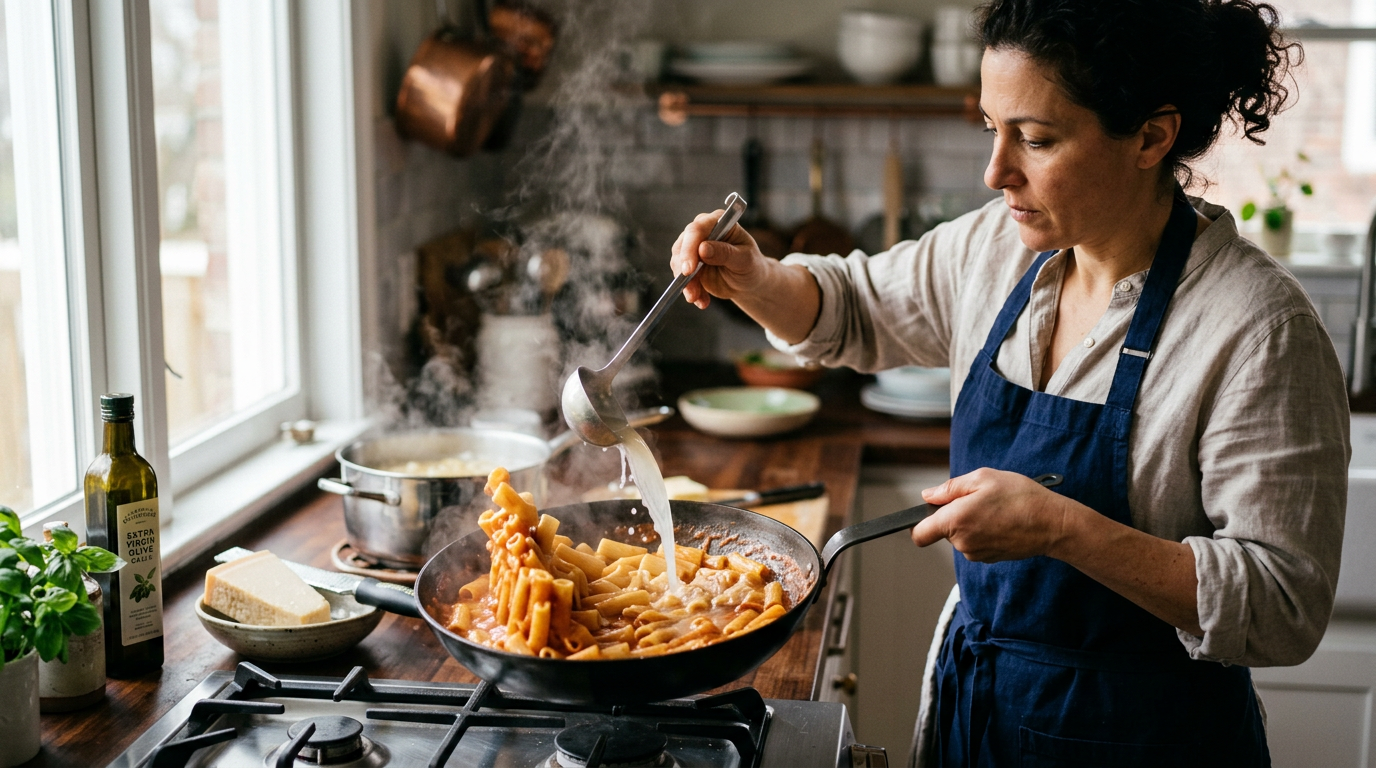
Few culinary disappointments cut deeper than boiling a premium box of artisanal noodles, opening a jar or simmering a scratch sauce, ladling one over the other, and watching a watery, pale red puddle pool at the bottom of your plate. You sit down expecting the cohesive, glossy luxury served at high-end Roman trattorias, Tokyo Wafu bars, or New York bistros, but end up with slippery starch coated in separated oil. Understanding how to cook restaurant style pasta at home is not an elusive art guarded by culinary schools; it is a masterclass in basic physical chemistry, temperature timing, and mechanical agitation.
Professional pasta chefs never boil pasta to completion in water and dump sauce over it. Instead, they view pasta boiling as the preliminary phase of a continuous cooking process finished inside a hot skillet. By manipulating heat, pasta-cooking water, and fat, you can produce a velvet-textured sauce that binds irrevocably to every strand or ridge. Here is the definitive, globally informed playbook to transforming everyday dried or fresh pasta into a restaurant-grade masterpiece.
1. The Geometry and Grain: Choosing the Right Foundation
Before any water meets heat, your choice of dry goods dictates your ceiling of success. If you walk down a standard grocery aisle, the slick, smooth, neon-yellow boxes produced via Teflon-die extrusion will inevitably yield a slippery exterior that repels sauce. Restaurants consistently reach for bronze-extruded (trafilata al bronzo) pasta, made from 100% durum wheat semolina. Bronze dies tear micro-abrasions along the pasta's surface, creating a chalky, matte, pale finish that acts like microscopic velcro for fats and emulsions.
Global pasta culture also dictates matching shape to sauce density. In Emilia-Romagna, delicate egg pasta like tagliatelle or pappardelle absorbs slow-simmered, rich meat rags because the porous egg dough can handle heavy proteins. In contrast, southern Italian dried durum pasta shapes—such as paccheri, rigatoni, and bucatini—excel with vibrant, oil-forward sauces like puttanesca, carbonara, or all'amatriciana.
Selecting the Right Cut
- Long, fine strands (Spaghetti, Capellini, Linguine): Best for emulsified oil, seafood, light butter sauces, and broths.
- Tubular shapes (Rigatoni, Penne Rigate, Paccheri): Ideal for trapping chunky sauces, ragùs, and dairy-heavy emulsions.
- Folded or twisted shapes (Fusilli, Gemelli, Orecchiette): Designed to capture herb purées, pestos, and fine vegetables.
If you want to read more about matching shapes to sauces, review our [INTERNAL_LINK: pasta shape guide]. Selecting an authentic, bronze-die cut from brands like Gragnano, Mancini, or Martelli elevates the baseline quality of your dish before cooking even begins.
2. Water Volume, Salinity, and the Chemistry of Starch
Generations of home cooks have heard the folklore: "Make your pasta water as salty as the Mediterranean Sea." In truth, the Mediterranean averages roughly 3.8% salinity; water that salty will make your pasta unpalatable and render your reduced cooking water useless for sauces. The goal is measured, intentional salinity that penetrates the wheat starch as it rehydrates.
A professional ratio sits between 1% and 1.5% salinity. That translates to roughly 10 to 15 grams of coarse sea salt or kosher salt per liter of boiling water. Because dry pasta has zero salt content, this boiling stage represents your only window to season the interior of the wheat grain itself. If you skip salting the water, the noodle will always taste flat, no matter how seasoned your sauce is.
The Pot Size Myth
While classic culinary wisdom called for massive stockpots holding eight liters of water, contemporary kitchens have re-evaluated this rule. Using slightly less water—just enough to keep the pasta fully submerged and freely moving—concentrates the free amylose and amylopectin starches shed into the liquid during boiling. This cloudy, starchy water is your primary emulsifying agent. Never add olive oil to the boiling pot. Oil floats on top, does not prevent sticking, coats the pasta as you lift it out, and blocks sauces from adhering.
3. The Science of Mantecatura: Emulsification Over High Heat
If there is one technique separating amateur home preparation from fine dining, it is la mantecatura. Originating in Northern Italian risotto and pasta culture, mantecatura refers to the vigorous mechanical agitation of pasta, hot starchy water, and fats over heat to create an emulsion.
"A restaurant pasta sauce is rarely a finished sauce poured over noodles. It is an unstable suspension forced into stability in the pan through the marriage of lipid and starch under intense movement."
To master this, pull your pasta from the boiling pot two to three minutes before the package's declared al dente time. Transfer it directly into a broad sauté pan containing your sauce base—whether that base is melted butter, olive oil infused with garlic and chilies, or a reduced stock. Splash half a cup of bubbling pasta water into the pan, turn the burner to medium-high, and begin shaking the skillet forward and backward while stirring rapidly with tongs.
The starch suspended in the pasta water acts as a surfactant, wrapping around fat droplets from your oil or butter. The mechanical friction of the pasta tossing through the liquid shears these fats into micro-droplets. Within 90 seconds, the thin liquid thickens, becomes viscous, and turns into a silky, opaque glaze that clings tightly to every noodle.
4. The Pan Finish (La Padellata)
Dumping pasta into a colander in the sink is the single quickest way to ruin texture and lose your best sauce-building ingredients. Instead, use a spider strainer, pasta fork, or tongs to lift the pasta directly from the pot into your sauté pan. This workflow keeps the noodles hot and retains excess surface moisture containing vital starches.
In restaurant kitchens, this stage is known as la padellata—cooking the pasta in the pan with its sauce for its final minutes. During this phase, two critical thermodynamic reactions take place simultaneously:
- Internal Hydration: The inner core of the pasta absorbs the seasoned sauce and cooking liquid rather than plain water, perfuming the wheat core with the flavor profile of the dish.
- External Reduction: Excess liquid evaporates rapidly in the wide surface area of the skillet, leaving only concentrated flavor compounds suspended in a velvety glaze.
Check the texture continuously during the pan finish. Bite into a strand: you should see a tiny, pinprick-sized white chalk core in the center (the punto verde). That is the exact moment to pull the pan off direct heat. Residual thermal energy will finish cooking the core during the next two minutes of plating and serving.
5. Fat Profiles: Layering Flavor Beyond Generic Olive Oil
Restaurant kitchens rarely rely on a single fat source. They understand that different fats behave differently under thermal load and bring distinct viscosity profiles to the finished dish. Combining fats often yields the most balanced, glossy sauces.
In Rome, traditional pastas like Carbonara and Amatriciana draw their primary fat from rendered guanciale (cured pork jowl). The rendered fat has a lower melting point than beef tallow or standard bacon fat, coating the tongue in a light, silky layer. For dairy-based emulsions, European-style cultured butter with an 82% to 84% fat content provides richer body and lower water volume than conventional table butters, reducing the chance of an oily break.
Consider blending fats intentionally. A base of extra virgin olive oil for aromatics, finished off-heat with a knob of cold, unsalted butter (a technique adapted from French saucing), introduces milk solids that bridge the gap between aqueous pan liquids and rich oils. For plant-based variations, high-quality emulsified nut purées, toasted sesame paste, or olive oil mixed with reduced vegetable reductions achieve a comparable velvety sheen without dairy.
6. Temperature Control and Dairy Timing
Nothing ruins a homemade Cacio e Pepe or Alfredo faster than cheese separating into stringy, rubbery clumps floating in translucent grease. This happens because high heat denatures cheese proteins, causing dairy fats to split away from milk solids. Managing pan temperatures is critical whenever aged, hard cheeses are involved.
Parmigiano Reggiano (aged 24 to 36 months) and Pecorino Romano are hard, low-moisture cheeses containing concentrated glutamate crystals. To integrate them smoothly, follow these non-negotiable rules:
- Use a Microplane or Star Grater: Pre-shredded packaged cheeses are coated with cellulose and potato starch to prevent caking, which makes smooth melting impossible. Grate whole blocks using a microplane to produce cheese that looks like fine powder.
- Kill the Heat First: Never dump grated hard cheese into an active, boiling pan. Pull the pan off the burner, wait ten to twenty seconds until the violent bubbling stops, and allow the pan temperature to drop below 70°C (160°F).
- Pre-Paste or Gradual Emulsification: Add the cheese in small handfuls while continuously swirling the pan, or mix the cheese into a smooth paste with warm (not boiling) cooking water in a small ceramic bowl before folding it into the noodles.
By keeping the cheese below its protein coagulation threshold, you ensure it melts into the existing starch-fat emulsion rather than breaking into tough strands. Explore our detailed primer on [INTERNAL_LINK: mastering cheese emulsions] to practice this delicate temperature control.
7. Global Perspectives: Lessons from International Pasta Traditions
While Italy set the foundation for pasta technique, global kitchens have contributed ingenious adaptations to the craft. Examining how non-Italian culinary traditions approach the noodle provides invaluable insights for home cooks.
In Japan, the Wafu pasta movement showcases brilliant approaches to balancing starch and umami. Born in mid-century Tokyo eateries, Wafu recipes unite Italian dried spaghetti with Japanese components like dashi, soy sauce, mirin, mushrooms, and cod roe (tarako). Japanese chefs apply the same precision to mantecatura, frequently emulsifying rich dashi broths with chilled cubes of unsalted butter and pasta cooking water to create a glossy sauce that balances sweet, salty, and savory notes.
In Buenos Aires, Argentina, Sunday family gatherings revolve around fresh tallarines and tuco. Influenced by massive waves of Italian migration, Argentine home cooks and cantinas prioritize heartier, slow-simmered sauces. They toss fresh, yolk-heavy ribbon pasta directly into cast-iron skillets filled with rich tomato-meat reductions, letting the sauce caramelize slightly against the noodles to build depth of flavor.
Embracing these cross-cultural techniques shows that the underlying mechanics remain the same everywhere: manipulate heat, bind water to fat, and respect the noodle's structural integrity.
8. Plating, Residual Heat, and the Finishing Flourish
The journey does not end when the pan leaves the stove. Restaurant pasta is a dynamic, temperature-sensitive entity; from the moment it leaves the skillet, the starch continues to drink liquid, and the sauce begins to set. If you drop piping-hot pasta into a cold ceramic bowl, the sudden drop in temperature causes the fats to congeal and the emulsion to stiffen.
Pre-Warming Your Tableware
Stack your serving bowls in a low-temperature oven (around 60°C or 140°F) for five minutes, or rinse them with hot water and dry them before plating. This simple step keeps the emulsion glossy and fluid from the kitchen to the last bite at the table.
The Chef's Plating Technique
To plate long cuts like spaghetti, bucatini, or tagliatelle like a pro, use a pair of long kitchen tweezers or a carving fork. Insert the prongs deep into the pasta in the skillet, lift upward, and twist your wrist continuously to form a tight, tall cylinder of noodles. Rest the bottom of the twist in a deep serving spoon to stabilize the shape, then transfer the nest to the center of your warm bowl.
Tilt the skillet to collect the velvety sauce left behind and spoon it generously over the crown of the pasta nest. Finish with your textural accents:
- A delicate drizzle of cold, unfiltered, single-estate extra virgin olive oil to add fresh, peppery aroma.
- A light grating of fresh cheese or fresh citrus zest (such as lemon zest over seafood pastas).
- Toasted, garlic-rubbed breadcrumbs (mollica fritta) for dishes that exclude cheese, adding crisp texture against tender noodles.
- A crack of whole black peppercorns from a pepper mill set to coarse grind.
By assembling all your finishing garnishes beforehand, you can plate and serve within sixty seconds of pulling the pan off the burner. That speed keeps the emulsion intact and ensures the dish arrives at its absolute peak.
The Master Pasta Blueprint
Executing this technique consistently requires muscle memory and confidence. The next time you cook, follow this streamlined workflow:
- Boil: Fill a wide pot with water, add sea salt until it tastes pleasantly saline (around 1.2%), and bring it to a rolling boil.
- Prep the Base: In a separate, wide sauté pan, gently heat your aromatics, sauce, or fat base.
- Boil Partway: Drop your bronze-die pasta into the water. Set a timer for 3 minutes less than the minimum box recommendation.
- Transfer: Lift the pasta directly from the boiling water into the sauté pan with tongs or a spider. Keep the pasta water simmering.
- Emulsify: Pour a ladleful of hot, starchy cooking water into the sauté pan. Crank the heat to high and agitate the pan vigorously, tossing the pasta until the sauce thickens into a glossy glaze.
- Off-Heat Rest: Pull the pan off the heat entirely. Let it cool for 15 seconds, then fold in your grated cheeses or cold butter, swirling until smooth.
- Plate and Garnish: Spin into pre-warmed bowls, top with remaining pan sauce, add crunchy garnishes and finishing oil, and serve immediately.
Cooking pasta at a professional level is not about sourcing rare ingredients; it is about treating simple physics and chemistry with care. Once you master the dance of starch, water, and heat in the pan, you will never settle for dull, separated home pasta again. Pick your favorite pasta shape, warm your skillet, and make tonight's dinner your first restaurant-quality success.
Keep reading
How to Cook Restaurant Style Pasta at Home: The Definitive Guide
Transform humble dry noodles into luxurious, velvety dishes. Master the science of emulsion, pasta water salinity, and pan-finishing with our global culinary guide.

How to Declutter Your Digital Life: A Practical Global Guide
Overwhelmed by notifications, chaotic cloud storage, and unread messages? Here is a practical, globally minded roadmap on how to declutter your digital life effectively.

How to Negotiate a Remote Work Agreement: A Global Guide
Master the art of securing flexible working terms. From international labor laws to bulletproof proposal templates, learn how to negotiate a remote work agreement.