
10 Essential Solo Travel Safety Tips for Exploring Mumbai & Beyond
Exploring Mumbai alone offers unmatched freedom, but smart preparation is key. Here are battle-tested solo travel safety tips for navigating MMR like a seasoned local.
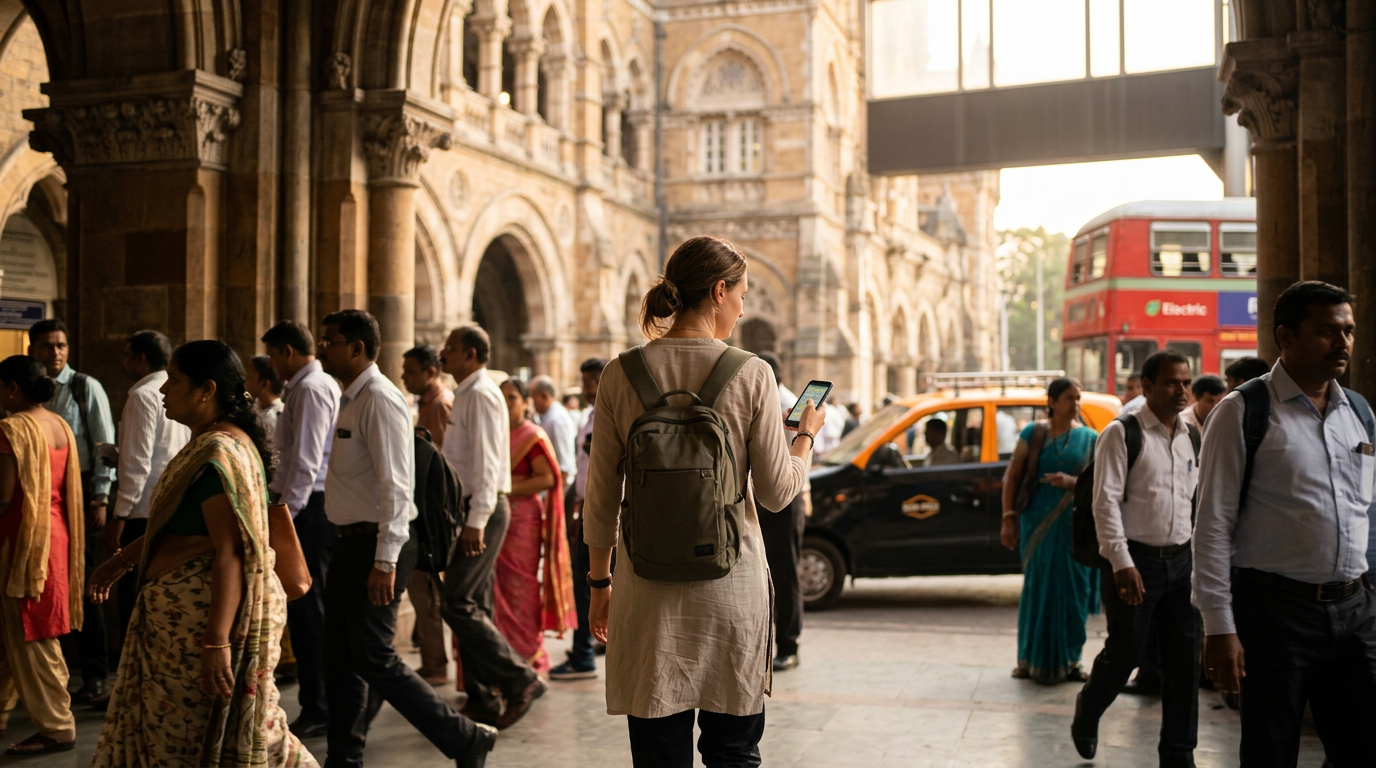
Stepping off a train at Chhatrapati Shivaji Maharaj Terminus (CSMT) during evening rush hour can feel like diving headfirst into an ocean of sheer human momentum. Thousands of commuters move in disciplined, rapid streams, street vendors call out over the rumble of double-decker electric buses, and the scent of roasted filter coffee mingles with the salty Arabian Sea breeze. Exploring India's commercial capital on your own terms provides an electric sense of independence, but moving confidently through this megalopolis requires local street smarts. Applying targeted solo travel safety tips designed specifically for the Mumbai Metropolitan Region (MMR) ensures you experience the city's legendary warmth without finding yourself stranded, overwhelmed, or compromised.
While Mumbai frequently earns its reputation as one of the safest metropolitan hubs in South Asia, particularly for solo female travellers, its scale is intimidating. From the heritage lanes of Colaba to the high-rise sprawl of Kharghar and CBD Belapur in Navi Mumbai, safety dynamics change block by block, transit line by transit line. Here is your definitive operational field guide to staying secure, connected, and savvy while navigating Mumbai and Navi Mumbai solo.
1. Master the Rails: Decoding Mumbai Local Trains and Metro Lines
The Suburban Railway network—comprising the Western, Central, and Harbour lines—carries more than seven million passengers every single day. If you plan to travel independently, this network will be your backbone, but you must understand its unspoken operating manual.
Navigate Compartments Intentionally
For solo female travellers, the local train network features dedicated ladies' coaches (marked with green and yellow stripes and labeled "Ladies"). These compartments are guarded by Railway Protection Force (RPF) personnel past 8:00 PM. If you find yourself travelling between 11:00 PM and the final service around 1:30 AM, board the ladies' coach located adjacent to the guard cabin or motorman's cab at either end of the train, where security presence is concentrated.
Avoid the Crushing Peak Window
Never attempt your first solo local train journey during peak commute windows: 8:30 AM to 11:00 AM towards South Mumbai (Churchgate/CSMT) and 5:30 PM to 8:30 PM heading north toward Borivali, Thane, or Kalyan. Station platforms at interchange junctions like Dadar and Kurla become high-density pressure cookers where platform balance and personal space vanish entirely.
- Upgrade to First Class or AC Locals: A second-class ticket between Churchgate and Bandra costs just ₹10, but purchasing an AC Local ticket (around ₹35 to ₹105 depending on distance) or a First Class pass offers significant breathing room and minimizes physical jostling.
- Download UTS: Skip the long ticketing queues at ticketing counters by installing the official Indian Railways UTS mobile app with geolocation ticketing enabled.
- Embrace the New Metro Lines: Metro Line 1 (Versova-Andheri-Ghatkopar), Lines 2A and 7 along the Western Express Highway, and the underground Line 3 (Aqua Line) offer air-conditioned, strictly monitored transit with comprehensive bag-scanning security checks at every turnstile.
2. Road Transit Protocol: Kaali-Peelis, Auto-Rickshaws, and App Cabs
Surface transport across the MMR differs radically depending on where you cross the municipal boundary. Knowing what vehicle to take and what you should legally pay is your first defence against transport scams or uncomfortable roadside confrontations.
In the island city (south of Bandra and Sion), three-wheeled auto-rickshaws are legally barred. Here, black-and-yellow Premier Padmini or compact Hyundai "Kaali-Peeli" cabs rule the streets. In suburban Mumbai (from Bandra to Dahisar, and Kurla to Mulund) as well as Navi Mumbai and Thane, auto-rickshaws are ubiquitous. By municipal mandate, drivers in Mumbai and Thane must calculate fares via electronic meters. The base fare in Mumbai starts at ₹23 for autos and ₹28 for taxis. Always ensure the driver resets the digital meter before the vehicle moves. If a driver refuses the meter in Bandra, Lower Parel, or Andheri, step out immediately and hail the next one; there is never a shortage of alternatives.
In Navi Mumbai sectors like Vashi, Nerul, or Panvel, "share-autos" operate along fixed routes between suburban railway stations and residential nodes. While cost-effective (typically ₹15 to ₹30 per seat), solo travellers out after dark should opt for private, non-shared autos or use Uber and Ola. When using ride-hailing apps late at night from Mumbai Airport (T1 or T2) or a pub in BKC, verify the driver's name, license plate, and make sure to turn on the mandatory four-digit safety PIN verification in your app settings.
3. Strategic Neighbourhood Selection: Where to Base Your Solo Stay
Choosing the right neighbourhood dictates your solo travel experience. The MMR stretches over 4,300 square kilometres; selecting an isolated hotel simply because it looks affordable online can leave you stranded behind industrial estates or unlit arterial roads.
Top Picks for South and Suburban Mumbai
Colaba, Fort, and Marine Lines provide unmatched walkability, grand heritage architecture, and continuous police patrolling around high-profile government institutions. For a creative, youth-centric atmosphere with high evening pedestrian footfall, Bandra West (specifically around Pali Hill, Perry Cross Road, and Carter Road) is ideal. Bandra lets you step directly out of boutique guesthouses into brightly lit cafe culture where dining alone is entirely normalized.
Sensible Hubs in Navi Mumbai and Thane
If business or trekking brings you across the Thane Creek, focus on planned nodes with wide, well-lit avenues. Vashi (Sectors 17 and 28) and CBD Belapur (near the artist village and railway complex) host reliable business hotels with round-the-clock security desks. Avoid booking budget guesthouses located in deep industrial MIDC pockets across Rabale, Mahape, or Turbhe, which empty out after 8:00 PM and leave you reliant on desolate access roads.
For independent travellers seeking community, verify whether your hostel has 24/7 manned front desks, biometric locker facilities, and clear guest curfews for non-residents. Properties like Zostel South Mumbai or boutique hostels in Khar West offer structured environments where you can safely exchange notes with fellow travellers [INTERNAL_LINK: best neighbourhoods to stay in mumbai].
4. Digital Armour: Essential Apps, Connectivity, and Geolocation
A reliable data connection is non-negotiable for real-time safety. Between concrete railway station arches and underground transit corridors, cellular networks can fluctuate. Ensure you carry an Indian SIM card (Airtel and Jio offer the strongest coverage across the MMR) and a reliable 10,000mAh external battery pack; high humidity and constant navigation will drain your phone battery far faster than anticipated.
"Street-level safety in Mumbai relies on momentum. When you know which station exit you need before the train stops, you move like a resident—and that single behavioural shift deters ninety percent of petty opportunists."
Equip your smartphone with these local tools before stepping out:
- M-Indicator: The uncontested bible of MMR transit. It contains live timetables, platform updates, and offline maps for local trains, metro routes, mono rails, and ferry schedules across the Gateway of India, Elephanta, and Belapur routes.
- Chalo App: Tracks real-time arrivals for Brihanmumbai Electric Supply and Transport (BEST) buses and Navi Mumbai Municipal Transport (NMMT) AC routes.
- 112 India: The unified pan-India emergency app that pings your coordinates straight to the nearest Mumbai Police patrol vehicle.
- Yatri App: The official Mumbai suburban local train tracking app backed by Central Railway, offering real-time live GPS tracking of trains.
Configure automated WhatsApp location sharing with a trusted friend or family member before heading into crowded markets or embarking on day trips to coastal outposts like Alibaug, Vasai Fort, or the Sanjay Gandhi National Park trails [INTERNAL_LINK: day trips from navi mumbai].
5. Cultural Codes and Street-Level Awareness
Mumbai prides itself on a culture of hard-working pragmatism, and its residents are famously helpful. If you look lost on a railway platform and ask for directions, three people will immediately stop to guide you. However, you must project clarity and firm boundaries.
Read the Room with Your Attire
Mumbai is visually liberal compared to many Indian cities, but modesty requirements change with geography. Athleisure, shorts, and sleeveless tops are unremarkable at a Bandra cafe, Juhu Beach, or a rooftop lounge in Lower Parel. Conversely, if you are exploring the narrow market lanes of Bhuleshwar, Chor Bazaar, Crawford Market, or Dadar Flower Market, loose linen shirts, full-length trousers, or cotton kurtas allow you to blend in seamlessly, deflect unnecessary staring, and show respect when visiting places of worship like the Haji Ali Dargah or Siddhivinayak Temple.
Dismantle the Tourist Silhouette
Avoid walking through crowded junctions while wearing noise-cancelling over-ear headphones or staring down at a digital map. Step inside a pharmacy, cafe, or beside a railway stall (tapri) to check your phone. When walking along busy thoroughfares like Linking Road or Hill Road, adopt the deliberate, brisk "Mumbai stride." When street vendors, tour touts, or persistent solicitors approach you outside the Gateway of India or Colaba Causeway, do not engage in prolonged negotiations. A clear, calm, and flat palm accompanied by a direct "Nahi chahiye" (I don't want it) terminates interactions instantly.
6. Financial Security: Cash, UPI, and Anti-Theft Practices
India's Unified Payments Interface (UPI) has virtually eliminated the need to carry large wads of paper currency. From high-end dining rooms in Bandra-Kurla Complex (BKC) down to a roadside stall serving ₹15 cutting chai, almost every vendor accepts QR-code payments via apps like Google Pay or PhonePe. International visitors without local bank accounts should look into UPI One World prepaid digital wallets issued at international airports.
However, transit pinch points present specific financial vulnerabilities you must manage proactively:
- The Dadar-Kurla Platform Rush: Pickpocketing is rare on empty streets, but common during boardings and alightings at dense interchange stations. Always sling your backpack in front of your chest across your shoulders before entering the train door. Never keep high-end smartphones in loose trouser pockets.
- Carry Reserve Emergency Cash: Keep ₹1,000 to ₹1,500 split across hidden pockets in denominations of ₹100 and ₹200. This handles spot cash needs if rural servers stall digital transactions at ferry jetties or auto stands outside pan-urban zones.
- Guard Banking Operations: Public Wi-Fi networks at major stations like Thane, CSMT, or Andheri are convenient for pulling up train timings, but never conduct mobile banking or credit card transactions over open municipal public Wi-Fi networks.
7. Late-Night Exploration: Distinguishing Safe Havens from Isolated Zones
One of Mumbai's most rewarding dimensions is its nocturnal life. Few cities in the world allow solo explorers to safely sit beside the sea at 1:30 AM reading a book or eating street snacks. However, this safety is context-dependent and tethered to locations with active public eyes.
Where Night Walks Work
Marine Drive (the Queen's Necklace), Worli Sea Face, and Carter Road promenade in Bandra maintain active foot traffic, police checkpoints, and cycling groups well past midnight. Similarly, areas around major train terminals remain well-illuminated and active 24 hours a day. Late-night food institutions like Amar Juice Centre in Juhu, Ayub's in Fort, or the bhurji-pav carts outside Borivali and Churchgate stations provide safe, brightly lit social environments.
Where to Exercise Extreme Caution
Avoid secluded sections of urban beaches—including Aksa Beach in Malad, the northern stretches of Juhu Beach, and Madh Island—after dusk. Across Navi Mumbai, while Palm Beach Road is a scenic marvel by day, its pedestrian pathways become desolate late at night with sparse police patrolling. Avoid walking solo along unlit marsh borders, salt pans near Wadala, or empty dockland access roads in Sewri after commercial hours. Stick to the primary urban grid where late-night auto-rickshaws and residential buildings provide natural surveillance.
8. Emergency Protocols and Medical Readiness
No safety strategy is complete without an immediate emergency plan. Memorize and save critical helpline numbers in your phone's speed-dial list rather than relying on search engines during high-stress scenarios:
- Central Emergency Response: Dial 112 for immediate, integrated police, fire, or ambulance dispatch.
- Mumbai Police Helpline: 100 (Dedicated control room) or direct WhatsApp messaging at +91 84549 99999.
- Mumbai Women's Safety Helpline: Dial 103 for rapid response units dedicated to female callers in distress across Mumbai, Navi Mumbai, and Thane.
- Railway Police Force (RPF/GRP): Dial 1512 for immediate security assistance inside local train coaches or on station platforms.
If you experience medical distress, skip municipal neighbourhood clinics and head straight to established tertiary hospitals with 24/7 emergency casualty wards. In South Mumbai, head to Saifee Hospital (Charni Road) or Bombay Hospital (Marine Lines). In the Western Suburbs, Lilavati Hospital (Bandra West) and Kokilaben Dhirubhai Ambani Hospital (Andheri West) offer premier facilities. In Navi Mumbai, Apollo Hospitals (CBD Belapur) and Fortis Hiranandani (Vashi) provide immediate, comprehensive care.
Step Out with Confidence
Solo travel across Mumbai and Navi Mumbai does not require hyper-vigilant paranoia; it demands pragmatic awareness, respect for local rhythms, and sensible urban planning. By leveraging structured transit systems, establishing clear physical and digital boundaries, and knowing precisely which districts support solitary exploration, you uncover a metropolis that is fiercely protective of independent travellers. Pack light, keep your eyes on the platform, trust your intuition, and let the unmatched spirit of Maximum City carry you forward.
Have you embarked on an independent journey across the Mumbai Metropolitan Region recently? Drop your personal safety observations, favourite solo-friendly cafes, and transit insights in the comments below—and share this guide with fellow adventurers charting their own course across Mumbai.
Keep reading
Best Travel Credit Card Perks for Mumbaikars (2024 Guide)
From skipping queues at Mumbai airport to free hotel stays in Lonavala, we break down the best travel credit card perks that every Mumbaikar should know about.
The Best Travel Credit Card Perks for Mumbaikars
Tired of the chaos at CSMIA? We break down the best travel credit card perks that offer Mumbaikars real value, from exclusive lounge access to hotel upgrades and dining discounts across the city.
Best Travel Credit Card Perks for Mumbai & Navi Mumbai Travellers
From free access to the Adani Lounge at CSMIA to dining discounts in BKC, we break down the best travel credit card perks for Mumbaikars to maximise their rewards.