
Mastering Meal Prep for the Week: A Practical Mumbai Guide
Streamline your chaotic Mumbai workweek with our step-by-step guide to meal prep for the week, designed for humid weather, compact kitchens, and long local train commutes.
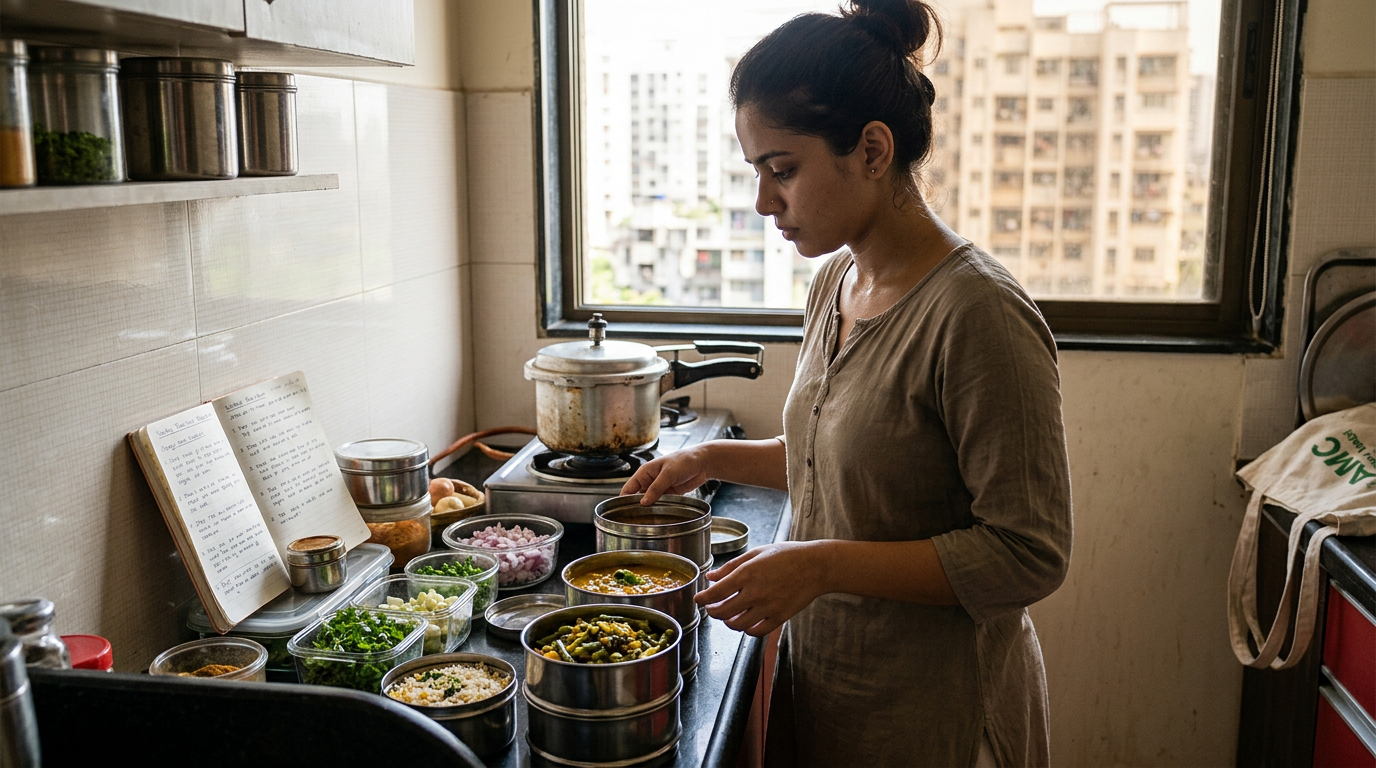
It is 7:15 AM on a muggy Tuesday in Kandivali. Your alarm went off forty minutes ago, you need to catch the 8:08 AM fast local from Borivali to Churchgate, and your kitchen counter is currently a battleground of half-chopped French beans, sputtering mustard seeds, and an unwashed pressure cooker. By the time you squeeze into the second-class compartment, your clothes are damp with sweat, and you realize you left your tiffin on the dining table anyway. If you want to reclaim your sanity, your health, and your wallet from daily food-delivery apps, mastering meal prep for the week is the single most effective lifestyle shift you can make in the Mumbai Metropolitan Region (MMR).
Preparing meals ahead of time sounds deceptively simple on Western food blogs, where influencers line up seven identical clear containers of dry grilled chicken breast, roasted sweet potatoes, and pale broccoli. Try doing that in a 1BHK apartment in Thane or a compact flat in Powai, and by Wednesday your food tastes like refrigeration, your vegetables are slimy from coastal moisture, and your soul is craving a hot, comforting plate of dal tadka. Meal prep in Mumbai requires a completely different playbook—one that respects our intense humidity, our rich culinary palette, and the physical reality of commuting an hour and a half each way.
The Mumbai Reality Check: Humidity, Commutes, and Kitchen Real Estate
Before buying a dozen glass containers, you must understand the environment you are cooking for. The climate of coastal Maharashtra behaves unlike inland cities. Between March heat and July downpours, ambient indoor humidity frequently hovers between 70% and 90%. Microorganisms thrive in this climate, which means wet curries, coconut-laced dishes, and dairy-heavy gravies turn sour at alarming speed if mishandled.
Furthermore, real estate in Mumbai and Navi Mumbai dictates kitchen geometry. Most working professionals and nuclear families work with medium-sized double-door refrigerators (roughly 240 to 300 liters). You cannot stack twelve bulky meal boxes without blocking airflow, leading to uneven cooling and accelerated spoilage. If you cram your fridge to capacity, the compressor struggles against the Mumbai ambient room temperature, and your Wednesday dinner spoils by Tuesday night.
Then comes the commute. Whether you take the Harbour Line from Nerul to CSMT, navigate the Western Line from Goregaon, or sit through traffic on the Eastern Express Highway from Mulund, your food container will be jostled, inverted, and subjected to fluctuating temperatures for 45 to 90 minutes. A meal prep strategy that works here must prioritize leak-proof integrity, temperature resilience, and quick morning assembly rather than lugging entire pre-plated wet banquets through rush-hour crowds.
Where to Source: From APMC Vashi to Your Corner Bhajiwala
Effective meal preparation begins with purchasing produce that has not already spent four days languishing in an air-conditioned warehouse. Depending on where you live across the MMR, your sourcing strategy directly impacts how long your prep will stay fresh in the fridge.
The Wholesale Route: APMC Market, Vashi
If you live anywhere along the Palm Beach corridor, Kharghar, or even Chembur and Ghatkopar, a bi-weekly trip to the Agriculture Produce Market Committee (APMC) in Vashi is the gold standard for bulk buying. Visiting the vegetable and spice sections early on a Saturday morning allows you to buy staples—like red onions, Nashik garlic, ginger, and hardy root vegetables—at 30% to 40% below retail prices. A 5-kilogram bag of quality onions from APMC will cost around ₹120 to ₹160 depending on the season, whereas suburban supermarkets often charge upwards of ₹40 per kilo for damp, bruised stock.
Suburban Markets and Local Vendors
For Western and Central suburban residents who cannot justify the trek to Navi Mumbai, traditional hub markets remain superior to rapid-delivery apps for bulk prep. The vegetable market outside Dadar West station, the sprawling stalls of Kurla West, or the vegetable lane near Borivali station offer exceptional turnaround. Produce arrives at these hubs between 3:00 AM and 5:00 AM daily from Nashik, Pune, and Gujarat.
When selecting items for your weekly batch cook, split your shopping list into two distinct categories:
- Long-Life Anchors: Gourd vegetables (dudhi, turai), cabbage, bell peppers, carrots, French beans, baby potatoes, green peas, and raw bananas. These hold their cellular structure well after being washed, chopped, or partially cooked.
- Immediate Use Items: Leafy greens like palak, methi, and chaulai, alongside delicate vegetables like bhindi (okra) and mushrooms. These should be consumed within the first 48 to 72 hours of your prep cycle.
If you are planning to add higher-protein components to your rotation, check out our guide on [INTERNAL_LINK: high protein vegetarian budget meal ideas] to align your grocery run with your nutritional targets.
The Holy Trinity of Indian Batch Cooking
Western meal preppers assemble complete meals; seasoned Indian home cooks prep foundational building blocks. In Mumbai, cooking entire curries on Sunday night to eat on Friday is a recipe for palate fatigue and sour gravy. Instead, focus on creating high-impact components that can be mixed and matched in ten minutes flat during weekday mornings.
1. The Universal Bhuna Masala
This is the engine of Indian cuisine. By slow-cooking a large volume of finely chopped onions, ginger, garlic, tomatoes, and basic ground spices until the oil completely separates, you create a concentrated paste that lasts up to seven days in the refrigerator or three months in the freezer. In a standard Kadai, cooking this base takes 35 minutes on Sunday. On Wednesday morning, you can drop two tablespoons of this base into a pan, toss in boiled chickpeas or paneer cubes, add a splash of water, and have a rich, freshly simmered sabzi ready before your bath water finishes heating.
2. Legume and Pulse Pre-Boiling
Soaking and pressure-cooking legumes is the biggest temporal bottleneck in weeknight cooking. On Sunday, utilize your pressure cooker across two consecutive cycles:
- Batch A: Kabuli chana (chickpeas) or rajma (kidney beans), soaked overnight on Saturday and boiled on Sunday with salt and a pinch of turmeric.
- Batch B: Whole brown lentils (sabut masoor) or green moong, which require shorter soaking times.
Drain them thoroughly—retaining the nutrient-dense cooking water separately for soups or kneaded dough—and store the cooled, dry legumes in airtight containers. Throughout the week, these can become dry stir-fries, protein additions to a quick evening chaat, or simmered in your prepared bhuna masala for a heavy-duty lunch.
3. The Dual-Purpose Fermented Batter
Whether you buy stone-ground batter from your neighborhood store in Matunga or run your own mixer-grinder, fermented idli-dosa batter is an indispensable ally. In Mumbai's ambient temperature, freshly ground batter ferments reliably within 10 to 14 hours. Keep it in the coldest zone of your fridge (usually the top shelf near the chiller). Monday and Tuesday can be piping hot idlis for breakfast; by Thursday and Friday, as the batter turns pleasantly tangier, it yields thin, crisp dosas or thick vegetable uttapams for dinner.
"The biggest mistake professionals in Mumbai make is attempting to cook full dishes on Sunday. Cook bases, not finished plates. The human tongue detects refrigerated stale food within days, but freshly tempered base pastes taste like a banquet cooked five minutes ago."
The Sunday Two-Hour Blueprint: A Step-by-Step Schedule
To successfully execute meal prep for the week without losing your entire weekend, you need an exact timeline. Set aside two hours on Sunday afternoon between 3:00 PM and 5:00 PM. Put on your favorite podcast, turn on the kitchen exhaust fan, and execute this chronological workflow:
- 0:00 – 0:15 (The Wash and Dry Station): Wash all firm vegetables thoroughly. Submerge your leafy greens (palak, coriander, mint) in a large bowl of salted water to dislodge dirt. Lay them out over clean cotton kitchen towels under the ceiling fan. Never put wet greens into the refrigerator; moisture is the primary catalyst for rot in Mumbai.
- 0:15 – 0:40 (The Pressure Cooker Shift): Place your soaked chickpeas or rajma into the cooker. While it whistles, peel and chop your onions, garlic, and tomatoes for the bhuna masala. Set up your chopping board with a waste bowl nearby to minimize counter clutter.
- 0:40 – 1:15 (The Multitask Simmer): Move the pressure cooker off the flame to release steam naturally. Place a heavy-bottomed kadai on the large burner to start the bhuna masala. On the second burner, boil a pot of potatoes or eggs. As the masala cooks down, strip methi leaves from their stems or chop your dry French beans and carrots.
- 1:15 – 1:45 (The Assembly Line): Blend your green chutney (coriander, green chillies, garlic, roasted chana dal, and a generous squeeze of lemon juice to retain the vibrant emerald color). Portion out your boiled legumes into dry containers. Box your chopped, raw veggies with paper towels beneath them.
- 1:45 – 2:00 (Cooldown and Stacking): Ensure no cooked item is placed into the refrigerator while still warm. Sticking hot food into a home fridge raises the internal ambient temperature, risking everything else on the shelf. Let everything reach room temperature, seal the lids, and label them if needed.
Storage Science: Combatting Mumbai's Moisture
Your storage containers make or break your prep. Many people grab cheap plastic containers from local utility stores in Vashi or Bandra, only to find their food smelling like stale polymer after three days. For our climate, specific materials serve specific roles.
Invest in high-grade borosilicate glass containers with four-sided clip lids and silicone gaskets for all acidic, oil-based gravies and chutneys. Glass does not absorb turmeric stains, does not retain the pungent odor of raw garlic, and allows you to reheat directly in an office microwave without chemical leaching. High-grade stainless steel dabbas, long favored by Mumbai's legendary dabbawalas, remain exceptional for storing chopped dry vegetables, kneaded dough, and boiled legumes.
To keep chopped vegetables like carrots, beans, and capsicum crisp for five full days, deploy the paper towel trick. Place a folded piece of plain kitchen tissue at the base of your steel or glass container, add the chopped vegetables, and lay another sheet across the top before sealing the lid. The tissue captures condensation that naturally evaporates from the produce, preventing that soggy film that ruins raw cuts.
For ideas on storing complementary dairy and quick-grab breakfasts, explore our walkthrough on [INTERNAL_LINK: easy healthy breakfasts for busy commuters].
A Realistic Monday-to-Friday MMR Meal Plan
Here is how that two-hour Sunday investment translates into rapid, stress-free cooking across the standard five-day workweek, even if you are battling power cuts or train delays.
Monday
- Breakfast (8 mins): Steamed idlis from pre-fermented batter, served with weekend green chutney.
- Lunch Box: Chana Masala (using 3 tablespoons of bhuna masala, pre-boiled chickpeas, and chopped coriander) tossed together in 7 minutes, packed with whole wheat rotis.
- Dinner: Quick Dal Tadka with steamed rice and a fresh side of stir-fried cabbage that was washed and shredded on Sunday.
Tuesday
- Breakfast (10 mins): Vegetable Uttapam using the fermented batter topped with pre-chopped onions, tomatoes, and green chillies.
- Lunch Box: Egg Bhurji or Paneer Bhurji made in five minutes using a spoonful of the onion-tomato base, paired with parathas.
- Dinner: Rajma bowl served over cumin rice. Because the kidney beans were pre-boiled, simmering them in the bhuna masala takes only 12 minutes.
Wednesday
- Breakfast (5 mins): Poha loaded with pre-chopped carrots and boiled peas.
- Lunch Box: Methi-Aloo subzi (methi plucked on Sunday, mixed with boiled potatoes) seasoned with cumin, hing, and dry mango powder.
- Dinner: Warm, comforting Moong Dal Khichdi served with roasted papad and green chutney.
Thursday
- Breakfast (7 mins): Crisp plain dosa with a quick podi-ghee rub.
- Lunch Box: Dry Sabut Masoor stir-fry with onions and curry leaves, accompanied by fresh cucumber slices and rotis.
- Dinner: Paneer Makhani or Tofu curry utilizing the last portion of the rich bhuna masala base, diluted with a little milk or cashew paste.
Friday
- Breakfast (5 mins): Boiled egg or sprouted moong chaat with chopped onions, tomatoes, and lemon juice.
- Lunch Box: Mixed vegetable pulav made in the pressure cooker using every remaining pre-chopped vegetable from the week's reserve.
- Dinner: Free pass! Head out to your local street food favorite in Juhu or Seawoods, or order in without a shred of guilt.
The Economics: Tiffin Service vs. App Orders vs. Meal Prep
Living anywhere in the MMR requires rigorous financial balance. Rent in areas like Andheri West, Powai, or Nerul claims a massive chunk of your monthly take-home salary. Food expenditures often sneak under the radar because a single ₹250 meal on an app feels insignificant. When calculated across an entire working month, the numbers tell an astonishing story.
A typical mid-tier lunch ordered via Swiggy or Zomato in an office district like Bandra-Kurla Complex (BKC) or Mindspace Airoli averages ₹280 to ₹350 once delivery fees, packaging charges, and GST are tallied. Across 22 working days, that amounts to roughly ₹6,160 to ₹7,700 per person solely for lunch. If you rely on delivery for late dinners three nights a week, you easily cross ₹11,000 monthly.
A standard suburban dabba service costs between ₹2,200 and ₹3,200 per month for basic, vegetable-heavy meals. While cost-effective, many commuters find that commercial tiffin food relies heavily on low-grade refined palm oil, lacks dietary protein, and tastes monotonous by week three.
By contrast, sourcing whole staples, pulses, and vegetables from local markets and executing meal prep for the week costs approximately ₹1,600 to ₹2,400 per person per month for lunches. You slash your food bill by over 65% compared to apps, control your sodium and oil intake, and eliminate the anxiety of waiting for a delivery driver trapped in Saki Naka traffic while your lunch hour ticks away.
Avoiding Food Fatigue and Keeping the Habit Alive
The single greatest threat to meal prep is boredom. We live in one of the world's most vibrant food capitals; walking past roadside stalls frying hot batata vadas or inhaling the aroma of frankies at a suburban railway station will break your resolve if your packed lunch feels like a prison ration.
To keep the habit sustainable, diversify your flavor finishes. Your base can be consistent, but change the final flourish:
- The Fresh Tadka Trick: Keep a tiny tadka pan handy. If you are reheating a dull portion of yellow dal, spend 90 seconds heating half a teaspoon of ghee with crushed garlic, a dried Kashmiri red chilli, and hing. Pouring that sizzling mixture over yesterday's dal completely revives its fragrance.
- Regional Spice Blends: Rotate your finishing masalas. A pinch of Kolhapuri Kanda Lasun masala turns a bland vegetable stir-fry into an assertive, spicy delight. A sprinkle of Malvani curry powder completely alters your weekend tomato-onion base. Keep a jar of dry garlic chutney from a local Vile Parle farsan shop to scatter over bland rotis.
- Textural Contrasts: Carry a small zip-pouch of roasted peanuts, flax seeds, or sev separately in your office bag. Toss them over your poha, salads, or curries right before eating to avoid the mushy texture of reheated meals.
Your goal is not to achieve culinary perfection on every single workday; it is to remove the daily friction that leaves you exhausted before your shift even begins. Set up your kitchen this Sunday, run through your prep checklist, and experience the immense satisfaction of stepping onto that crowded morning train knowing your meals for the day are locked down, nourishing, and completely paid for.
Keep reading
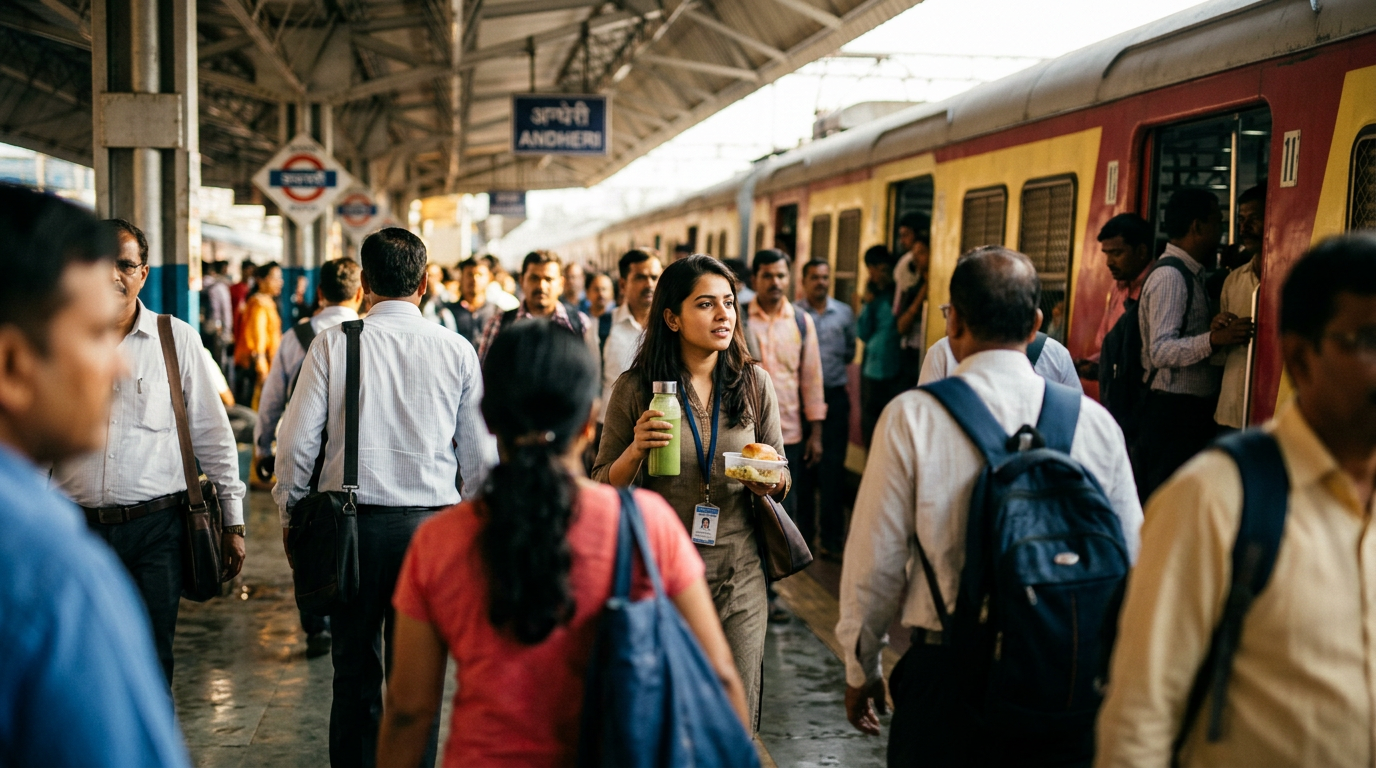
Quick High Protein Breakfast Ideas for Mumbaikars
Stuck in the Mumbai local train rush with no time for a proper meal? We've got you covered with quick high protein breakfast ideas that go beyond the usual vada pav.
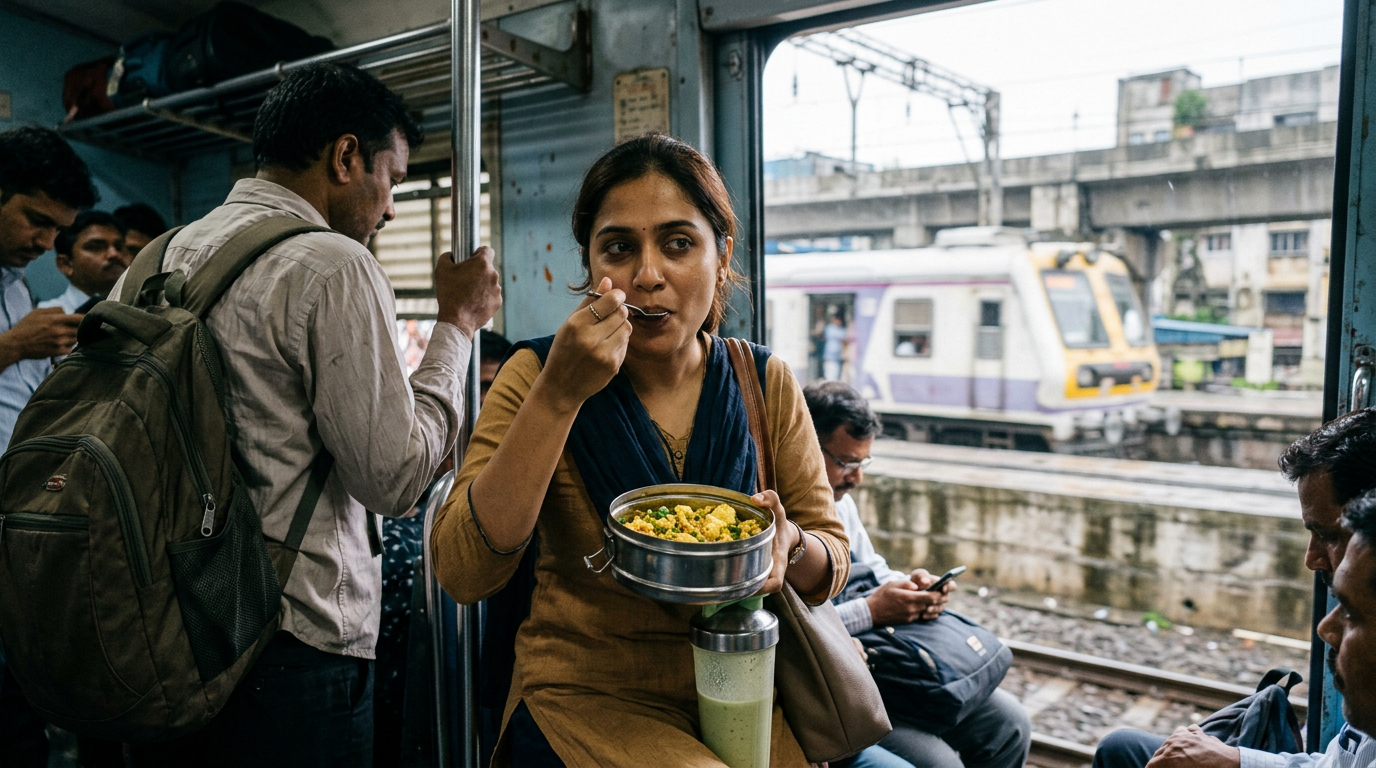
Quick High Protein Breakfast Ideas for a Hectic Mumbai Life
Struggling to fit a healthy meal into your Mumbai morning rush? Here are some quick high protein breakfast ideas, from souped-up poha and paneer bhurji to grab-and-go shakes.
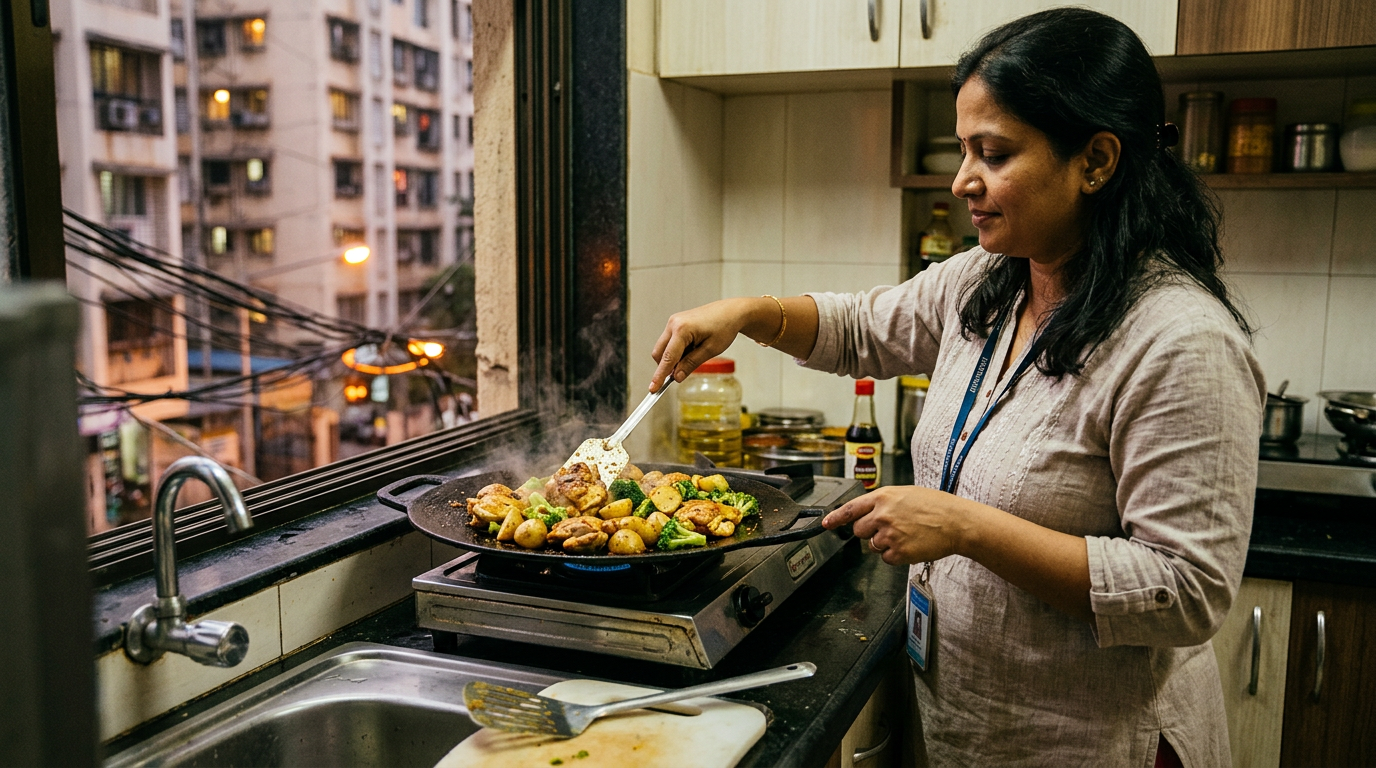
Effortless One Pan Dinner Recipes for Busy Mumbaikars
Beat the post-commute exhaustion with our guide to one pan dinner recipes. Perfect for busy Mumbaikars, these dishes minimize cleanup and maximize flavour.