
How to Price Freelance Work in Mumbai: A Local's Guide
Figuring out how to price freelance work can be tougher than a Virar fast local during rush hour. This guide breaks down pricing models for Mumbai's market.

You did it. You landed a promising meeting with a startup founder at their office in Bandra Kurla Complex. The vibe is great, the project sounds exciting, and you know you can deliver fantastic results. Then comes the question that makes even seasoned freelancers pause: "So, what are your charges?" Suddenly, the confidence you felt navigating the Sea Link traffic evaporates. This moment is critical. Setting the right price is the most important step in building a sustainable career. This guide will teach you how to price freelance work specifically for the dynamic, and often demanding, Mumbai Metropolitan Region (MMR) market.
Ditching the 'Cheaper is Better' Mindset
There's a pervasive myth among new freelancers in India: to win clients, you must be the cheapest option available. This is a race to the bottom, and it's a race you can't win without burning out. In a city like Mumbai, where the cost of living is the highest in the country, underpricing isn't just bad business strategy—it's financially unsustainable. Your rent in an Andheri high-rise or a quiet lane in Chembur, your daily commute from Thane, the cost of a cutting chai, and your high-speed internet bill all need to be covered before you even think about profit. When a client from a well-funded company in Powai's Hiranandani Business Park hires you, they aren't just paying for your time. They are investing in your expertise, your creative problem-solving, your reliability, and the professional polish you bring. Your price is a direct signal of this value. A low price signals low confidence and, potentially, low quality. A well-reasoned, confident price signals a professional who understands their worth and is ready to deliver commensurate results. Don't price yourself as a commodity; price yourself as an expert service provider.
The Three Core Pricing Models: Hourly, Project-Based, and Retainer
Choosing the right pricing structure is as important as the price itself. Each model suits different types of projects and clients. Understanding them allows you to be flexible and propose the best fit for each opportunity, whether it's with a small business in Vashi or a large corporation in Fort.
The Hourly Rate: Your Base Camp
Charging by the hour is the simplest way to get started. It ensures you're compensated for every minute you work, including unexpected revisions or client calls. To calculate a basic hourly rate, use this formula:
- Determine your desired annual income: Let's say you want to earn ₹15,00,000 per year before taxes.
- Add your annual business expenses: This includes software (e.g., Adobe suite), co-working space passes (a day pass at WeWork can be ₹1,000+), marketing, and insurance. Let's estimate this at ₹2,00,000.
- Calculate your billable hours: You won't be working 8 hours a day, 5 days a week on client work. You need time for admin, marketing, and finding new clients. A realistic estimate is 25 billable hours per week for 48 weeks a year, which is 1,200 hours.
- Calculate: (₹15,00,000 + ₹2,00,000) / 1,200 hours = ₹1,416 per hour. You might round this up to ₹1,500/hour.
Hourly rates are excellent for projects with an unclear scope or for ongoing consultancy work, like managing social media for a chain of restaurants in Lower Parel and Bandra.
Project-Based Fees: Selling the Value
This is the most common model. You charge a flat fee for the entire project. This approach is preferred by clients as it gives them cost certainty. For you, it rewards efficiency. If you can complete a project faster than estimated, your effective hourly rate goes up. To set a project fee, estimate the hours it will take, multiply by your hourly rate, and then add a 15-20% buffer for unforeseen issues—think of it as the "Mumbai traffic" contingency. For example, designing a brand identity for a new cafe in Kharghar might take you 30 hours. At ₹1,500/hour, that's ₹45,000. With a buffer, you might quote ₹52,000 or a round ₹55,000. This model forces you to focus on the value delivered, not just the time spent.
The Retainer: Creating Predictable Income
A retainer is a fixed monthly fee for a pre-defined amount of your time or a set of deliverables. This is the holy grail for freelancers as it provides a stable, predictable income stream—a huge relief in a city with fixed high costs. For example, a FinTech firm in BKC might hire you on a retainer of ₹60,000 per month to write four long-form articles and manage their LinkedIn page. Retainers are perfect for clients who need consistent, ongoing support. They build strong client relationships and make financial planning significantly easier.
Know Your Market: What Are Others Charging in the MMR?
Setting your prices in a vacuum is a recipe for failure. You need to understand the local market rates. While there's no official rate card, you can get a good sense of the going rates through research and networking. Don't just Google it; the real insights are found on the ground. Start by talking to other freelancers. Attend industry meetups, maybe a design event at the Nehru Centre or a digital marketing workshop in Andheri. Join Mumbai-specific freelancer communities on Facebook and LinkedIn; you'll find people openly discussing rates and red-flag clients. Co-working spaces like 91springboard or Awfis are melting pots of talent and great places to discreetly inquire about pricing standards.
To give you a starting point, here are some ballpark figures for mid-level freelancers in Mumbai (as of 2024). Remember, these can vary wildly based on experience, portfolio, and the client's size and budget. A small boutique in Colaba will have a different budget than an MNC in Nariman Point.
- Content Writer: ₹3 to ₹8 per word for well-researched blog posts. A full website copy project could range from ₹30,000 to ₹1,00,000+.
- Graphic Designer: A logo and basic brand identity for a startup might be ₹25,000 - ₹60,000. A monthly social media creative package could be ₹20,000 - ₹50,000.
- WordPress Developer: A standard 5-page brochure website for a local business (e.g., a dental clinic in Panvel) could range from ₹40,000 to ₹85,000. E-commerce sites start much higher.
- Social Media Manager: Managing 2-3 platforms for a small to medium business could command a retainer of ₹25,000 to ₹70,000 per month, depending on the scope (content creation, ads management, etc.).
Use these as a guide, not a rulebook. Your unique skills, experience, and the value you can prove you deliver will ultimately determine your price ceiling. [INTERNAL_LINK: best co-working spaces in Mumbai]
Factoring in the 'Mumbai Premium': Costs You Cannot Ignore
Your pricing must account for the unique economic reality of living and working in Mumbai. This isn't just about high rent; it's a collection of costs that we call the 'Mumbai Premium'. If you're working from your flat in Goregaon, you might save on some costs, but many are unavoidable. When you calculate your rates, make sure you've budgeted for these realities.
"Never send a price in a WhatsApp message or a single-line email. A professional proposal demonstrates that you're a serious business partner, not just a gig worker. It frames your fee as an investment, not a cost, and justifies why you're the right choice for their business in a competitive market like Mumbai."
Here are some of the key expenses to factor into your pricing:
- Infrastructure & Workspace: This includes your high-speed internet (non-negotiable), electricity (especially with the AC running half the year), and potentially a co-working space membership for a professional environment or just a change of scenery from your apartment.
- Client Travel & Meetings: A meeting in BKC might require a ₹400 auto ride from the suburbs. A meeting in Fort could mean an hour on the local train plus a cab. Add the cost of a coffee at Blue Tokai or Starbucks, and a single client meeting can easily cost ₹500-₹700.
- Professional Development: Staying competitive means constant learning. This could be online courses or attending workshops and conferences held at venues like the Jio World Centre. These costs are investments in your ability to charge higher rates later.
- Taxes: Once you cross the turnover threshold, you'll need to register for GST. You also need to account for income tax. It's wise to set aside at least 20-30% of your earnings for taxes. Consult a CA to understand your obligations. [INTERNAL_LINK: understanding GST for freelancers in India]
- Health & Insurance: As a freelancer, you have no employer-provided health insurance. A comprehensive policy is essential in a city where medical costs are high.
Forgetting these costs means you're paying for them out of your own pocket, effectively giving your client a discount at your expense.
The Art of the Quote: Presenting Your Price with Confidence
How you present your price is almost as important as the number itself. A professionally crafted proposal elevates your quote from a simple price tag to a compelling business case. It shows the client you’ve understood their needs and have a strategic plan to address them. Avoid the rookie mistake of just dropping a number in an email. Instead, create a document that builds value before ever mentioning the cost. Your proposal, whether for a fashion brand in Juhu or a tech company in Airoli, should be your silent salesperson.
A strong proposal should always include these sections:
- The Client's Goal: Start by summarizing your understanding of their objective. For example, "Your goal is to increase online orders for your delivery kitchen in the Andheri-Lokhandwala area." This shows you were listening.
- Scope of Work: Be incredibly specific. Detail exactly what is included (e.g., "Three rounds of revisions") and, crucially, what is not included (e.g., "Stock photography licensing fees are extra"). This prevents scope creep later.
- Your Proposed Solution & Deliverables: Outline your plan. What will you do, and what will the client receive at the end? (e.g., "A 10-page responsive website," "12 professionally written blog posts of 1000 words each").
- Timeline: Provide a realistic project timeline with key milestones.
- Investment: Use the word "Investment" instead of "Price" or "Cost." Present the total project fee clearly. If it's a large project, you can break it down by milestones.
- Payment Terms: This is non-negotiable in the Indian market. Standard practice is 50% advance to begin work and 50% on final delivery, before handing over source files. This protects you from clients who might delay or disappear.
Presenting your services this way shifts the conversation from "How much does it cost?" to "What is the return on this investment?"
Handling Negotiations Like a Pro at Crawford Market
In Mumbai, bargaining is practically a sport. From the street vendors at Linking Road to corporate procurement departments, almost everyone will try to negotiate. Don't be offended; anticipate it and have a strategy. The key is to negotiate from a position of strength, knowing your value and your absolute bottom line.
First, establish your 'walk-away' price. This is the absolute minimum you can accept for a project after factoring in your costs, time, and a small profit. This number is for you only. If a client's final offer is below this, you must be prepared to politely decline and walk away. Taking on an underpaid project leads to resentment and poor work.
When a client asks for a discount, don't just say yes. Use the "Give, but Get" principle. If they want to reduce the price, you must reduce the scope. For instance, if a client from Thane wants a 15% discount on your ₹80,000 website development quote, you could respond, "I can work within that budget. To do so, we can reduce the number of pages from seven to five and use a premium template instead of custom design for certain elements. Would that work for you?" This reframes the negotiation: the price is tied to the value and scope, not arbitrary. It shows that your pricing is deliberate, not inflated. Be firm but flexible, and always justify your original price by reiterating the value you bring—your experience, your specific strategy for their business, and the results you aim to deliver.
Conclusion: Price Yourself for Mumbai's Market
Learning how to price freelance work in Mumbai is a journey of confidence and calculation. It's about respecting your own skills while understanding the complex financial landscape of this incredible city. Ditch the imposter syndrome, do your market research, and calculate your rates based on real costs and desired income. Present your prices professionally, stand firm on your value, and be prepared to negotiate intelligently. Your pricing isn't just a number; it's a statement about your professionalism, your experience, and the quality of work you deliver. Price yourself not just to survive in Mumbai, but to thrive here.
What are your biggest challenges with freelance pricing in the MMR? Have you had a great success or a learning experience you'd like to share? Drop your thoughts in the comments below! And for more deep dives, check out our [INTERNAL_LINK: guide to starting a side hustle in Mumbai].
Keep reading

How to Price Freelance Work in Mumbai: A 2024 Guide
Learn how to price freelance work in the competitive Mumbai market. We cover calculating your baseline rate, project vs. hourly fees, and negotiating with local clients.
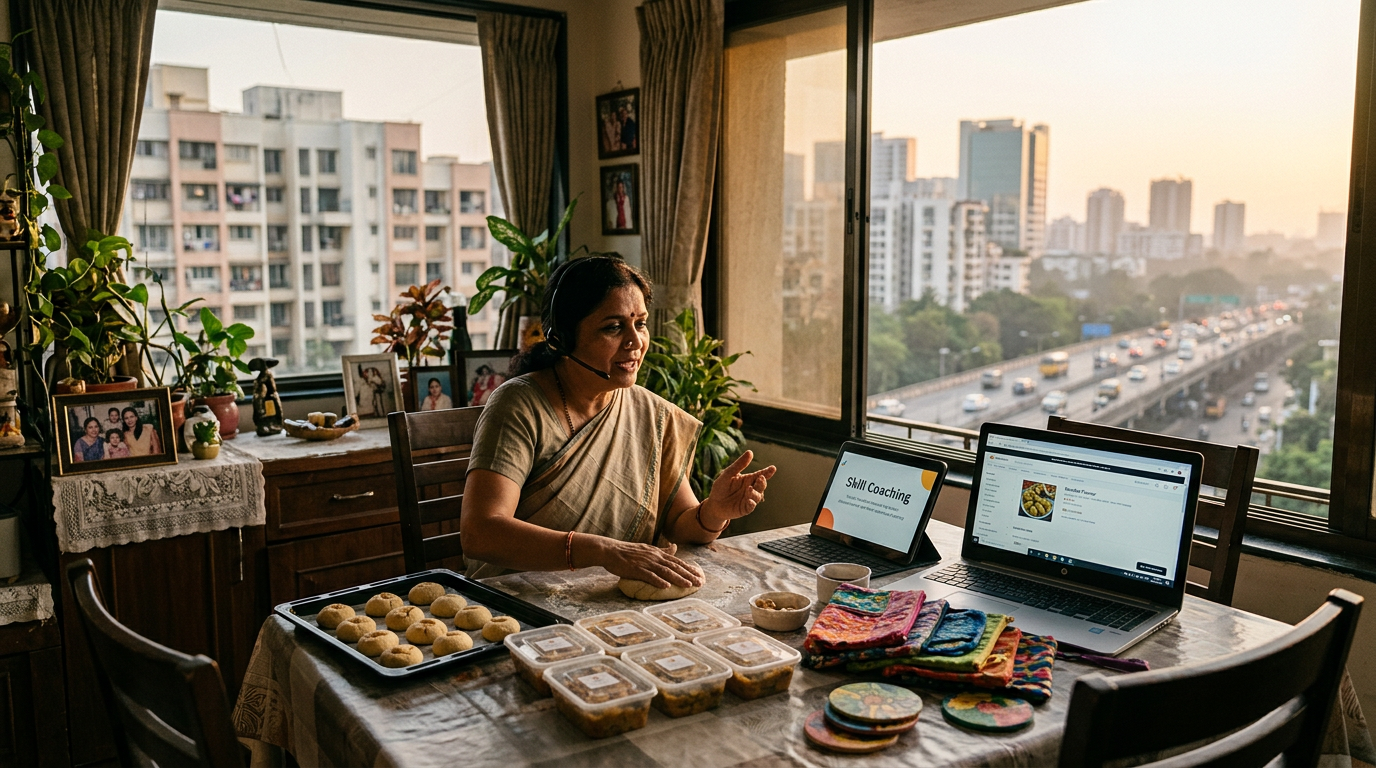
Best Side Hustles from Home: A Mumbai & Navi Mumbai Guide
Tired of the commute? Explore our guide to the best side hustles from home, tailored for Mumbai and Navi Mumbai residents. Start earning extra income today.

Starting a Newsletter Business in Mumbai: A Local's Guide
Thinking of starting a newsletter business in Mumbai? This guide covers everything from finding your niche in Bandra to monetizing with local brands in Vashi. Turn your passion into profit.