
How to Price Freelance Work in Mumbai: A Local's Guide
Wondering how to price freelance work in a city as diverse as Mumbai? From Andheri startups to BKC corporates, we break down setting rates that reflect your skill and the local market.

How to Price Freelance Work in Mumbai: The Ultimate Guide for 2024
You’re sitting in a bustling Social co-working space in Powai, the aroma of fresh coffee mixing with the hum of a dozen MacBooks. A potential client, a promising D2C brand based out of a slick Bandra West office, loves your portfolio. Then comes the question that makes your heart do a little nervous flutter, a question more daunting than navigating the Dadar station skywalk during peak hours: “Great work! So, what are your charges?” Suddenly, all your creative confidence evaporates. This is the moment of truth for every Mumbai freelancer. Knowing how to price freelance work in a city with such a vast economic spectrum is more of an art than a science. Do you quote a price that impresses the Bandra client but might scare off a startup from Thane? It’s a tightrope walk. This guide will provide a practical, Mumbai-centric framework to help you set prices that reflect your worth, respect your client's budget, and ultimately, build a sustainable freelance career in the city of dreams.
Understanding Mumbai’s Economic Landscape: Why a ‘One-Size-Fits-All’ Price Fails
Pricing your freelance services in Mumbai isn't like selling a vada pav; there's no standard rate. The city's economic geography is a complex tapestry. A client with a sea-facing office in the Bandra Kurla Complex (BKC) operates in a different financial reality than a bootstrapped e-commerce business run from a gala in a Bhiwandi industrial estate. Recognizing this diversity is the first step towards intelligent pricing.
Consider the primary business hubs:
- South Mumbai (Colaba, Fort): Home to legacy corporations, art galleries, and luxury brands. Clients here often have larger budgets but also demand the highest quality and professionalism.
- BKC and Lower Parel: The heart of finance, consulting, and major corporate headquarters. They are used to dealing with established agencies and value strategic input, which can command premium pricing.
- Andheri and Malad: The epicenter of media, entertainment, and a massive startup ecosystem. Budgets can vary wildly, from a blockbuster production house to a two-person influencer marketing agency.
- Powai: Mumbai's answer to Silicon Valley, filled with tech startups, VCs, and established IT firms. These clients are often data-driven and appreciate pricing that connects to ROI.
- Navi Mumbai (Vashi, Belapur, Kharghar): A burgeoning hub for IT, SMEs, and educational institutions. Clients here are often more price-sensitive but offer the potential for long-term, stable work as they grow.
A web developer building a site for a law firm in Fort will need a different pricing strategy than one creating a portfolio for a photographer in Kharghar. The former requires a formal, security-focused approach, while the latter might be more about creative expression. Your pricing must be fluid, adapting not just to the project scope but to the client's location, industry, and perceived budget. The key is to do your homework and not throw out a single, rigid number for every lead that comes your way.
The Core Pricing Models: Hourly, Project-Based, and Retainer
Once you understand the market's diversity, you need to choose the right pricing structure. Each model has its place, and the best Mumbai freelancers often use a mix of all three depending on the client and the nature of the work. Let's break them down with local examples.
Hourly (Per-Hour Rate)
This is the most straightforward model: you charge for every hour you work. It’s ideal for projects with an unclear scope, ongoing consultations, or when you’re starting with a new client and want to mitigate risk. For example, a content strategist hired by a Vashi-based tech company to overhaul their blog might start with an hourly rate for the initial audit and strategy phase before moving to a project fee for execution. The downside? It punishes efficiency. The faster you get, the less you earn for the same task. It also requires meticulous time-tracking, which can be an administrative headache.
Project-Based (Flat Fee)
This is the most popular model. You quote a single, fixed price for the entire project. This works beautifully for well-defined tasks like designing a logo for a new Juhu cafe, writing a 10-page website for a Panvel real estate developer, or producing a short promotional video for an event at Jio World Centre. Clients love it because the cost is predictable. You love it because if you work efficiently, your effective hourly rate soars. The danger is 'scope creep'—the client asking for “just one more small change” that adds up. To combat this, your proposal must be crystal clear about deliverables, timelines, and the number of revision rounds included.
Retainer (Monthly Fee)
A retainer is the holy grail for freelance stability. A client pays you a fixed amount each month for a set amount of work or to have you on call. This is perfect for ongoing needs, such as a social media manager handling accounts for a chain of restaurants across Mumbai, an SEO specialist managing a corporate blog, or a graphic designer providing consistent creative support for a marketing team in Andheri East. Retainers provide predictable cash flow, a godsend in a city with high living costs, and allow you to build deep, strategic relationships with your clients.
Calculating Your Baseline Rate: The ‘Mumbai Cost of Living’ Formula
Before you can quote any price, you need to know your numbers. What does it cost for you to live and work as a freelancer in the Mumbai Metropolitan Region (MMR)? This isn't about getting rich; this is about survival and sustainability. Let's create a simplified formula to find your minimum viable rate.
First, tally your annual expenses:
- Personal Costs (Annual):
- Rent/Housing: This is the big one. A 1BHK in Dombivli might be ₹12,000/month, while the same in Bandra could be ₹70,000/month. Be realistic about your location. Let's use an average of ₹35,000/month (₹4,20,000/year).
- Food, Utilities, Lifestyle: Groceries, electricity (those Adani/BEST bills add up!), internet, and social life. A conservative estimate is ₹25,000/month (₹3,00,000/year).
- Travel: Whether it’s a First Class AC local pass, Metro card top-ups, or the occasional Uber to a client meeting in BKC, budget for it. Say, ₹5,000/month (₹60,000/year).
- Insurance & Savings: Health insurance is non-negotiable. Aim to save at least 15-20% of your income. Let's put ₹20,000/month here (₹2,40,000/year).
- Business Costs (Annual):
- Co-working/Office: A hot desk at a place like WeWork or 91Springboard can be ₹10,000-₹18,000/month. Or maybe you work from home. Let's budget ₹8,000/month (₹96,000/year).
- Software & Tools: Adobe Creative Cloud, Figma, accounting software, etc. Budget ₹5,000/month (₹60,000/year).
- Taxes: This is crucial. Factor in Professional Tax, GST (if applicable), and Income Tax (assume roughly 20-30% of your profit). This is complex, so let's use a simplified 25% of your total required income.
Your total annual cost (before tax) is ₹4,20,000 + ₹3,00,000 + ₹60,000 + ₹2,40,000 + ₹96,000 + ₹60,000 = ₹11,76,000. This is the minimum you need to earn. Add a 25% buffer for taxes and profit, which brings your target to roughly ₹14,70,000 per year. Now, divide this by your billable hours. A full-time job has about 2,080 hours/year, but you won't be billing all of them. A realistic target for a freelancer is 1,200 billable hours/year (about 25 hours/week). Your Minimum Hourly Rate: ₹14,70,000 / 1,200 hours = ~₹1,225 per hour. This is your starting point, your floor. You should never quote below this.
Market Research: What Are Other Mumbai Freelancers Charging?
Your cost-based rate is your floor, but the market determines your ceiling. You need to figure out what clients are accustomed to paying for your skills in Mumbai. This requires some detective work, but it’s invaluable.
- Talk to People: This is where Mumbai's collaborative spirit helps. Attend industry meetups, whether it’s a design event at the Nehru Centre, a startup pitch session in Powai, or a writers' gathering in a Bandra cafe. Build a network of trusted peers in your field. You don't have to ask, “What do you charge?” directly. Instead, try, “I’m putting together a proposal for a mid-sized e-commerce site. What’s the typical budget range you’ve seen for such projects in Mumbai?”
- Use Online Communities: LinkedIn and specialized Facebook groups (like 'Mumbai Freelancers' or 'Pune-Mumbai Startups') are goldmines. Use LinkedIn's search to find freelancers with similar experience levels in Mumbai. While their rates aren't public, you can see the kinds of clients they work with, which gives you a clue about their pricing tier.
- Analyze Job Postings: Look at job postings for full-time roles similar to your freelance work. If a company in Lower Parel is willing to pay a Senior Graphic Designer a salary of ₹18 Lakhs per annum, you can reverse-engineer an equivalent freelance rate. That salary translates to roughly ₹900/hour before factoring in benefits, overhead, and the premium for freelance flexibility. You should charge significantly more, perhaps ₹1,800-₹2,500/hour.
While you should never copy someone else's pricing, this research helps you benchmark. It gives you the confidence to know whether your calculated rate of ₹1,225/hour is competitive, too low, or too high for the specific client you're targeting. For a well-funded startup, it might be too low. For a small NGO in Chembur, it might be the right starting point for negotiation.
The Value-Based Pricing Strategy: Selling Outcomes, Not Hours
This is the strategy that separates the freelancers earning a decent living from those building real wealth. Instead of anchoring your price to your time or costs, you anchor it to the value and return on investment (ROI) you provide to the client's business. It’s a mindset shift from “How long will this take me?” to “How much is this worth to my client?”
“I hired a freelancer to rewrite the landing page for our new real estate project in Kharghar. I didn't pay for the 10 hours she spent writing; I paid for a page that led to a 30% increase in qualified site visit inquiries within a month. That’s worth crores in potential sales. Her ₹1,50,000 fee was one of the best investments we made.” - A (hypothetical) Navi Mumbai Developer
To price on value, you must become a consultant during the sales process. Ask deep questions that uncover the business goals behind the project:
- “What is the primary business objective for this new website?” (e.g., increase leads, drive online sales, build brand authority)
- “What would a 20% increase in leads be worth to your business annually?”
- “What is the cost of *not* doing this project?” (e.g., losing market share to a competitor in Thane, inefficient internal processes)
If you discover that your work on an email marketing campaign could realistically generate ₹20 lakhs in new revenue for a client, charging ₹2 lakhs for the project suddenly seems incredibly reasonable. You're no longer just a writer or a designer; you're a strategic partner in their growth. This approach allows you to command significantly higher fees, decouples your income from your time, and attracts higher-quality clients who understand and appreciate the impact of your work.
Creating Your Rate Card and Proposal: The Professional Touch
Your pricing is communicated through your proposal, and first impressions matter. A badly formatted email with a number plucked from thin air screams 'amateur'. A professional proposal and a clear rate card build trust and justify your fee before the client even reads the price.
Your Rate Card
Even if you customize pricing for every project, have an internal rate card. It can also be a polished PDF you share with certain clients. It should include:
- Service Packages: Instead of just 'logo design', offer tiered packages like 'Startup Logo Pack' (logo + favicon), 'Business Branding Pack' (logo, brand guide, business cards), and 'Corporate Identity Pack' (full branding suite). This frames the conversation around value, not cost.
- Clear Deliverables: Specify exactly what is included and, more importantly, what is *not* included. E.g., “Includes two rounds of revisions. Additional revisions are billed at my hourly rate of ₹X.”
- Payment Terms: This is critical in the Mumbai market. Standard practice is 50% advance and 50% on completion, before handing over final files. For larger projects, you might do 40-40-20. Never start work without an advance.
The Winning Proposal
Your proposal is your sales pitch on paper. It should be tailored to the client. A proposal for a gritty rock band in Versova should have a different tone and look than one for a financial advisor in BKC. It must:
- Restate Their Goals: Show you were listening. Start by summarizing the project goals in their own words.
- Outline Your Solution: Detail your proposed plan of action and the process you'll follow.
- Provide Options (The 3-Tier Trick): Present three pricing options: a basic, a recommended (mid-range), and a premium option. This psychological trick shifts the client's question from “Should I hire this person?” to “Which option should I choose?”
- Include Social Proof: Add a testimonial or a mini-case study from a similar Mumbai-based client.
The Art of Negotiation: Handling Price Objections in Mumbai
“Bhaisaab, thoda kam karo.” Negotiation is woven into the fabric of Mumbai's commerce. From the vegetable vendor at Pali Market to the corporate procurement department, everyone wants a better deal. Don’t be offended; be prepared. When a client pushes back on your price, it’s not a rejection—it’s an invitation to a conversation.
Here’s how to handle common objections:
- The Objection: “That’s way over our budget.”
Your Response: “I understand that budget is a key consideration. Based on the value this project will bring, I believe the price is fair. However, I’m happy to explore if we can adjust the scope to better align with your budget. For example, we could start with just the core website pages and add the blog and gallery in a second phase.” (This maintains your value while offering a solution). - The Objection: “My friend’s nephew in Pune can do it for half the price.”
Your Response: “I appreciate you sharing that. There are definitely cheaper options available. My pricing reflects over [X] years of experience, my specific expertise in [Your Niche], and a deep understanding of the Mumbai market you operate in. I focus on delivering a strategic result, not just a commodity.” (This positions you as a premium expert, not a low-cost provider). - The Objection: “Can you give me a discount for future work?”
Your Response: “I prefer not to discount my work as I believe it reflects the value I provide. However, I’d be very open to discussing a monthly retainer after this project is complete, which often proves more cost-effective for clients with ongoing needs.” (This deflects the discount request and cleverly upsells to a more stable arrangement).
Always know your walk-away number—the price below which the project is no longer profitable or worth your stress. It’s far better to politely decline a project than to take on an underpaying client who will drain your energy and disrespect your work.
Set Your Price, Know Your Worth
Learning how to price freelance work in Mumbai is a journey, not a destination. Your rates will and should evolve as you gain experience, build a stronger portfolio, and get better at articulating your value. Start by understanding your fundamental costs, research the local market, and always try to anchor your price to the value you create, not the hours you spend.
Present yourself professionally, negotiate with confidence, and never be afraid to charge what you’re worth. Your work has value, and in a city that runs on ambition and results, the right clients will be more than willing to pay for it.
What's the biggest challenge you face when pricing your freelance services in Mumbai? Share your experience in the comments below! [INTERNAL_LINK: join our Mumbai freelancers community]
Keep reading

How to Price Freelance Work in Mumbai: A Local's Guide
Figuring out how to price freelance work can be tougher than a Virar fast local during rush hour. This guide breaks down pricing models for Mumbai's market.

How to Price Freelance Work in Mumbai: A 2024 Guide
Learn how to price freelance work in the competitive Mumbai market. We cover calculating your baseline rate, project vs. hourly fees, and negotiating with local clients.
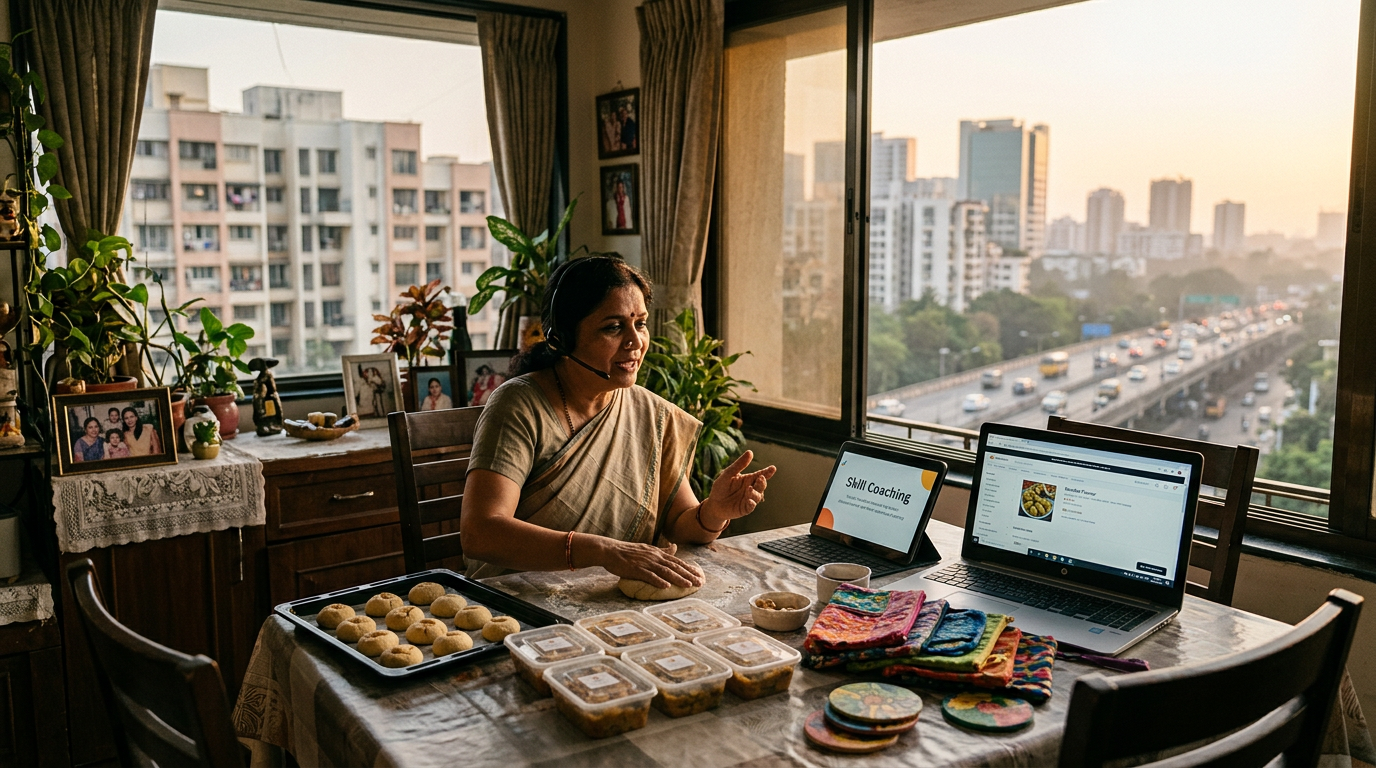
Best Side Hustles from Home: A Mumbai & Navi Mumbai Guide
Tired of the commute? Explore our guide to the best side hustles from home, tailored for Mumbai and Navi Mumbai residents. Start earning extra income today.