
Deep Work Techniques That Actually Work in Mumbai
Is the constant hum of Mumbai killing your focus? From crowded locals to chaotic offices in BKC, we explore deep work techniques that help you thrive in the city that never sleeps.
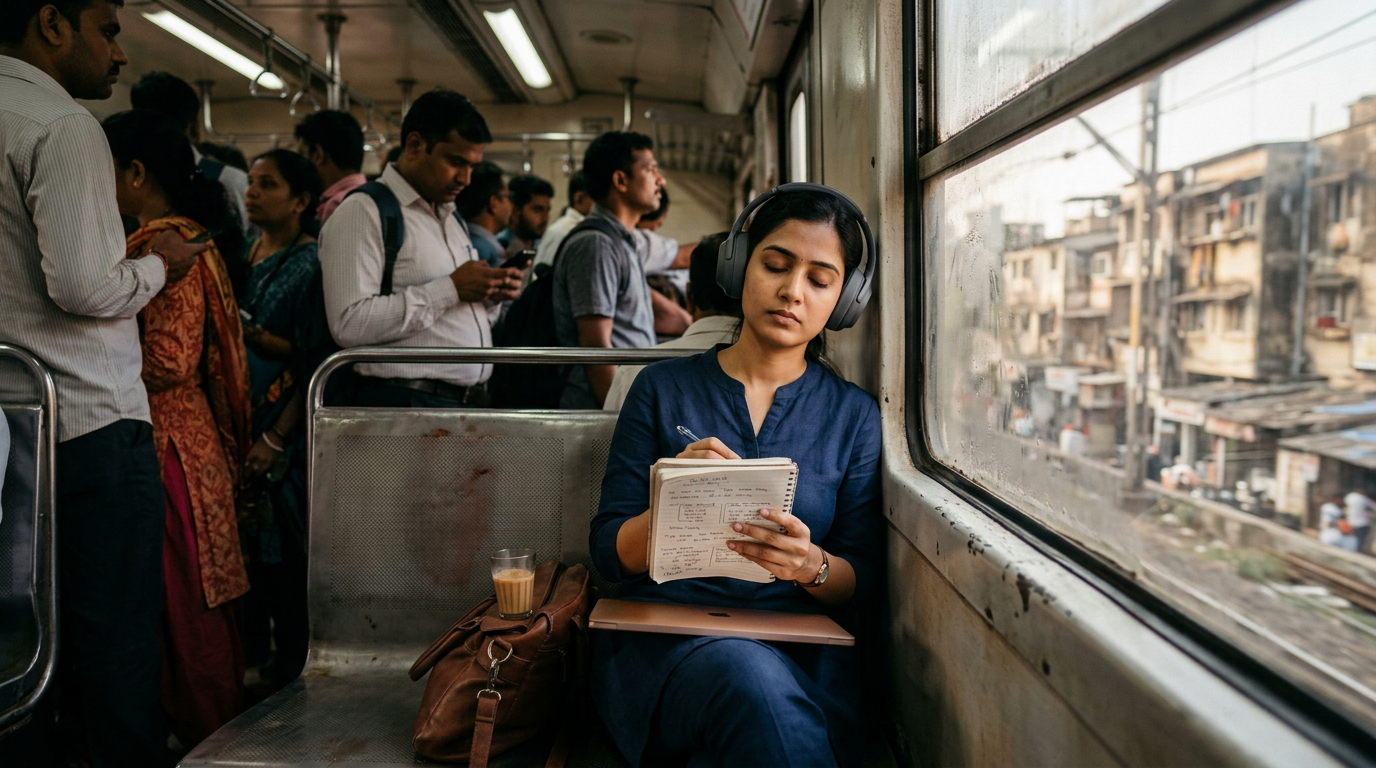
The 8:47 AM Virar fast, the cacophony of horns on the Western Express Highway, the colleague who loves to chat over your cubicle wall in your Andheri office—Mumbai is a city that thrives on beautiful, productive chaos. But that very chaos can be the enemy of real achievement. If you've ever ended a 10-hour workday feeling like you've been busy but not productive, you're not alone. The solution isn't working longer; it's working deeper. This is a guide to deep work techniques specifically adapted for the unique pressures and distractions of life in the Mumbai Metropolitan Region (MMR).
What is Deep Work and Why Does Every Mumbaikar Need It?
Coined by author Cal Newport, 'Deep Work' refers to professional activities performed in a state of distraction-free concentration that push your cognitive capabilities to their limit. These efforts create new value, improve your skill, and are hard to replicate. Think of it as the mental equivalent of a high-intensity workout. The opposite is 'Shallow Work': non-cognitively demanding, logistical-style tasks, often performed while distracted. Think answering emails, attending pointless meetings, or scrolling through your company's Slack channel.
In a city as competitive as Mumbai, the ability to produce high-value work is not a luxury; it's a survival skill. The finance wizards in BKC, the tech innovators in Powai, and the creative minds in Bandra aren't getting ahead by simply being 'busy'. They are getting ahead by producing work that requires intense, uninterrupted focus. While your colleague is stuck in a loop of replying to emails and getting interrupted every 15 minutes, you could be designing a market-winning strategy, writing flawless code for a new app, or drafting a legal brief that changes the course of a case. Deep work is the superpower that allows you to stand out in a sea of talent and deliver tangible results, justifying that hefty rent for your 1BHK in Thane or Vashi.
The Fortress of Solitude: Crafting Your Deep Work Environment
Finding a quiet space in Mumbai can feel like searching for a parking spot in Dadar on a Sunday. It's a challenge, but not an impossible one. Your environment is the single biggest factor in your ability to slip into a state of deep work. You need to create a 'fortress of solitude' that signals to your brain: "It's time to focus."
If You're at the Office:
Open-plan offices in Lower Parel or Navi Mumbai's tech parks are notorious for being distraction factories. Your strategy here is to create a micro-environment. Invest in a pair of high-quality, noise-cancelling headphones—consider them as essential as your laptop. A good pair from Sony or Bose might set you back ₹15,000-₹25,000, but the ROI in terms of productive hours is immense. If your office has them, book a meeting room or a quiet pod for a 90-minute block. Put a sign on the door: "Deep Work in Session. Please Do Not Disturb." It might feel awkward at first, but it sets a clear boundary.
If You're Working from Home:
Your small Mumbai apartment presents its own set of challenges—the pressure cooker whistle, the doorbell from the Amazon delivery person, the family's TV serials. Designate a specific corner, even if it's just a small desk in your bedroom, as your 'work-only' zone. This physical separation is crucial. When you sit there, you work. When you're not there, you don't. Tell your family your deep work hours. For example: "From 10 AM to 12 PM, I need complete quiet. I'll be available after that." [INTERNAL_LINK: work-from-home-productivity-tips]
Escaping the House/Office:
Sometimes, a change of scenery is the best solution. Consider these options:
- Co-working Spaces: Places like WeWork (multiple locations), 91springboard in Andheri, or Ministry of New in Fort offer day passes (around ₹500-₹800) or monthly 'hot desk' plans. The ambient noise of a co-working space is often a productive hum, not a distracting chatter.
- Libraries: The iconic David Sassoon Library in Kala Ghoda or the magnificent Asiatic Society Library are temples of silence. Membership is required, but it's a small price for guaranteed peace.
- Off-Peak Cafes: A Starbucks in Powai at 7 AM or a small Irani cafe in Bandra on a Tuesday afternoon can be surprisingly conducive to focus before the crowds roll in.
The Commuter’s Strategy: Time Blocking Like a Local Pro
Your calendar is your most powerful weapon. Time blocking isn't just about scheduling meetings; it's about scheduling focus. Instead of a to-do list, you schedule every minute of your workday. A Mumbaikar's schedule is often dictated by the local train timetable or Google Maps' terrifying traffic predictions. Use this to your advantage.
A typical approach looks like this:
- Review Your Tasks: At the start of the day (or the evening before), identify the one or two most important tasks that require deep work.
- Block the Time: Look at your calendar. Do you have a clear 90-minute window between 10:00 AM and 11:30 AM? Block it out. Label it: "Deep Work: Project X Report." Be as specific as possible.
- Schedule the Shallow: Group your shallow tasks. For example, block 30 minutes at 12:30 PM and 30 minutes at 4:30 PM for "Email & Slack Catch-up." This prevents you from reactively checking notifications all day.
- Leverage the Commute: Your travel time is not dead time. Use your hour-long journey from Borivali to Churchgate or from Kharghar to BKC for shallow work. Answer emails on your phone, plan your day, or listen to a relevant podcast. This frees up prime, high-energy hours at your desk for deep work. Travelling by the new AC locals or a cab? Even better. You can get a solid chunk of planning done before you even reach the office.
Rituals and Routines: Your Pre-Work Cutting Chai
Your brain loves cues. Just as the smell of popcorn at a PVR cinema makes you think of movies, you can create rituals that signal the start of a deep work session. These routines don't have to be elaborate. The goal is consistency, not complexity.
"The key to developing a deep work habit is to move beyond good intentions and add routines and rituals to your working life designed to minimize the amount of your limited willpower necessary to transition into and maintain a state of unbroken concentration." - Cal Newport, Deep Work
Think about what your personal 'focus trigger' could be. Here are some Mumbai-centric ideas:
- The specific beverage: It could be grabbing a ₹10 cutting chai from the vendor outside your office in Fort, brewing a specific type of filter coffee from a Matunga-based supplier at home, or having a glass of fresh sugarcane juice.
- The location shift: The simple act of moving from your main desk to a designated 'focus chair' or walking to a nearby coffee shop like Blue Tokai or Third Wave Coffee Roasters.
- The tech setup: A routine of putting your phone on 'Do Not Disturb' and into a drawer, closing all unnecessary tabs, opening only the document you need, and putting on your headphones.
- A short walk: A quick 5-minute walk around the block, whether it's the leafy lanes of Hiranandani Gardens in Powai or the bustling area around Vashi station, can help clear your head before you dive in.
The Grand Gesture: When a Day in the City Isn't Enough
Sometimes, a 90-minute block isn't enough. For a truly monumental task—writing a book, preparing a major presentation, or starting a new business plan—you might need to make a 'grand gesture'. This involves taking a radical change of scenery for an extended period of deep work, completely removing yourself from your daily environment.
This isn't a vacation; it's a strategic work retreat. Mumbai's proximity to a variety of getaways makes this surprisingly feasible. You could book a simple Airbnb or a quiet resort in Lonavala or Karjat for a long weekend. The cost (maybe ₹8,000-₹15,000 for a 3-day trip) is an investment in unparalleled productivity. Imagine spending three days where your only obligations are to think, write, or create, punctuated by quiet walks and simple meals. You can achieve more in these 72 hours than in three weeks of distracted work in the city.
Another option is a longer-term stay in a quieter town. A friend of mine, a programmer, rented a small apartment in Alibaug for a month to finish a complex coding project. He worked in focused bursts from morning until early afternoon and then spent the rest of the day at the beach, completely disconnected. This monastic approach allows for an intensity of focus that's simply unattainable amidst the daily grind of city life. [INTERNAL_LINK: weekend-getaways-from-mumbai]
Taming the Tech Beast: Digital Minimalism in a Digital City
Mumbai is the financial and technological heart of India. We are wired, connected, and always online. This is both a strength and a weakness. The same technology that enables your work is often the biggest source of distraction. The solution is to adopt a philosophy of digital minimalism.
Curate Your Digital Space:
- Turn off all non-essential notifications: Your phone should not be buzzing every time someone likes your photo or a new sale starts on Myntra. Go into your settings and be ruthless. The only notifications you truly need are calls and perhaps messages from immediate family. Everything else can wait.
- Use focus apps: Tools like Forest (which gamifies not touching your phone), Freedom, or Cold Turkey can block distracting websites and apps for a set period. It's like having a digital security guard for your attention.
- Schedule your social media: Instead of dipping into Instagram or Twitter whenever you feel a pang of boredom, schedule specific, short blocks for it. Maybe 15 minutes during your lunch break. This contains the distraction instead of letting it bleed into your entire day.
This isn't about becoming a Luddite and moving to a cave. It's about using technology intentionally, as a tool to serve your goals, not as a master that dictates your attention. Your focus is your most valuable asset in the 21st-century economy; protect it as fiercely as you would your wallet on a crowded local train.
The '5:30 PM Churchgate Fast' Shutdown Ritual
Just as important as starting deep work is knowing when to stop. In a city with a pervasive 'always-on' work culture, creating a hard stop to your day is crucial for long-term sustainability and preventing burnout. The 'shutdown ritual' is a set of actions you perform at the end of the workday to signal to your brain that the day's work is done.
Think of it as catching the 5:30 PM fast train from Churchgate. Once you're on that train, you're heading home. You're not going back to the office. Your ritual should provide the same sense of finality.
- Final Check: Take 10 minutes to review your emails and messages to ensure there are no genuine emergencies.
- Plan for Tomorrow: Quickly map out your plan for the next day. This gets it out of your head and onto paper (or a digital doc), preventing you from ruminating on it all evening.
- The Verbal Cue: As you close your laptop, say a simple phrase out loud, like "Shutdown complete." It sounds silly, but it works as a powerful psychological trigger.
Conclusion: Master Your Focus, Master Your Life
Living and working in Mumbai is an exercise in managing chaos. While the city's energy is infectious, it demands a deliberate approach to protect your focus. The deep work techniques outlined here aren't just abstract productivity hacks; they are practical strategies for thriving in this specific, demanding environment. By creating a fortress of solitude, time blocking your day like a local train schedule, building powerful rituals, and knowing when to shut down, you can move beyond being merely 'busy'. You can start producing work that truly matters, accelerating your career and reclaiming your time to actually enjoy the incredible city you call home.
So, which technique will you try first? Do you have a favorite undiscovered quiet spot in the MMR for getting work done? Share your thoughts and tips in the comments below!
Keep reading

How to Negotiate a Raise in Mumbai: Your Local Guide
Struggling with Mumbai's cost of living? Our guide breaks down how to negotiate a raise, using local benchmarks and strategies that work in the unique Mumbai corporate world.
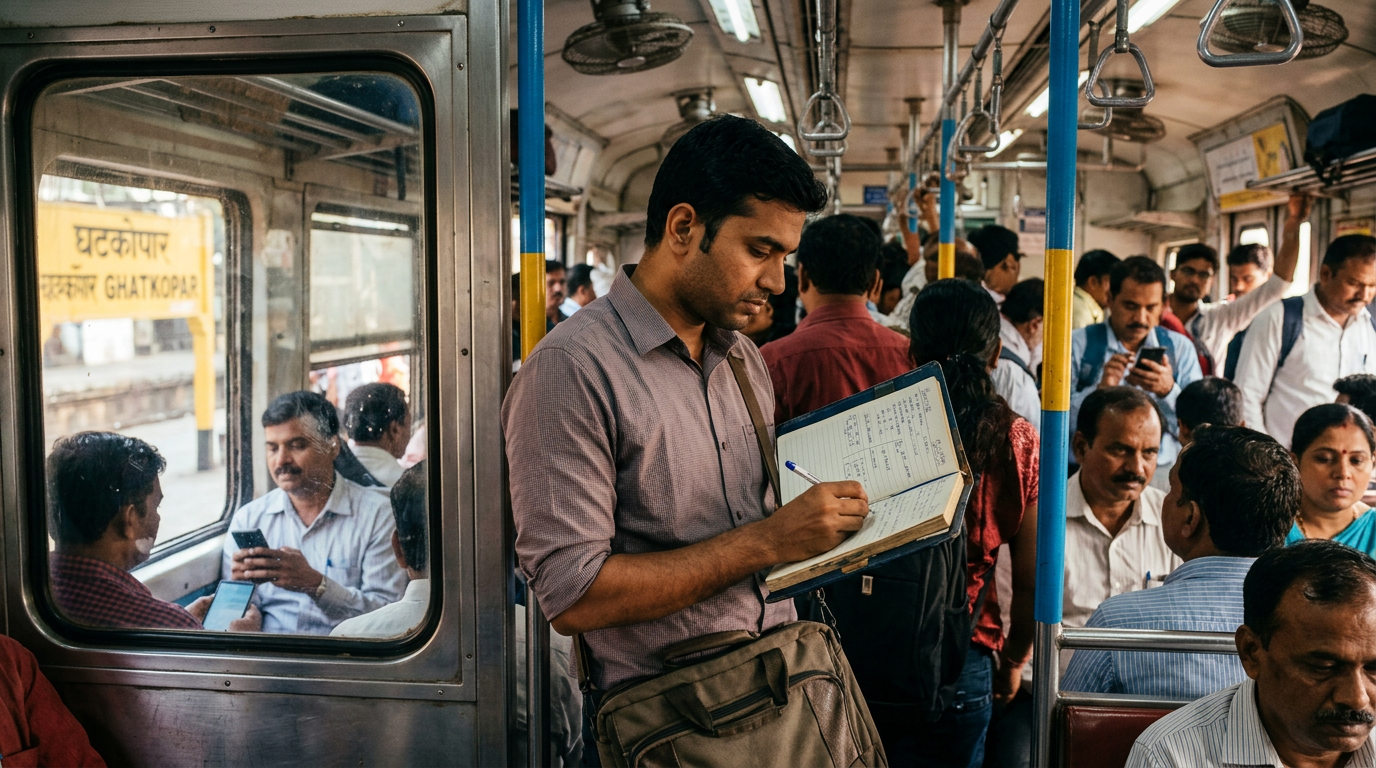
The Best Note-Taking Systems for Mumbai's Hustle Culture
Struggling to keep track of ideas amidst Mumbai's chaos? We break down the best note-taking systems, from digital tools for your commute to analogue methods perfect for a quiet coffee shop in Bandra.
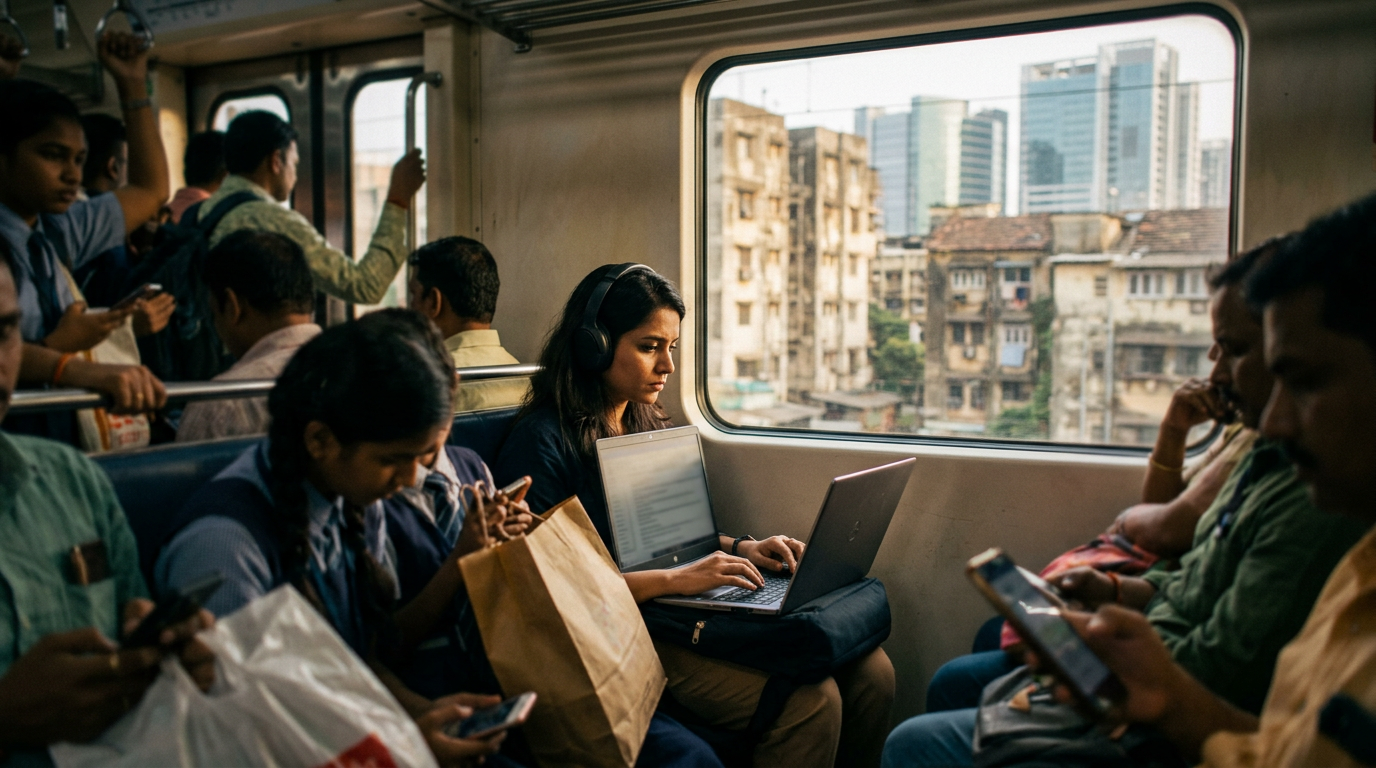
Deep Work Techniques for a Distracted Mumbai Mind
The constant buzz of Mumbai can shatter your focus. Discover powerful deep work techniques tailored for city life, helping you achieve more from your home in Thane to your office in BKC.