
Deep Work Techniques That Actually Work for Mumbai Professionals
Living in the Mumbai Metropolitan Region means constant sensory overload. Here are practical deep work techniques that actually work despite the noise and hectic schedules.
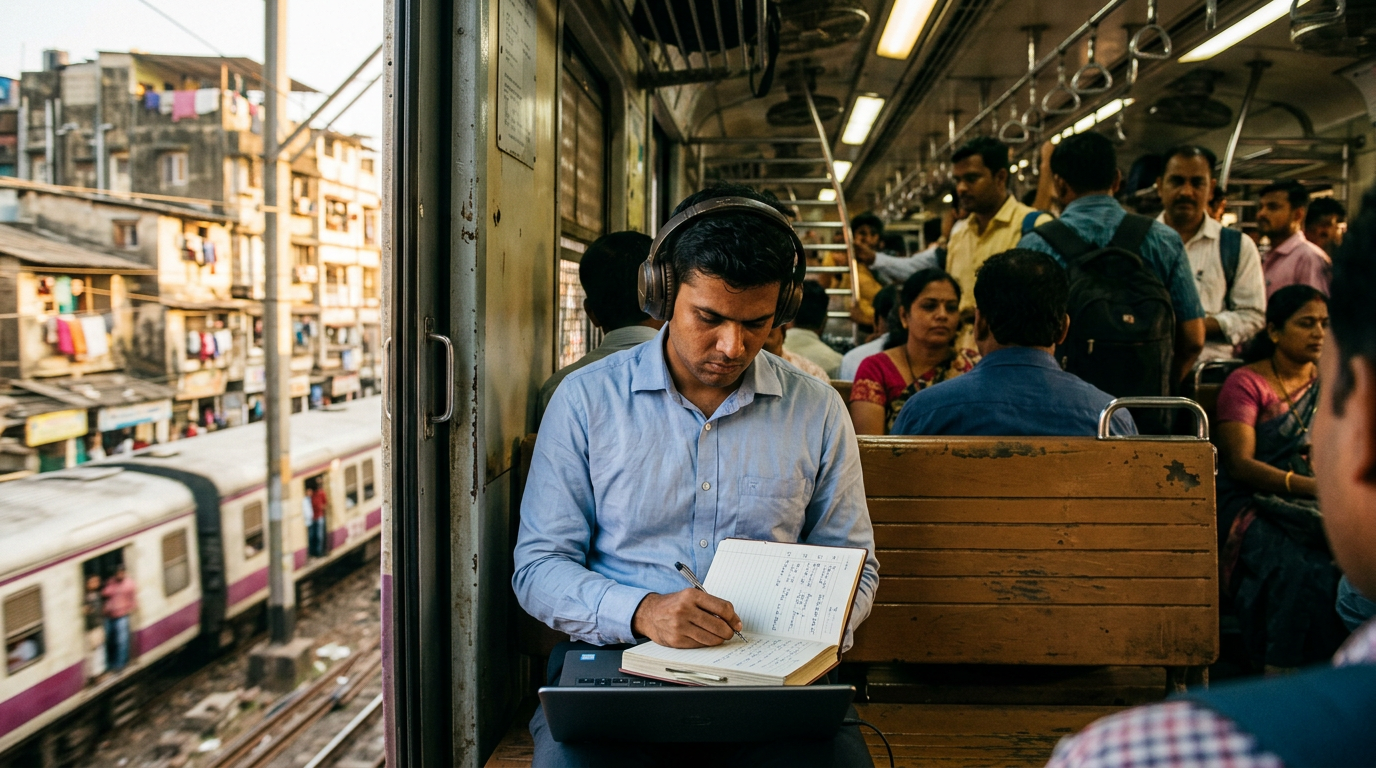
Step out onto the platform at Dadar at 8:45 AM or spend forty-five minutes stalled at the Kalanagar junction in Bandra East, and your cognitive reserve takes a massive hit before your workday even begins. Between buzzing open-plan desks in Lower Parel, pinging WhatsApp client groups, and relentless slack notifications from teams across Bangalore and London, finding two uninterrupted hours feels like a luxury reserved for monks. Yet, high-performing knowledge workers across the Mumbai Metropolitan Region (MMR) consistently pull off complex projects without working 16-hour shifts. Their secret lies not in working longer, but in adopting deep work techniques that actually work within our hyper-stimulating urban environment.
Deep work—a term coined by professor Cal Newport—refers to professional activities performed in a state of distraction-free concentration that push your cognitive capabilities to their limit. In a city where ambient sound rarely drops below 70 decibels and professional demands are unrelenting, standard productivity advice like “just turn off your phone” falls flat. You need practical, stress-tested strategies built for the reality of long transit lines, shared flats in Andheri, and bustling corporate parks from Powai to Belapur.
1. The Rhythmic Scheduling Strategy: Reclaiming MMR Commute Time
The rhythmic philosophy of deep work relies on turning focus sessions into automatic daily habits. Rather than waiting for inspiration or a rare quiet afternoon, you anchor fixed blocks of time to predictable daily anchors. In Mumbai, your most predictable—or painfully prolonged—anchor is often your commute.
If you take the Harbour Line from Seawoods to Wadala or board a Western Line fast local from Borivali, attempting to write an executive brief on a laptop during peak crush is unrealistic. However, you can bifurcate your commute into structured cognitive phases. Morning travel can be reserved for low-friction, high-value preparation: reading technical documentation offline, reviewing codebase architectures on a tablet, or structuring complex proposals on paper.
The 90-Minute Pre-Office Block
For those driving down the Eastern Freeway or navigating the Western Express Highway, leaving home forty-five minutes earlier saves thirty minutes of gridlock. Arrive near your office hub—whether that is Nesco in Goregaon or Bandra Kurla Complex (BKC)—and spend that salvaged hour inside a quiet coffee shop like Subko in Bandra or Blue Tokai in BKC. This single ninety-minute block, executed when your mind is fresh and before daily firefighting starts, regularly outperforms four hours of scattered afternoon effort.
Key habits for rhythmic scheduling include:
- Fixed morning start times: Commit to starting your primary cognitive task at the exact same hour every weekday, regardless of team meetings.
- Defensive calendar booking: Block out 9:00 AM to 11:00 AM as recurring non-negotiable “Focus Time” across your shared company calendar.
- Commute conceptualization: Use transit solely for passive input (podcasts, industry papers) or mental outlining, leaving output generation for stationary setups.
2. Sensory Quarantine: Neutralizing Open-Plan Chaos in BKC and Powai
Modern workplaces across Mumbai—from the sprawling tech campuses in Hiranandani Powai to commercial hubs in Mindspace Malad—have heavily favored open-plan layouts. While designed for collaboration, these offices are catastrophic for sustained attention. Overhearing sales calls, coffee machine chatter, and colleagues tapping your shoulder creates an epidemic of attention residue.
To produce exceptional work, you must implement a strict sensory quarantine. This means physically and visually marking yourself as unavailable during dedicated deep sprints.
Deploying High-Fidelity Audio Shields
Invest in active noise-cancelling (ANC) headphones. Do not play high-tempo Bollywood tracks or lyrical indie playlists, which compete for linguistic processing in your brain. Instead, opt for brown noise, binaural beats at 40 Hz, or ambient rain recordings. When your teammates see over-ear headphones paired with a physical indicator—such as a small red desk card or a closed phone—they quickly learn not to interrupt unless the building is on fire.
If your office floor remains hopelessly loud, relocate. Many corporate parks now feature phone booths or quiet library zones. If those are booked, negotiate half-day desk shifts at nearby coworking outposts such as WeWork on the JVLR or Awfis in Vashi to isolate yourself during heavy analytical sprints.
3. The Bimodal Approach: Finding Micro-Monasteries Across Navi Mumbai & Thane
The bimodal philosophy requires dividing your schedule into distinct intervals: one dedicated entirely to deep pursuits, and another reserved for shallow tasks, administrative obligations, and communication. On a weekly or monthly scale, this means finding local “micro-monasteries” where you can vanish for four to eight hours at a stretch.
Navi Mumbai and Thane offer surprisingly peaceful pockets far removed from south and central Mumbai’s high-density hum. Consider spending alternate Fridays or weekend deep sessions in spaces explicitly architected for calm:
- The Asiatic Society Reading Room (Fort): For those working on deep research, academic manuscripts, or long-form strategy documents, the towering ceilings and reverent silence of this historic library provide unmatched gravitas.
- Central Park and Valley Park Pockets (Kharghar): When planning macro business pivots or creative direction, step completely away from monitors. The expansive open greenery of Kharghar offers space for disconnected walking thoughts paired with a physical notebook.
- Dedicated Quiet Workspaces in Vashi & Belapur: Co-working facilities along Palm Beach Road frequently feature designated silent zones where phone calls are strictly banned, letting you dive into code or financial modelling undisturbed.
By stepping outside your everyday domestic and corporate environment, you signal to your neurobiology that routine tasks are off-limits. You enter the space with one mandate: execute one difficult objective to completion.
4. Digital Triage: Severing the WhatsApp and Slack Leash
India runs on WhatsApp, and corporate Mumbai is no exception. Between cross-departmental groups, client escalation threads, and residential society committees pinging about water maintenance, your attention is continuously shattered into micro-fragments. Research shows it takes upwards of twenty minutes to regain deep focus after a single contextual interruption.
“If you treat your attention like an open gate that anyone can walk through with a quick message, you surrender your ability to produce rare, high-value work. In a dense city, mental boundaries are your only real property lines.”
Implementing deep work techniques that actually work requires aggressive, unapologetic digital triage. Here is a battle-tested protocol to regain control without alienating your stakeholders:
- The Two-Window Rule: Check messaging platforms only twice a day—for example, at 11:30 AM before lunch, and at 4:30 PM before wrapping up. State this expectation in your status update: “Focusing on deliverables until 11:30 AM. Call directly if urgent.”
- Batching Low-Value Correspondence: Group invoice approvals, minor vendor inquiries, and routine administrative emails into a tight 45-minute sprint late in the afternoon when your willpower is naturally depleted.
- Ruthless WhatsApp Archival: Archive every non-essential group chat. Use the “Keep chats archived” feature so new notifications never trigger visual badges on your home screen.
If you need structured approaches to managing workplace expectations around responsiveness, explore our tactical guide on [INTERNAL_LINK: managing workplace boundaries and asynchronous communication] to align your team without causing friction.
5. Timeboxing with High-Stakes Accountability
Vague goals like “I will work on the annual pitch deck today” almost guarantee procrastination. When surrounded by the ambient energy of Mumbai, ambiguous goals dissolve into endless trips to the local tea stall for cutting chai and cigarettes. Deep work demands clear boundaries through timeboxing.
Timeboxing involves allocating a specific, non-negotiable window for a single output. Treat that block as an immovable meeting with a senior director. To make it stick, tie it to high-stakes social accountability.
- Define the Objective Concretely: Never title a box “Code review.” Instead, use “Review and merge pull requests for authentication microservice modules 1 through 4.”
- Establish a 60- to 90-Minute Window: Human cognitive stamina for intense focus rarely exceeds 90 minutes without diminishing returns. Set a visible timer on your desk.
- Set Up an Accountability Contract: Pair up with an accountability partner—whether a fellow remote worker in Thane or a colleague in your Lower Parel office. Message them at the start: “I am going dark to draft Section 3 of the risk report. Sending it to you for review at 11:00 AM sharp.” The social cost of delivering nothing forces your prefrontal cortex to stay locked on target.
For those balancing demanding operational schedules alongside entrepreneurial pursuits, mastering this method is critical. Check out our breakdown of [INTERNAL_LINK: effective time management strategies for side hustles] for practical ways to structure these blocks around a full-time corporate job.
6. Navigating the Post-Lunch Energy Slump in High Humidity
Productivity is not merely a function of discipline; it is heavily dictated by your biology. From March through October, Mumbai’s tropical humidity combined with ambient temperatures exceeding 34°C places significant metabolic demands on your body. Add a heavy corporate lunch—such as an oily thali or double servings of pav bhaji from the cafeteria—and your afternoon focus disappears into severe postprandial somnolence.
Optimizing Cognitive Sprints with Circadian Rhythms
Match the difficulty of your tasks to your physiological peaks and troughs:
- Morning Prime (8:30 AM – 11:30 AM): Core analytical challenges, complex coding, architectural design, high-stakes writing. This is when cortisol and alertness naturally peak.
- Trough Management (1:30 PM – 3:30 PM): Routine operational tasks, team scrums, administrative check-offs, and light correspondence.
- Second Wind (4:00 PM – 6:00 PM): Secondary deep work blocks, creative brainstorming, synthesizing feedback, or reviewing team outputs.
Keep lunches light: opt for lean proteins, fresh salads, or light South Indian meals like idlis and steamed vegetables over dense, carbohydrate-heavy curries. Maintain optimal hydration by drinking water supplemented with electrolytes throughout the afternoon; mild dehydration directly impairs working memory and executive functioning, rendering deep focus nearly impossible.
7. The Concrete Shutdown Ritual: Protecting Mental Recovery
A fatal mistake made by ambitious professionals in the MMR is allowing work to bleed endlessly into evening hours. When you answer emails on your phone while stuck in traffic on the Sea Link or parse metrics from your sofa in Chembur at 10:00 PM, your brain never enters genuine restoration. Newport emphasizes that without true downtime, you cannot generate the neural intensity required for subsequent deep work.
End your workday with a structured, non-negotiable shutdown ritual:
- Perform a Final Sweep: Spend ten minutes reviewing your primary inbox and task boards. Ensure no urgent operational fires require attention before tomorrow morning.
- Update the Tomorrow Plan: Draft your three core deep work tasks for the following day. Assign them specific timeboxes on your calendar. Knowing exactly what tomorrow holds prevents rumination.
- The Physical Closure: Close all work-related browser tabs. Shut your laptop lid completely. Clear your physical desk surface.
- Utter a Verbal Cue: Say a clear phrase out loud, such as “Shutdown complete.” While it may feel eccentric initially, this auditory signal trains your brain to break the psychological grip of active problem-solving.
Once this ritual finishes, strictly prohibit yourself from checking work apps. If an insight strikes during dinner or your commute home, write it down in a pocket notebook or a basic notes app for processing the following morning.
Reclaiming Your Focus in the Maximum City
Living and working in Mumbai demands an exceptional degree of energy, resilience, and adaptability. However, operating at high speed must not be confused with producing valuable output. By moving away from reactive firefighting and applying deep work techniques that actually work, you protect your attention from the city’s sensory barrage and elevate the caliber of your craft.
Start small tomorrow morning. Choose one high-impact task, retreat to a quiet corner of your office or an early-morning cafe in Bandra, silence your notifications for just ninety minutes, and immerse yourself completely. As your focus muscle strengthens, scale these habits across your workweek. In a city driven by sheer relentless momentum, true mastery belongs to those who know how to stand completely still and focus on what truly counts.
Keep reading

Best Note Taking Systems for Busy Mumbai Professionals
Struggling with information overload between BKC boardroom meetings and your Harbour Line commute? Discover the best note taking systems built for Mumbai professionals.
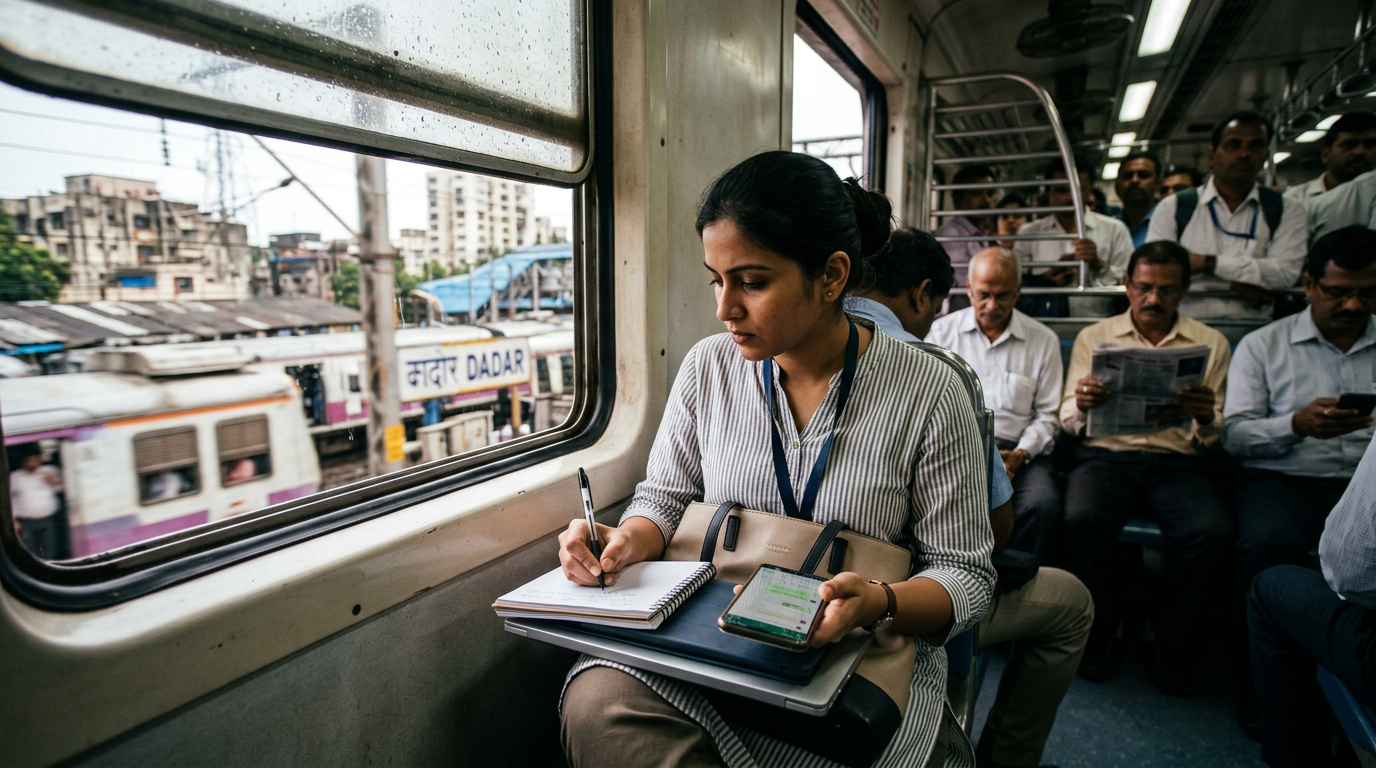
Best Note Taking Systems for Mumbai's Busy Working Professionals
Drown out workplace noise across BKC, Powai, and Navi Mumbai. Discover the best note taking systems built to capture ideas, streamline projects, and survive your commute.

How to Negotiate a Raise in Mumbai: Your Local Guide
Struggling with Mumbai's cost of living? Our guide breaks down how to negotiate a raise, using local benchmarks and strategies that work in the unique Mumbai corporate world.