
Deep Work Techniques for a Distracted Mumbai Mind
The constant buzz of Mumbai can shatter your focus. Discover powerful deep work techniques tailored for city life, helping you achieve more from your home in Thane to your office in BKC.
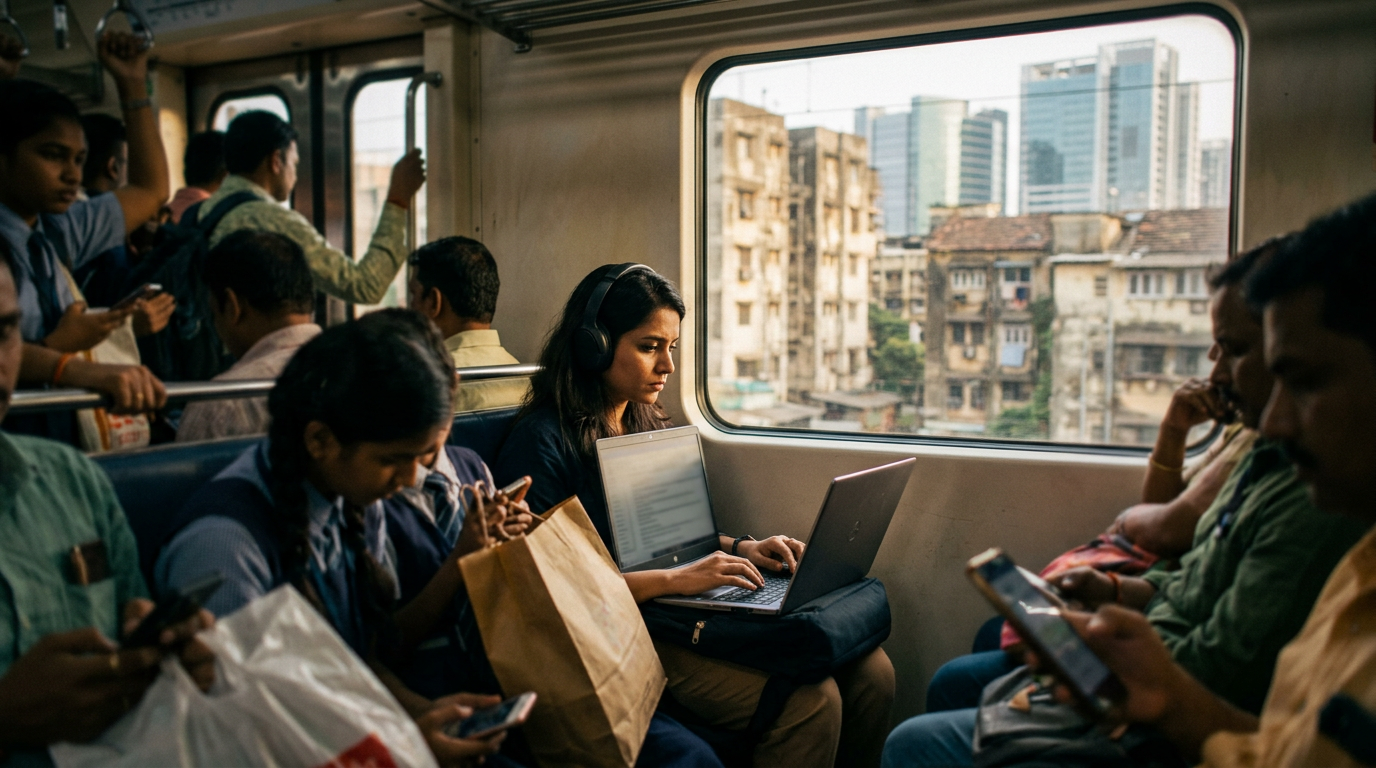
The 7:42 AM fast local pulls into Thane station. A sea of humanity pushes forward. Your phone buzzes with three WhatsApp groups, a Slack notification, and an email from your boss marked 'URGENT'. By the time you reach your office in the glass towers of Bandra-Kurla Complex (BKC), your focus is already shattered into a million pieces. This is the daily reality for millions in the Mumbai Metropolitan Region. But what if you could reclaim your attention? Mastering a few powerful deep work techniques isn't just a productivity hack; it's a survival strategy for thriving in this magnificent, chaotic city.
Deep work, a term coined by author Cal Newport, is the ability to focus without distraction on a cognitively demanding task. It’s the skill that allows you to quickly master complicated information and produce better results in less time. In a city that demands our constant attention—from the blare of a BEST bus horn to the siren call of a new Zomato offer—cultivating this skill is non-negotiable for professional growth.
Taming the Clock: Time Blocking in a City That Never Sleeps
The first casualty of Mumbai life is often our own schedule. We react to the city's pace rather than setting our own. Time blocking is the antidote. It’s the simple practice of scheduling every part of your day, including and especially, long, uninterrupted blocks for deep work. This isn't about rigidity; it's about intentionality. Instead of a vague to-do list, your calendar becomes your battle plan.
For a Mumbaikar, this could mean blocking out 90 minutes from 6:30 AM to 8:00 AM before the rest of the family wakes up and the morning chaos begins. Or, if you have a hybrid schedule, dedicating your WFH days to 2-3 hour deep work sessions, reserving your office days in Andheri or Fort for meetings and collaborative tasks. Even the commute can be time-blocked. If you're lucky enough to get a seat on the AC local or the Metro, you can block that 45-minute journey for deep reading or planning, armed with noise-cancelling headphones. The key is to treat these blocks as unbreakable appointments. If someone wants to schedule a meeting during your deep work block, you should say, "Sorry, I'm booked at that time," just as you would for a client meeting. This simple shift in mindset protects your most valuable asset: your focus.
Your 'Shantata' Zone: Crafting a Distraction-Free Environment
Your environment dictates your ability to focus. Trying to do deep work on your laptop at the dining table while your family watches TV in the next room of your 2BHK in Kandivali is a recipe for failure. You need to consciously engineer a space that signals to your brain: "It's time to focus." This doesn't mean you need a soundproof home office, though that would be nice. It means creating a dedicated space, no matter how small, that is optimized for concentration.
The Home Office Hack for Your MMR Apartment
For many of us working from homes in areas like Panvel, Kalyan, or Borivali, space is a premium. Here's how to create a focus zone:
- Claim a Corner: Designate a specific corner of a room, even your bedroom, as your workspace. When you are in this corner, you are working. When you are not, you are not.
- Use Sensory Cues: Use a specific lamp that you only turn on when doing deep work. Put on a pair of noise-cancelling headphones (a godsend against street vendors and construction noise). This creates a psychological boundary.
- Communicate Boundaries: Have a clear conversation with your family or flatmates. A closed door or headphones on means "Do not disturb unless the building is on fire." Setting these expectations is crucial.
Leveraging Co-working Spaces from Vashi to Andheri
If your home environment is simply too chaotic, investing in a co-working membership can be a game-changer. For a few thousand rupees a month, you get access to a professional, quiet environment. Places like WeWork in Powai, 91springboard in Vashi, or Ministry of New in Fort offer everything from flexible day passes to dedicated desks. The nominal cost of a day pass (around ₹800 - ₹1200) is a small price to pay for 8 hours of pure, unadulterated focus that could save you days of fragmented work. [INTERNAL_LINK: best co-working spaces in navi mumbai]
The Grand Gesture: Escaping Your Routine for Ultimate Focus
Sometimes, a change of scenery is the most powerful tool. Cal Newport calls this a "grand gesture." It involves making a significant change to your normal routine to signal the importance of a task. In the Mumbai context, this can take several forms. It could be booking a cheap hotel room in Lonavala for a weekend to finish a critical project proposal, or even just taking a day off to work from a different location within the city.
Think about the iconic David Sassoon Library in Kala Ghoda. For a nominal membership fee, you gain access to a bastion of silence and history, a world away from the hustle outside. Or consider the public library in Kharghar's Central Park, a surprisingly serene spot. Even a carefully chosen café can work wonders. Avoid the bustling Starbucks on Carter Road on a Sunday. Instead, find a quiet Blue Tokai in a Vashi lane or a small, independent café in Bandra on a Tuesday morning. Buying a ₹350 coffee can purchase you two hours of focused bliss. The key is to leave your usual environment behind, breaking the psychological patterns that lead to distraction.
"The ability to perform deep work is becoming increasingly rare at exactly the same time it is becoming increasingly valuable in our economy. Consequently, the few who cultivate this skill, and then make it the core of their working life, will thrive."
Rituals and Routines: Your Pre-Focus Mumbai Warm-Up
Your brain needs a clear signal to transition from a state of distraction to one of deep focus. This is where rituals come in. A pre-work ritual, lasting just 5-10 minutes, can dramatically improve the quality and duration of your deep work session. The ritual itself doesn't matter as much as its consistency. It's about building a Pavlovian response where these specific actions tell your brain it's time to concentrate.
What could a Mumbai-specific ritual look like?
- Grabbing your morning cutting chai from the street-side vendor downstairs and drinking it at your desk before opening your email.
- A brisk 10-minute walk around the internal society garden in your complex in Thane West, leaving your phone behind.
- Putting on a specific instrumental playlist—perhaps some Anoushka Shankar or even just lo-fi beats—that you only listen to when you're doing deep work.
- Tidying your desk for five minutes. A clear desk promotes a clear mind.
- A simple five-minute meditation using an app like Headspace or Calm before you begin your first major task.
Digital Minimalism: Mastering Your Tech from Churchgate to Thane
Your smartphone is the single greatest threat to deep work. The constant barrage of notifications from WhatsApp, Instagram, and news apps is designed to hijack your attention. Practicing digital minimalism isn't about abandoning technology; it's about using it intentionally. During your commute on the Central line, the patchy network offers a forced opportunity to disconnect. Instead of desperately trying to refresh your feed, put your phone on airplane mode and read a book or review your notes for the day.
During your deep work blocks, your phone should be out of sight and on silent. Not face down on the desk—that's still a temptation. Put it in a drawer or in another room. Use browser extensions like Freedom or StayFocusd to block distracting websites for a set period. Turn off all non-essential notifications on your phone and laptop. Do you really need to know instantly that someone liked your photo from your weekend trip to Marine Drive? The answer is no. Every buzz, ping, and banner is a micro-interruption that pulls you out of a state of flow and costs you precious mental energy to get back in. Reclaiming your focus starts with reclaiming your devices.
The Art of the Shutdown: Ending Your Workday, Mumbai-Style
In a city that's always 'on', switching off from work is incredibly difficult. Emails at 9 PM are common, and the line between work and life blurs, especially for those working from home. This is why a 'shutdown ritual' is as important as a start-up ritual. It’s a consistent set of actions you perform at the end of the workday to signal to your brain that the professional day is done. This prevents work from bleeding into your personal time and allows your mind to truly rest and recharge, which is essential for high-quality deep work the next day.
Your shutdown ritual could be as simple as saying the phrase, "Shutdown complete," out loud after you've checked your email one last time and planned the next day's tasks. It could involve closing all work tabs, tidying your desk, and then immediately changing out of your 'work clothes' even if you work from home. For those commuting, the journey home can be the ritual. Instead of checking emails on the train back to Virar, listen to a podcast or music. Once you step off the train, work is done. A walk along the sea face at Worli or Bandstand after work, without your phone, can be a powerful way to decompress and create a hard stop to your day. This clear boundary is critical for long-term sustainability and avoiding burnout in a high-pressure environment like Mumbai. [INTERNAL_LINK: managing work-life balance in mumbai]
Conclusion: Finding Focus in the Urban Jungle
Living and working in Mumbai is a privilege, but it demands a different level of mental fortitude. The energy of this city can either fuel you or drain you. These deep work strategies aren't about building a sterile, silent life—that’s not Mumbai. They are about creating pockets of profound focus amidst the energy, using the city’s rhythm to your advantage rather than letting it overwhelm you. From your 1BHK in Borivali to a bustling open-plan office in Lower Parel, the power to do deep, meaningful work is within your reach.
Your challenge for this week: Pick one technique. Just one. Maybe it's time blocking your morning or implementing a strict shutdown ritual. Try it for three days. You might be surprised at how much clarity you can find in the heart of the chaos. Let us know in the comments: What's your go-to Mumbai focus spot, or which deep work technique will you try first?
Keep reading

How to Negotiate a Raise in Mumbai: Your Local Guide
Struggling with Mumbai's cost of living? Our guide breaks down how to negotiate a raise, using local benchmarks and strategies that work in the unique Mumbai corporate world.
The Best Note-Taking Systems for Mumbai's Hustle Culture
Struggling to keep track of ideas amidst Mumbai's chaos? We break down the best note-taking systems, from digital tools for your commute to analogue methods perfect for a quiet coffee shop in Bandra.
Deep Work Techniques That Actually Work in Mumbai
Is the constant hum of Mumbai killing your focus? From crowded locals to chaotic offices in BKC, we explore deep work techniques that help you thrive in the city that never sleeps.