
The Best Note-Taking Systems for Mumbai's Hustle Culture
Struggling to keep track of ideas amidst Mumbai's chaos? We break down the best note-taking systems, from digital tools for your commute to analogue methods perfect for a quiet coffee shop in Bandra.

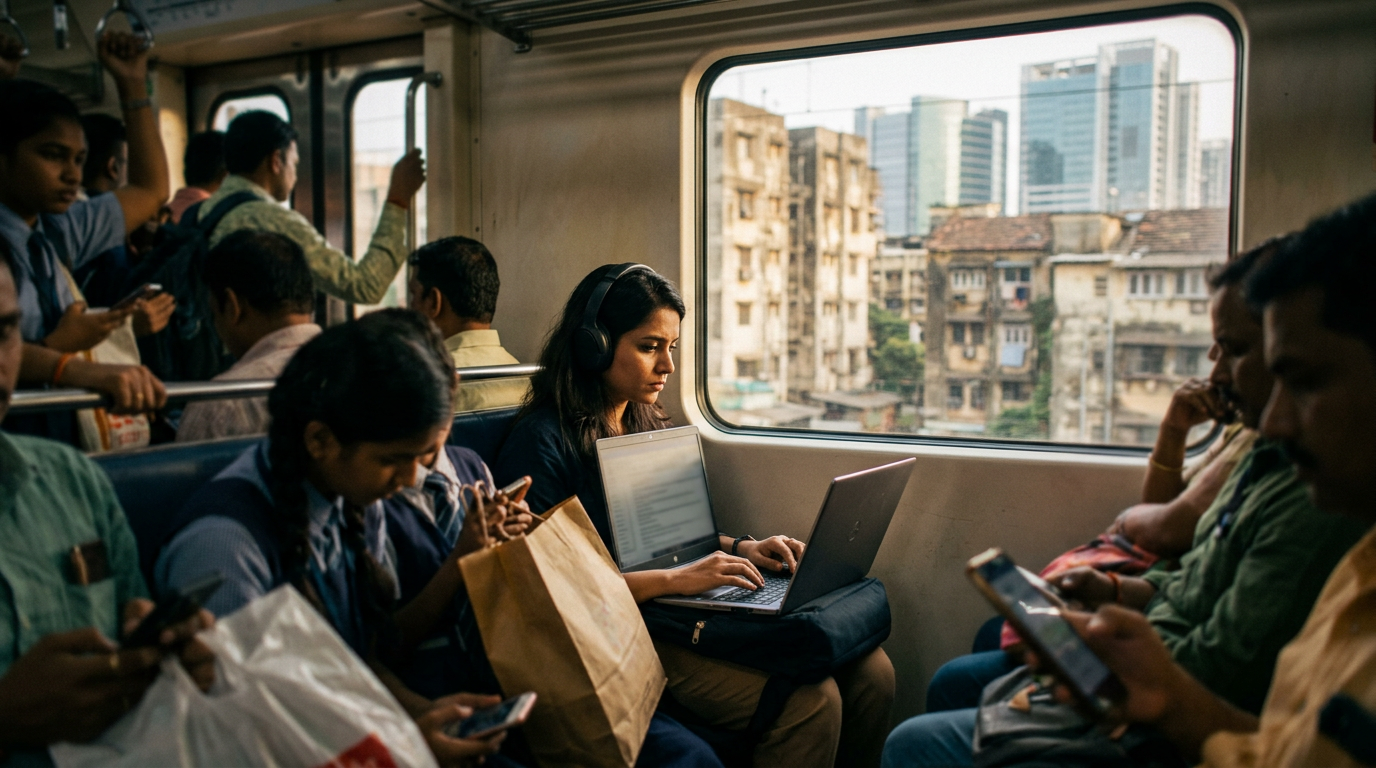
You're on the 8:42 AM fast local from Thane, squished between a dozen other dreamers and doers. An incredible idea for your startup strikes you just as the train lurches past Ghatkopar. You grab your phone, open a generic notes app, and type a cryptic line. By the time you reach your office in Lower Parel, the idea is a ghost, lost in a sea of grocery lists and random numbers. This is the Mumbai hustle. It’s a city that floods you with inspiration and information, but without a proper framework, it all just washes away. Finding one of the best note taking systems isn't a luxury here; it's a survival tool for your career and creativity.
Why Your Moleskine from Crossword Isn't Enough
We’ve all been there. You walk into a Crossword at Kemps Corner or a Title Waves in Bandra and splurge on a beautiful, expensive notebook. You tell yourself, "This is it. This is where I'll organize my life." For a week, you use it diligently. Then, life happens. A client meeting in BKC, a frantic brainstorming session for a new campaign, a networking event at a rooftop bar in Andheri. Soon, that pristine notebook becomes a chaotic jumble of meeting minutes, to-do lists, and half-formed thoughts with no rhyme or reason. The problem isn't the notebook; it's the lack of a system.
Simply taking notes is like throwing ingredients into a kitchen. Having a note-taking system is like having a recipe. It provides structure, a method for processing, and most importantly, a way to retrieve information when you need it. In a city where you might get a business idea while haggling in Dadar market and need to recall it for a presentation in a Navi Mumbai SEZ a week later, retrieval is everything. A system transforms your notes from a passive graveyard of ideas into an active, dynamic partner in your personal and professional growth.
The Analogue Approach: For the Tactile Thinker in Thane
In an age of constant screen time, there's a certain magic to pen and paper. The physical act of writing can improve memory and spark different creative pathways. If you work from a home office in a quieter neighbourhood like Thane or Chembur, or if you just prefer a screen-free method, these analogue systems are powerful.
The Bullet Journal (BuJo) Method: Your Life, Organized
The Bullet Journal is less of a notebook and more of an adaptable framework for mindfulness and productivity. Created by Ryder Carroll, it lets you track the past, organize the present, and plan for the future. You can pick up a good dotted notebook from a local shop like Bombay Stationery in Fort for around ₹400-₹800 and get started. The core components are:
- The Index: Your table of contents, so you can find anything quickly.
- The Future Log: For scheduling events and goals months in advance (e.g., "Renew rent agreement for Andheri flat in September").
- The Monthly Log: A calendar and task list for the current month.
- The Daily Log: Where the magic happens. You use rapid-logging with different symbols (bullets for tasks, circles for events, dashes for notes) to capture your day as it unfolds.
Going Digital: Note-Taking on the Harbour Line
For the quintessential Mumbaikar who spends hours commuting, a digital system is often more practical. You can capture a thought, a photo of a poster, or a voice memo while waiting for your train at Kurla or navigating the crowds at Churchgate. The key is choosing apps that have robust offline functionality, because we all know the network can be unreliable between Vashi and Mankhurd.
The Cornell Method, Digitized: Structure on Evernote or OneNote
The Cornell Method is a classic for a reason. It forces you to be an active listener and learner. You divide your digital page into three sections:
- Main Notes (Right Column): The largest section. Here, you take notes during a lecture, meeting, or while reading. For instance, you're at a fintech seminar at the Jio World Centre in BKC. All your primary points go here.
- Cues (Left Column): A smaller column. After the meeting, you pull out keywords, questions, and main ideas from your notes. This is your 'retrieval' column.
- Summary (Bottom Section): At the end of the day, you write a one or two-sentence summary of the notes on that page. This act of synthesis is crucial for retention.
The PARA Method: A Digital Filing Cabinet for Your Life
If your digital life feels as chaotic as the view from a Dadar station bridge, Tiago Forte's PARA method might be the solution. It’s a simple, universal system for organizing any type of digital information—not just notes, but files, documents, and bookmarks too. It works beautifully in apps like Notion or Obsidian, but can even be implemented with simple folders on your computer. It’s based on four categories:
- P - Projects: Things you’re actively working on with a specific goal and deadline. Examples: "Launch New Website Q3," "Plan Family Trip to Alibaug," "Complete Navi Mumbai Half Marathon Training."
- A - Areas: Your long-term areas of responsibility. These have a standard to maintain, but no end date. Examples: "Finances," "Health & Fitness," "Apartment Management (Kharghar)."
- R - Resources: Topics of ongoing interest. This is where your curiosity lives. Examples: "Stock Market Investing," "Mumbai Heritage Walks," "Best Coffee Shops in Bandra."
- A - Archives: Inactive items from the other three categories. This is for completed projects, areas you're no longer responsible for, or resources that are no longer relevant.
Mind Mapping: Visualizing Your Next Big Idea in a Juhu Cafe
Sometimes, linear notes just don't cut it. For brainstorming, strategic planning, or just understanding a complex topic, mind mapping is a game-changer. It’s a visual thinking tool that helps structure information, allowing you to better analyze, comprehend, and generate new ideas. The process is simple: start with a central concept in the middle of a page, and draw radiating branches for major sub-topics, which then branch out further. Imagine sitting in Prithvi Cafe in Juhu, mapping out a business plan for a new D2C brand. The central bubble is your brand name. The main branches could be "Product," "Marketing," "Logistics," and "Finance." Under "Marketing," you could have sub-branches for "Social Media Strategy," "Targeting (South Mumbai vs. Suburbs)," and "Collaborations with Mumbai Food Bloggers." This visual approach can unlock connections that a simple list never would. You can use a large sheet of paper or digital tools like Miro, MindMeister, or XMind.
"I was stuck on a logistics problem for my delivery service for weeks. I'd made endless lists. It was only when I sat down at a Starbucks in Powai with a blank notebook and drew a mind map of the entire delivery process—from pickup in Vashi to drop-off in Colaba—that I saw the bottleneck. The visual layout made the solution obvious." - A (fictional) Mumbai-based entrepreneur
Hybrid Systems: The Best of Both Worlds for the MMR Resident
The truth is, you don't have to pledge allegiance to a single system. The most productive people often create a hybrid system tailored to their unique life. Your reality might involve a mix of deep work at home in Panvel and frantic commutes into the city. A hybrid approach respects that. Here's an example of a powerful hybrid system:
- A Physical Bullet Journal: For daily planning and tasks. It's kept on your desk for focused, mindful work. The act of writing down your top three priorities for the day is a powerful ritual.
- A Digital Capture Tool (like Google Keep or Apple Notes): For fleeting ideas on the go. This is your quick-capture tool for when inspiration strikes on the metro or in a queue for vada pav. The key is to have a weekly review where you process these quick notes and move them to their permanent home.
- A Digital 'Second Brain' (like Notion or Obsidian with PARA): This is your long-term knowledge base. This is where you flesh out the ideas captured on your phone, store research for projects, and manage your life's areas and resources.
Conclusion: Find the System That Quiets the Chaos
Living and working in the Mumbai Metropolitan Region is an exhilarating experience, but it demands a high level of personal organization. The constant influx of information, opportunities, and demands can lead to overwhelm. The goal of implementing a note-taking system—be it a Bullet Journal, PARA, Mind Mapping, or a hybrid of your own making—is not just about being more productive. It's about creating mental space. It's about ensuring your best ideas don't get lost in the noise of a local train announcement. It's about building a reliable external brain that allows your real brain to do what it does best: think, create, and connect. Start small, experiment, and find the framework that brings a sense of calm and control to your Mumbai hustle. [INTERNAL_LINK: top co-working spaces in Mumbai]
What's your go-to note-taking system for surviving and thriving in Mumbai? Share your tips and tricks in the comments below!
Keep reading

How to Negotiate a Raise in Mumbai: Your Local Guide
Struggling with Mumbai's cost of living? Our guide breaks down how to negotiate a raise, using local benchmarks and strategies that work in the unique Mumbai corporate world.
Deep Work Techniques for a Distracted Mumbai Mind
The constant buzz of Mumbai can shatter your focus. Discover powerful deep work techniques tailored for city life, helping you achieve more from your home in Thane to your office in BKC.

Deep Work Techniques That Actually Work in Mumbai
Is the constant hum of Mumbai killing your focus? From crowded locals to chaotic offices in BKC, we explore deep work techniques that help you thrive in the city that never sleeps.